


Uniting payors, providers, and pharmacies for seamless care.
53M+
Members supported
100%
Compliance Rate
- Strategy
- Web
- App
Ailoitte is a global native app development company. We write your iPhone app in Swift and your Android app in Kotlin, so each one opens fast, scrolls smoothly and uses the camera, sensors and Face ID without workarounds. You get a fixed price per platform before any code is written.
Native or cross-platform? Ask an architect first. We'll recommend the one that fits your app and budget.
Swift and Kotlin
Written for each platform, not wrapped
300+ real devices
Tested on every release
Both stores handled
App Store and Google Play
Our native mobile app development services cover design, development, testing, store launch and maintenance, with iOS built in Swift and Android in Kotlin.
A single-platform first version typically goes live in 6 to 10 weeks. Both platforms take longer, and you get the date before you sign.
From about $20,000 for a one-platform MVP to $160,000 or more for an enterprise app on both platforms, quoted as a fixed price for each platform.
A named senior architect owns your custom native app development, with a small pod of senior iOS and Android engineers. You talk to the people writing the code.
Only if your app depends on speed, animation or phone hardware. If it does not, cross-platform is cheaper, and we will tell you.
Both codebases, the Xcode and Android Studio projects, signing keys and store accounts, all transferred to you.
Native app development services cover the design, development, testing, launch and maintenance of apps built for one platform, using Swift for iOS and Kotlin for Android. The code runs directly on the phone, with nothing in between. That makes native apps the fastest and the smoothest to scroll. They are also the best at using the camera, GPS, Bluetooth, Face ID and offline storage.
Native iOS and Android development means two separate apps, one for each platform. That costs more than one shared codebase. It is worth paying when the experience depends on speed or hardware. When it does not, you should not pay it, and we will tell you so.
Native also gets new platform features first. When Apple or Google ship a new camera API, widget type or health sensor, a native app can use it on release day, while cross-platform apps wait for a plugin. For products that compete on the newest phone features, that head start matters.
In custom native app development, the design follows each platform too. iOS screens follow Apple’s guidelines, Android screens follow Material, so the app feels familiar to both sets of users. That applies whether you need a single-platform MVP or an enterprise app on both platforms, and you keep full IP ownership of both.
Describe the app in a few lines. We will recommend one approach and write down why.
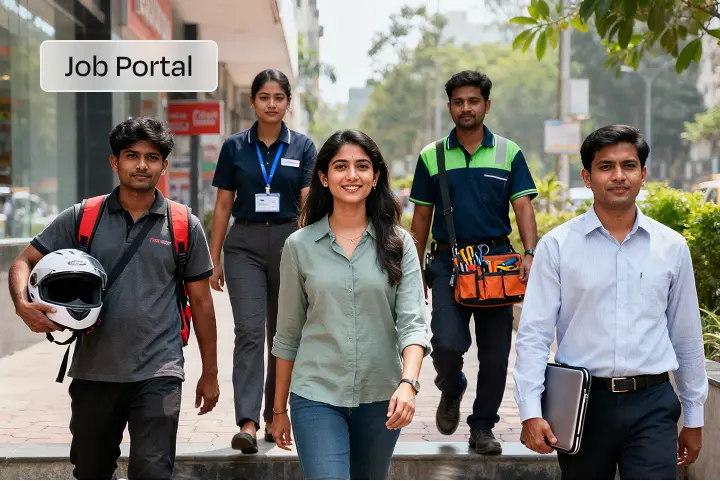
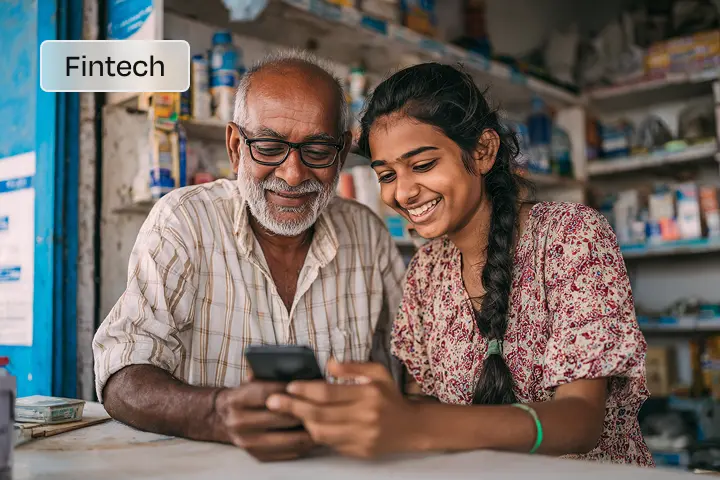
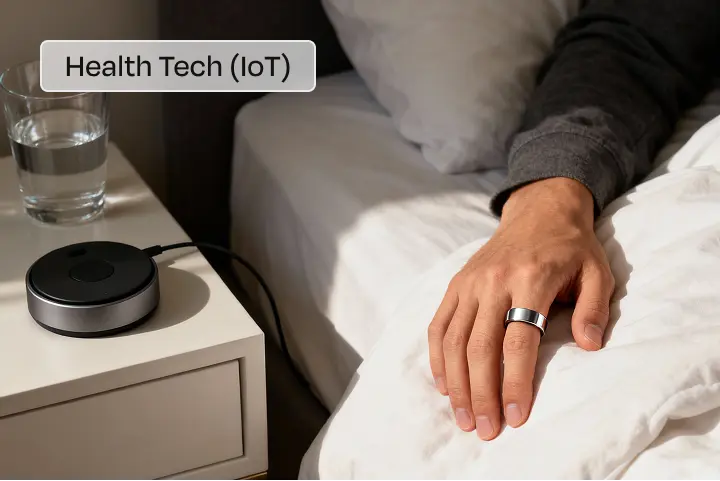
Two of these show native doing what cross-platform struggles with: Apna running smoothly on low-cost Android phones for tens of millions of users, and Utsah pairing a smart ring over Bluetooth. Judge any native app development company on builds like these, ours included. Browse the full portfolio or every case study we have published.
Tell us the devices, the users and the deadline. A senior engineer will tell you whether native is the right call.
What product leads say after shipping with our iOS and Android engineers. Each reference is signed and readable in full.



Founder & CEO @Mana
It's fair to say that we didn't just find a development company, but we found a team and that feeling for us is a bit unique. The experience we have here is on a whole new level.


Co-founders @Apuphi
Dependable, reliable and fast. There will always be bugs, but what matters is how fast the team resolves them. When universities asked for a pilot, Ailoitte sorted out the features we needed in 7 or 8 hours, and the officials approved it the next day.


Head Of Product, Apna
We brought Ailoitte in when what we had was an idea rather than a product, and they built the first version from scratch. They understood our requirements immediately and built the team we wanted, on time and on budget. Ailoitte was never a one-project supplier for us. We kept them.


Product Leader, Quantiphi Inc · Boston

Ailoitte helped us ship our MVP in record time, and the launch was a success. Sunil was personally involved throughout to keep execution smooth. What impresses me most is that the team operates as an extension of our own.


Manager @ Dr. Morepen
They truly understood our vision of putting 'Health in Your Hands' and brought it to life through a beautifully designed, intuitive app. Their team was skilled and aligned with our mission every step of the way.


CEO, Banksathi
We had a concept and no product. Ailoitte built it from the first MVP through to the version that found its market. We ran the engagement on a time-and-materials basis, with their engineers working inside our team rather than at arm's length. Their commitment to quality and attention to detail truly set them apart.


Founder & CEO, OpenFactor Technology Group · Johannesburg
We came to Ailoitte with a capacity and skills problem, not an idea problem. Six of their people delivered our digital lending marketplace, the web portal and both mobile apps, to specification. I would rate them eight out of ten on project performance, and we are on our third project with them.


Head of Operations, Koovs.com, at the time of the engagement
I have worked in ecommerce for fourteen years and this was my first seamless experience with a technology team. They built our iOS and Android app and replaced the old one, confirming every milestone without us ever having to chase.


Lead Product Manager, LinkOMed · United Kingdom
Ailoitte were the driving force behind the success of LinkOMed's MVP launch. Their dedication and teamwork were truly remarkable, and I was grateful to witness the seamless collaboration that overcame every challenge during development.


Co-Founder & CEO, Tripeers Tech · Mangaluru
They did not simply build to the specification. Where they disagreed with our technology choices they proposed alternatives with sound reasoning, which we accepted. Commitments were kept almost every time, and where the team hit a blocker they raised it rather than working around it quietly. A great technology partner, and I would recommend them.


Founder & CEO, AI Innovations Hub
Over six months they produced the site, the tools database with search and filtering, user accounts, a CMS with training for our team, SEO and analytics. What stood out was that nobody behaved like a contractor. When we hit problems they would contact third-party support services on our behalf to get things resolved.


CEO, Sanskritly
They executed the core requirements effectively and contributed several valuable suggestions that strengthened the overall solution. Their recommendations on architecture for our voice recognition workflows improved performance, scalability and long-term maintainability.


Co-Founder, Reveza
Their team delivered seamless AI integration and a user-friendly experience that our clients love. We've seen a clear 25% boost in in-store engagement and loyalty.


Co-Founder & CEO, SupDup
A referral brought us to Ailoitte after we had evaluated around five firms. The project started with workshops that gave them a clear view of what we wanted to achieve. Their project management and team spirit are outstanding.
Full-lifecycle native mobile app development services, from architecture and design through store launch and scale. Native iOS and Android development is the core of it. Not sure which one you need? Tell us the problem and we will tell you.

Kotlin and Jetpack Compose apps with Material design, tuned for the thousands of Android models your users carry, and ready for Play Store review.

Swift and SwiftUI apps for iPhone and iPad that follow Apple's Human Interface Guidelines and pass App Store review the first time.

Built around your workflows rather than a template, with your integrations, your design system and your security requirements.

ARKit and ARCore experiences for product previews, training, measurement and field service, running at full native speed.

Native apps paired with sensors, wearables and hardware over Bluetooth and Wi-Fi, reliably and in real time.

Apple Watch and Wear OS apps that show what matters at a glance and stay in sync with your main app.

Our native mobile app development services lead with an AI-first mindset to build smarter apps. Because native code talks to the phone directly, AI features like on-device machine learning, camera recognition, voice and smart search run faster and keep data on the device.
Two native apps means twice the code. This is how AI stops that doubling your timeline in native iOS and Android development, and why a person still approves every release.
A senior architect designs the data, offline storage and device connections once, then maps them to iOS and Android patterns. Automated checks enforce that structure on every commit.
AI writes the repetitive code for both platforms at once. Guard rails reject libraries that do not exist and stop keys or passwords reaching the repository.
Automated suites run on real iPhones and Android phones in parallel on every commit, from this year's flagships to three-year-old budget models.
A senior iOS engineer and a senior Android engineer each approve their platform's structure, security and speed before release. Both names are in your contract.
We build both, so this is a comparison, not a pitch. Here is how the two actually differ. If you would rather add engineers to your own team, we also provide dedicated developers.
Compared on the five things that decide which one you need.
| On | Cross-platform (React Native, Flutter) | Native (Swift and Kotlin) |
|---|---|---|
| Speed | Close to native for most apps. A translation layer sits underneath. | Fastest. The code runs directly on the phone, which matters for heavy animation and processing. |
| Phone hardware | Good, but new OS features may wait for a plugin or need native code added. | Full access to every sensor and every new OS feature, on the day it ships. |
| Build cost and time | Lower. One shared codebase, usually the faster route to both stores. | Higher. Two apps to write and test, one per platform. |
| Maintenance | One codebase, so updates reach both platforms at once. | Two apps to update for every iOS and Android release. |
| Best for | MVPs, content and data apps, internal tools, anything that needs both stores fast. | AR, games, camera-heavy apps, health sensors, apps that must work offline, polished consumer apps. |
Tell us the platforms, the features and the devices you need. Within 12 hours a senior engineer sends a fixed native price and, where it helps, what the same app would cost cross-platform.
iOS engineers who work in Xcode every day and Android engineers who work in Android Studio, not one team stretched across both.
iOS screens follow Apple's guidelines and Android screens follow Material, so each app feels right to the people using it.
Keys in the iOS Keychain and Android KeyStore, certificate pinning and biometric login, backed by ISO 27001.
Both codebases, signing keys, store accounts and design files move to you at launch. Nothing stays locked with us.
We build native and cross-platform, so we recommend what your product needs, not what costs more.
A banking app and a delivery driver's app need different things from the phone. Healthcare needs HealthKit and offline patient data. Fintech needs keys locked in the iOS Keychain and Android KeyStore. Logistics needs GPS that keeps tracking with no signal. These are the sectors where native earns its cost most often.
Tell us what the app must do on the phone. We will tell you whether native is worth it in your market.
Native delivery runs two platforms side by side, so each stage makes separate decisions for iOS and Android. It runs on Clarity, our delivery framework, with a working build of both apps every week.
iOS and Android scope set separately, hardware needs mapped, then a costed plan. About discovery.
iOS to Apple’s guidelines, Android to Material, checked on real screen sizes. UI and UX design.
iOS in Swift and SwiftUI, Android in Kotlin and Jetpack Compose, in two-week cycles.
Automated tests across 300+ real device and OS combinations, plus security and speed checks.
We submit to both stores with a staged rollout, then maintain and improve both apps.
Swift and SwiftUI for iOS, Kotlin and Jetpack Compose for Android, and the backend and cloud tools we connect them to.


Native app development typically costs from about $20,000 to $160,000 or more. A single-platform MVP runs $20,000 to $45,000 over 6 to 10 weeks. An app on both iOS and Android runs $45,000 to $95,000 over 3 to 5 months. Enterprise apps start around $95,000.
Native costs more than one cross-platform codebase, because there are two apps to build, test and maintain. Many clients launch one platform first and add the second once the product is proven, which spreads the cost.
Six factors set a native price, and most apps only trigger two or three of them. Running costs after launch sit under app maintenance.
Two native apps roughly double build and maintenance effort compared with one.
AR, Bluetooth devices, health sensors and camera processing add real engineering time.
Payment SDKs, Bluetooth hardware and enterprise systems each need native work on both platforms.
HIPAA or PCI DSS scope adds platform controls, like Keychain storage and certificate pinning, to build, test and document.
Models built with Core ML or ML Kit need tuning for each platform's hardware before they run well.
Budget 15 to 20 percent of the build cost a year. Two codebases means two sets of OS updates.
Choose by how settled your platforms and features are. Each works the same way with a native app development company that builds both.
A senior pod delivers finished iOS and Android apps, or one of them, on a fixed scope and a fixed date, submitted to the stores by us.
For when you know which platforms and features you need.
Senior Swift and Kotlin engineers who join your stand-ups and work only on your product. Hire iOS developers, Android developers, or a full dedicated team.
For a product that ships updates on both platforms every sprint.
A paid discovery that decides native or cross-platform, maps every hardware connection, and produces a costed plan you own.
For when you are not yet sure native is worth it.
What native makes possible inside the app, because the AI can run on the phone itself instead of waiting on a server.
Assistants that answer from your own content, with native voice input and push follow-ups.
Recommendations computed on the phone with Core ML and ML Kit, so they work offline and keep data private.
Document, face and barcode scanning built on the native camera pipeline, at full frame rate.
On-device speech recognition and translation that keep working when the signal drops.
Answers drawn from your own content, so users stop hunting through menus.
Readings from Bluetooth sensors and wearables interpreted on the phone, with alerts built in.
Some run better on the phone, some in the cloud. In 30 minutes we will tell you which is which for your app.
Our native mobile app development services reach clients across the USA, UK, UAE, Australia, Canada and Singapore. Store rules differ by region too: Apple and Google apply different privacy labels, payment rules and age ratings in each market, and our release engineers prepare both listings for every country you launch in.
Before you sign, check us out: the team, the awards we have won, and our ISO 27001 and ISO 9001 certificates.

Where our Swift and Kotlin engineers, testers and architects work, all in-house.

L-148, 5th Main Road, Sector 6, HSR Layout, Bengaluru, Karnataka 560102

US contracts, invoicing and support in North American hours.
8 The Green, STE R, Dover, DE 19901
Native app development services cover the design, development, testing, launch and maintenance of apps built for one platform, using Swift for iOS and Kotlin for Android. The code runs directly on the phone, so native apps are the fastest and the best at using phone hardware. Our native mobile app development services sit within our wider mobile app development services.
A native app is written in the phone’s own language, Swift on iPhone and Kotlin on Android, and installed from the App Store or Google Play. Nothing sits between the code and the operating system, so it opens faster, scrolls more smoothly and reaches the camera, sensors, Bluetooth and secure storage directly. It also looks and behaves like the other apps on that phone.
Choose native when speed, hardware access or security decide whether the app succeeds. Choose cross-platform when you need both stores quickly on a tight budget and the app is mostly content, lists and forms. We compare both for your scope on the first call and send the recommendation in writing, even when it points away from native.
A hybrid app is a web page running inside a native shell, while a native app is built from the platform’s own components. Hybrid is cheaper to start but tends to feel slower and struggles with hardware features. Native costs more because each platform gets its own code, and in return it feels like part of the phone. Our hybrid app development page covers the other side.
Native pays for itself when the app depends on hardware or on speed. Think payments and banking, health devices and wearables, camera and AR features, live maps, offline field work, and apps people open many times a day. If your app is mostly content and forms, the extra spend buys little, and we will tell you so before you commit.
Most native apps we build cost between $20,000 and $160,000 or more. One platform MVP sits at the low end. Both platforms together cost less than two separate builds, because the design, backend and test plan are shared. You get a fixed price for each platform before any work starts.
A single-platform native MVP takes 6 to 10 weeks, and a full app on both iOS and Android takes 3 to 5 months. Both apps are built in parallel by one team, so adding the second platform adds weeks, not months. Hardware integrations and compliance reviews are the usual reasons a timeline grows, and we flag them in the first week.
Yes. Native iOS and Android development is how most of our native projects run: one team, one architecture and backend, then Swift for iPhone and Kotlin for Android. Both apps launch on the same day with matching features. For single-platform detail, see our iPhone app development and Android app development pages.
Yes, and it is often the best use of a first budget. We launch where most of your users are, then add the second platform once the product has proven itself. Custom native app development planned this way keeps the backend and design system ready for the second app, so it costs noticeably less than the first. Startups often take this route.
Yes, we build with React Native and Flutter too, so our advice is not tied to one approach. We also help teams whose cross-platform app has hit its limits, either by rebuilding the slow screens natively or by moving the whole app to Swift and Kotlin in stages.
New builds use SwiftUI on iOS and Jetpack Compose on Android, the modern toolkits Apple and Google now recommend. We still use UIKit and Android Views where a screen needs finer control, and we work comfortably inside older codebases that mix both. Our Swift and Kotlin engineers choose per screen, not by habit.
Yes. Native apps can store data on the device, keep working with no signal and sync once the connection returns. We agree up front what happens when two people change the same record offline, which is where most offline apps go wrong. It matters most for field teams, clinics and logistics apps.
Native code talks to Bluetooth Low Energy directly, through Core Bluetooth on iOS and the Android Bluetooth stack, which keeps pairing stable and battery use low. We built the Utsah smart ring app this way, with heart rate and HRV readings at 90% accuracy. See our wearable and IoT work.
Yes. We design proper tablet layouts rather than stretching phone screens, and build AR features with ARKit and ARCore. Split view, keyboard shortcuts and Apple Pencil support are planned in from the start for iPad. Our AR and VR app development page covers immersive work in depth.
Yes, and we do it screen by screen, so your app stays live in the stores throughout. Swift runs alongside Objective-C and Kotlin alongside Java, so we rewrite the slowest or riskiest parts first and retire old code as we go. A paid code audit comes first, so you know the cost before anything changes. Ongoing app maintenance can follow.
Every release runs automated tests on 300+ real device and OS combinations, from current flagships to older iPhones and budget Android phones still in daily use. Each build must also open in under two seconds and hold 60 frames per second. Testers then walk through the journeys that earn you money by hand.
We build compliance into the native layer: encrypted storage in the iOS Keychain and Android Keystore, biometric login, certificate pinning and no sensitive data in logs. We work to HIPAA, GDPR, PCI DSS, India’s DPDP Act and the UAE’s PDPL where they apply, under an ISO 27001 certified process. More on our security and compliance page.
Because shared work is done once and routine code is drafted by AI. The architecture, backend, design system and test plan serve both platforms, and AI drafts the repetitive Swift and Kotlin so senior engineers spend their hours on review and the hard parts. The saving is written into a fixed price per platform, not promised in hourly estimates.
Industries where the app handles money, health or hardware. As a native app development company we see the strongest case in healthcare and telemedicine, fitness and wearables, banking and insurance, logistics and retail. Browse every sector we serve.
Send it with a line about the app and a native engineer will reply, usually the same day.
Describe the hardware, speed or security your app depends on. We come back with a platform plan for iOS, Android or both, and a price for each. Good custom native app development starts with that honesty, so if one shared codebase would do the job, you hear it from us first.
Loading available times…

Information Security
Management System

Quality Management
System
Information Security
Management System
Quality Management
System
 India
 Job Portal

"Ailoitte understood our requirements immediately and built the team we wanted. On time and budget. Highly recommend working with them for a fruitful collaboration."
Head of product, Apna
USAEduTech
My experience working with Ailoitte was highly professional and collaborative. The team was responsive, transparent, and proactive throughout the engagement. They not only executed the core requirements effectively but also contributed several valuable suggestions that strengthened the overall solution. In particular, their recommendations on architectural enhancements for voice‑recognition workflows significantly improved performance, scalability, and long‑term maintainability. They provided data entry assistance to reduce bottlenecks during implementation.
CEO, Sanskritly
IndiaFinTech
On paper, Banksathi had everything it took to make a profitable application. However, on the execution front, there were multiple loopholes - glitches in apps, modules not working, slow payment disbursement process, etc. Now to make the application as useful as it was on paper in a real world scenario, we had to take every user journey apart and identify the areas of concerns on a technical end.
CEO, Banksathi
IndiaHealthTech
“Working with Ailoitte was a game-changer for us. They truly understood our vision of putting ‘Health in Your Hands’ and brought it to life through a beautifully designed, intuitive app. From user experience to performance, everything exceeded our expectations. Their team was proactive, skilled, and aligned with our mission every step of the way.”
Director, Dr.Morepen
IndiaRetailTech
“Working with Ailoitte was a game-changer. Their team brought our vision for Reveza to life with seamless AI integration and a user-friendly experience that our clients love. We've seen a clear 25% boost in in-store engagement and loyalty. They truly understood our goals and delivered beyond expectations.”
Co-Founder, Reveza
IndiaHealthTech
“Ailoitte truly understood our vision for iPatientCare. Their team delivered a user-friendly, secure, and scalable EHR platform that improved our workflows and helped us deliver better care. We’re extremely happy with the results.”

CMO, iPatientCare
IndiaEduTech
"Working with Ailoitte was a game-changer for us. They truly understood our vision of putting ‘Health in Your Hands’ and brought it to life through a beautifully designed, intuitive app. From user experience to performance, everything exceeded our expectations. Their team was proactive, skilled, and aligned with our mission every step of the way."
Director, Dr. Morepen


Response guaranteed within 12 hours.




A senior engineer will review your brief and reply within 12 hours. Want to talk sooner? Pick a time that suits you.
Book a 30-minute call