


Uniting payors, providers, and pharmacies for seamless care.
53M+
Members supported
100%
Compliance Rate
- Strategy
- Web
- App
Ailoitte builds AI interviewer agents that run your first-round interviews by voice or video, ask the same core questions to every candidate, follow up when an answer is vague, and score it against your rubric. Your recruiters get a report with quotes and reasons within minutes, and they make the call. Built for your roles, priced per agent, and live for a first role in 2 to 4 weeks.
Tell us the roles, your interview volume and your ATS. Within a week: which rounds to automate, how, and the fixed price.
Structured, every time
Same core questions and rubric for every candidate.
Affordable by design
Fixed price from $4,000 per agent. No per-interview fees.
No emotion reading
Scores what candidates say, never faces or tone.
An AI interviewer agent for your roles. It runs first-round interviews by voice or video, live or on the candidate's own time, and writes a scored report for your recruiters.
Structured questions from a bank you approve, follow-ups when an answer is thin, and scoring against a rubric with a quote behind every score.
An agent for one role goes live in 2 to 4 weeks. Larger programs across many roles and languages take 4 to 8 weeks, after a calibration run.
Each agent has a fixed price between $4,000 and $39,000, set by the use case and AI complexity after a free interview audit. You never pay per interview.
It never reads faces, tone or emotion. Pass rates are tested across groups, and candidates get notice, consent and a human option.
Ownership of the agent, the question bank, rubric, prompts and test results once paid. Interview recordings sit in your own storage, kept or deleted on your schedule.

Sunil Kumar 
AI interview automation uses an AI interviewer agent to run first-round interviews: it asks structured questions, follows up, and turns each answer into evidence your recruiters can check. Structure matters more than the AI. A large 2022 review of hiring research found structured interviews were the strongest single predictor of job performance (Sackett et al., via SIOP). The trouble is that people find structure hard to keep up through the twentieth call of the day.
An agent does not get tired. In a field experiment with 70,000 applicants, candidates interviewed by an AI voice agent were 12 percent more likely to get an offer, 18 percent more likely to start, and 17 percent more likely to still be there after 30 days. Given the choice, 78 percent picked the AI interviewer (Jabarian and Henkel).
Trust is the hurdle. Only 26 percent of candidates trust AI to judge them fairly (Gartner, July 2025). So our automated AI interviews for smarter hiring are built to earn it: candidates are told up front, scored only on what they say, and every recommendation goes to a person who decides.
We can review what your tool scores, what it records and where a person sits in the loop, before a candidate or a regulator asks.
An AI interview agent for automation looks different for each. In volume hiring the agent must be quick, multilingual and available around the clock. For professional roles it must probe, follow up and hand a hiring manager something worth reading. We build both on one platform, so recruiters see every report in one place.
The problem: 600 candidates a week, 2 recruiters.
The problem: senior people stuck on screening calls.
The goal is not fewer people in hiring. It is people spending their time on decisions instead of repeat calls.
| Step | Today | With an AI interviewer |
|---|---|---|
| First-round calls | Recruiters spend hours a day on calls that mostly end in a no. | The agent runs the first round. Recruiters read reports and spend their time on the best candidates. |
| The questions asked | Each interviewer asks different questions and weighs them differently. | Every candidate gets the same core questions, scored on the same rubric. |
| Notes and reports | Written from memory hours later, if at all. | A transcript, scores and quotes for each answer, ready within minutes. |
| Scheduling | Days of back and forth to find a slot. | Candidates interview within hours of applying, at any time of day. |
| The audit trail | Nothing to show if a decision is challenged. | Questions, answers, scores, model version and who decided, all on record. |
Four steps. The last one matters most. The agent gathers evidence and recommends, and a trained recruiter makes the decision. That keeps the judgment with your team and puts you in a stronger position under NYC and EU rules. For screening before the interview, see AI recruitment automation.
We do not resell a generic tool. As an AI interview software development company, we build each AI interview agent for automation on your question bank, your rubric and your systems, and you own it.
Phone, browser or app, live with the agent or recorded on the candidate's own time.
When an answer is vague, the agent probes for an example, the way a good interviewer would.
English, Hindi, Arabic, Spanish, German, French and more, with accuracy tested per language.
Reasoning, problem solving and case questions built with your hiring managers.
Transcript, scores, quotes and a recommendation on the candidate record within minutes.
Optional ID and liveness checks before the interview, to stop stand-ins and fake profiles.
Send your monthly interview volume, average call length and who runs them. We will model the hours an agent could return.
An agent for one role goes live in 2 to 4 weeks. Calibration is not optional: it is how you learn whether the agent scores like your best interviewers before it meets a real candidate. Delivered on Clarity, our delivery method.
Your roles, current rounds and interviewers mapped, and what predicts success in each role agreed. Candidate locations listed, because they decide which laws apply.
Structured questions per competency, scoring anchors agreed in writing, and an accommodation path for candidates who need a different format.
The agent, voice and video, ATS connection, notice and consent built in. Recordings stored in your systems from the first release.
Your interviewers and the agent score the same test interviews. Gaps are investigated, accents and audio quality tested, and pass rates compared across groups.
One role at a time, with rollback ready, recruiters trained to read and overrule reports, and an evidence pack delivered. Then the next role, or your team takes over.
Three choices decide your exposure: what the agent records, what it scores, and who signs off. Off-the-shelf tools fix those choices for you. We set them with you and hand you the evidence.
Since 2 February 2025 the AI Act bans inferring emotions at work, and that includes recruitment (Wolters Kluwer). Hiring AI is also high risk from 2 December 2027 (Gibson Dunn).
Tell candidates AI will assess them and how, get consent, limit who sees the video, and delete it within 30 days on request (Holistic AI).
If interview scores substantially assist the decision, the tool needs an independent bias audit every year, a published summary and advance notice to candidates (NYC DCWP).
Candidates with speech, hearing or other needs must get a fair alternative, such as a text interview or a person. We build that path in from the start.
The live risk with AI interviews is not that they ask questions. It is what they score. Ours score the content of an answer against your rubric and nothing else. See security and compliance and private AI deployment for agents that must run inside your own infrastructure.
These platforms taught us how candidates behave at volume, on basic phones and in their own languages. That is exactly where an AI interviewer has to perform. See ROI case studies.
An AI interview agent costs $4,000 to $39,000, fixed, depending on the use case and how much AI it needs. A voice first round for one role sits toward the low end; video interviews in several languages with technical questions, ATS integration and bias testing sit toward the top.
The price moves with the number of roles, languages, interview formats and hiring locations. Running costs such as AI usage and phone minutes are listed separately. For automated AI interviews for smarter hiring across many teams, a program can run as an AI Velocity Pod from about $15,000 a month.
Each transcript and score is written to the candidate’s record, so hiring managers read it in the tool they already open every day.
Reports post to Greenhouse, Lever, Workday, iCIMS, BambooHR or an in-house ATS.
Browser, app or a phone call, so candidates without a laptop can interview too.
Live or recorded video in the browser, with nothing to install.
Google Calendar and Outlook for live slots and reminders.
Optional ID and liveness checks before the interview starts.
Interview scores travel with the candidate into your HR system.
Run on the model provider you prefer, or privately in your cloud.
Where an ATS has no usable API, we connect through middleware.
A service that builds and runs an AI interviewer agent for your first-round interviews. The agent asks structured questions by voice or video, follows up, scores each answer against your rubric and sends a report to a recruiter, who makes the decision.
In four steps: invite, interview, score and recommend. Candidates get a link after they apply, answer a set of structured questions with follow-ups, and the agent scores each answer with a quote from the transcript. A recruiter reads the report and decides.
Both. Recorded interviews let candidates answer on their own time. Live interviews have the agent talk with the candidate in real time and ask follow-ups.
No. The agent recommends advance or review, and a trained recruiter makes every decision and can overrule any score. We do not build agents that decline candidates on their own.
No, never. It scores only the content of what a candidate says. Inferring emotions at work, including in recruitment, has been banned in the EU since February 2025, and it adds bias risk everywhere else.
Yes, with rules. Illinois requires notice, an explanation, consent and deletion on request for AI-assessed video interviews. NYC requires a bias audit for tools that substantially assist hiring decisions, and the EU AI Act treats hiring AI as high risk. This is general information, not legal advice.
By controlling what is scored and testing the results. Job-related competencies only, a quote behind every score, accents and audio tested, pass rates compared across groups, and a human or text option for candidates who need it.
Yes. The agent can run behavioral and technical reasoning interviews, with case questions built with your hiring managers, so the same bar applies to every candidate.
English, Hindi, Arabic, Spanish, German, French and more. We test accuracy in each language during calibration rather than assume it.
A transcript, a score per competency with the quote behind it, notes on anything unclear, and a recommendation. It lands on the candidate record in your ATS within minutes.
Yes. Greenhouse, Lever, Workday, iCIMS and BambooHR through their APIs, and other systems through middleware.
2 to 4 weeks for one role. Programs across many roles, languages and an ATS take 4 to 8 weeks, including the calibration run.
Between $4,000 and $39,000 per agent, fixed, depending on the use case and how much AI it needs. Running costs such as AI usage and phone minutes are listed separately. We quote after a free interview audit.
Ownership and control. You own the agent, question bank, rubric and recordings, avoid per-interview fees at volume, and decide exactly what is scored and logged. If a SaaS tool fits your process, we will say so.
With checks built into the flow. Optional ID and liveness checks before the interview, follow-up questions that are hard to script, and flags for answers that read like they were generated. A recruiter reviews anything flagged.
Send it over. A hiring automation lead replies within 12 hours.
Tell us the roles, how many interviews you run and which ATS you use. A senior architect will scope your AI interviewer: which rounds to automate, what it costs, and where a person must stay in the loop.
Loading available times…

Information Security
Management System

Quality Management
System
Information Security
Management System
Quality Management
System
 India
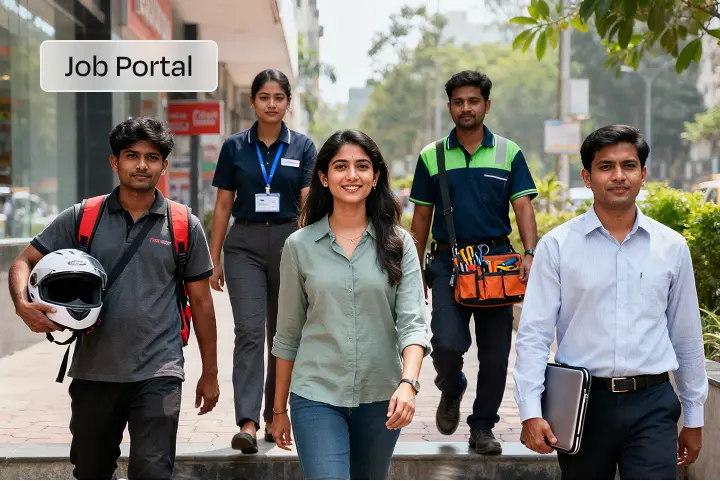
 Job Portal

"Ailoitte understood our requirements immediately and built the team we wanted. On time and budget. Highly recommend working with them for a fruitful collaboration."

Head of product, Apna
USAEduTech
My experience working with Ailoitte was highly professional and collaborative. The team was responsive, transparent, and proactive throughout the engagement. They not only executed the core requirements effectively but also contributed several valuable suggestions that strengthened the overall solution. In particular, their recommendations on architectural enhancements for voice‑recognition workflows significantly improved performance, scalability, and long‑term maintainability. They provided data entry assistance to reduce bottlenecks during implementation.

CEO, Sanskritly
IndiaFinTech
On paper, Banksathi had everything it took to make a profitable application. However, on the execution front, there were multiple loopholes - glitches in apps, modules not working, slow payment disbursement process, etc. Now to make the application as useful as it was on paper in a real world scenario, we had to take every user journey apart and identify the areas of concerns on a technical end.

CEO, Banksathi
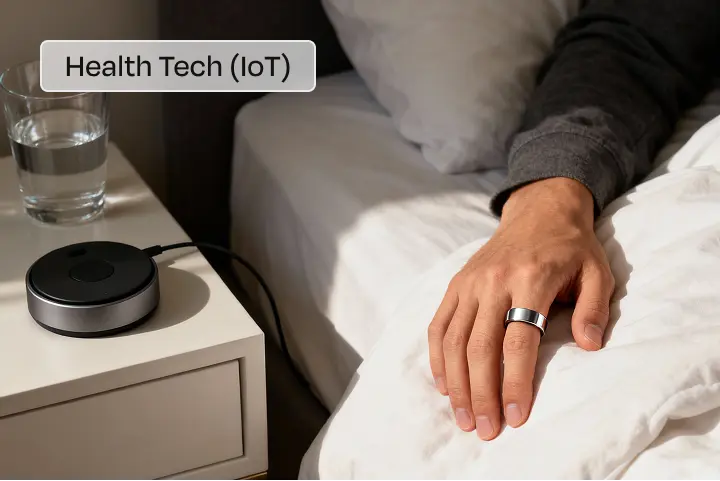
IndiaHealthTech
“Working with Ailoitte was a game-changer for us. They truly understood our vision of putting ‘Health in Your Hands’ and brought it to life through a beautifully designed, intuitive app. From user experience to performance, everything exceeded our expectations. Their team was proactive, skilled, and aligned with our mission every step of the way.”
Director, Dr.Morepen
IndiaRetailTech
“Working with Ailoitte was a game-changer. Their team brought our vision for Reveza to life with seamless AI integration and a user-friendly experience that our clients love. We've seen a clear 25% boost in in-store engagement and loyalty. They truly understood our goals and delivered beyond expectations.”
Co-Founder, Reveza
IndiaHealthTech
“Ailoitte truly understood our vision for iPatientCare. Their team delivered a user-friendly, secure, and scalable EHR platform that improved our workflows and helped us deliver better care. We’re extremely happy with the results.”

CMO, iPatientCare
IndiaEduTech
"Working with Ailoitte was a game-changer for us. They truly understood our vision of putting ‘Health in Your Hands’ and brought it to life through a beautifully designed, intuitive app. From user experience to performance, everything exceeded our expectations. Their team was proactive, skilled, and aligned with our mission every step of the way."
Director, Dr. Morepen





Response guaranteed within 12 hours.




A senior engineer will review your brief and reply within 12 hours. Want to talk sooner? Pick a time that suits you.
Book a 30-minute call