Healthcare
Most MVPs do not fail because the idea was bad. They fail because nine months went on building something nobody had tested, on a runway that was only ever twelve. Ailoitte is an MVP app development company that puts a real web or mobile product in front of real users in 4 to 14 weeks. Our MVP software development services run on a fixed scope and price agreed before the build starts, with analytics wired in so you can read the result.
Not sure you need an MVP at all? Ask first. If a landing page or a prototype answers your question for less, we will say so.
4 to 14 weeks
To a live MVP
Fixed price
Agreed before the build starts
100% IP
Yours on payment
A real product in production that users can sign up to and pay for. Not a demo, and not a clickable prototype.
Most MVPs launch within 4 to 14 weeks. We fix your timeline at scoping, once we know what the MVP has to prove.
A Launch MVP starts from $12,000, and a Growth MVP across web and mobile usually runs $20,000 to $40,000. Both are fixed at scoping.
A senior pod led by a named architect whose job includes saying no to features that do not test your idea.
We agree the success metric before the build and wire in analytics as each feature lands.
All code, accounts, designs and documents on payment, so your own team can take over without us.
MVP development builds the smallest version of a product that can prove or disprove your core assumption with real users. It is not the smallest version of your vision, and it is not a demo. It is a working product, live in production, that people can use and pay for.
The word doing the work is viable. If the product is too broken to use, a bad result tells you nothing. If it holds everything you imagined, it is not an MVP, and it will not ship in a quarter.
This matters because most startups die of the wrong product, not the wrong code. CB Insights’ 2026 review of 431 failed venture-backed startups found poor product-market fit behind 43 percent of them. Running out of money topped the list at 70 percent, but it is usually the last symptom, not the cause.
As an MVP software development company, we treat the deliverable as a decision: at the end you should know whether to scale, pivot or stop. Our MVP software development services run on senior AI Velocity Pods at a fixed price, with full IP ownership. If the idea is still fuzzy, start with Discovery for Success.
Describe the assumption you want to test. A senior architect will tell you the cheapest way to test it, even when that is not a build.
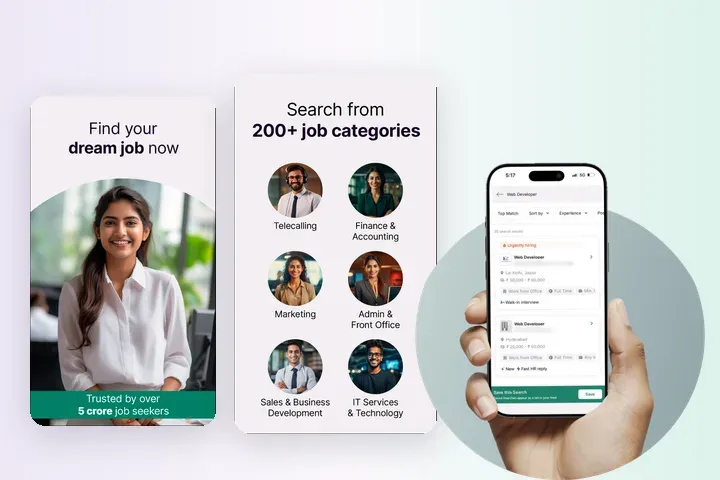
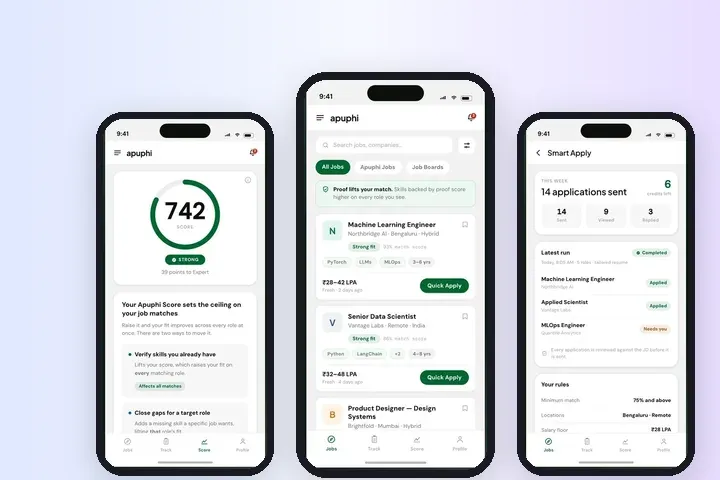
Every product below began as a focused first version with one job to prove. Apna grew into India’s frontline hiring app with 50M+ downloads. Reveza proved AI-driven loyalty could lift in-store sales, and ProtoVerify cut background checks from weeks to days. Browse all case studies.
Tell us who it is for and what has to be true. A senior architect will tell you the smallest build that proves it.
Founders on taking a first version to market with us. Every reference is signed and readable in full.
Our MVP development services cover every kind of first version we are asked to prove, from a single-flow web app to a regulated mobile build. Unsure which fits? Tell us the assumption you need to test.
As an MVP app development company, we build iOS and Android MVPs on one React Native or Flutter codebase that serves both stores.
Multi-tenant web products with sign-up, subscription billing and roles, built on a stack your future team can hire for.
MVPs where AI is the idea being tested, with an evaluation set so you know the output is good enough before users see it.
Two-sided onboarding, matching, payments and ratings, scoped so one side of the market proves itself first.
The assumption written as one testable sentence, every feature triaged, and a fixed price and date before any code.
A stalled build from another team audited, then continued or restarted, whichever is cheaper. We tell you which.
An agency paid by the hour earns more when the build runs long. We price against a fixed scope instead, so delay costs us, not you. A named architect holds the line on scope, and any change arrives as a written quote on price and date that you approve first.
An MVP that ships without analytics cannot validate anything, and it is the most common way MVP budgets are wasted. So we agree the success metric before we build, not after.
One sentence that can be proved wrong, such as "at least a third of signups finish the core action within seven days". The pass mark is agreed in writing.
Every step from signup to the first core action is tracked. You see where users drop off, not just that they do.
Weekly cohorts instead of totals, because total growth hides the fact that nobody comes back. In-product feedback shows why.
A decision meeting booked at launch, so the read happens on a date instead of drifting. See outcome-based engineering.
These get mixed up, and picking the wrong one is the most expensive mistake at this stage. Match the option to the question you still need answered.
We tell you on the first call when the answer is not a build.
| Option | What it proves, and its limits | Best for |
|---|---|---|
| Landing page or concierge test | Whether anyone wants it, in days and for very little. There is no product for users to judge. | Demand questions, before any build. |
| Clickable prototype | Whether users understand the flow, in 2 to 4 weeks. Nothing works behind the screens, and it is thrown away. | Testing a journey with users before building it. |
| Proof of concept | Whether it can be built at all, in 1 to 3 weeks. Internal only, and usually discarded. | Risky technology, AI feasibility and hard integrations. |
| No-code MVP | Live in days on Bubble, Softr or Retool. Per-user pricing and a rebuild usually follow if it works. | Standard workflows, hundreds of users, pre-funding budgets. |
| Custom MVP | A real product that becomes version one, in 4 to 14 weeks. It costs more than the options above. | Technical differentiators, regulated data and investor diligence. |
Send the assumption you need to test and who your users are. Within 12 hours a senior architect sends a starting price and a launch window.
A fixed price against a fixed scope. Delay costs us, which is why we can promise a date.
A named senior architect owns the build and says no to features that do not test your idea.
If a prototype or a landing page answers your question, we say so, even when it costs us the project.
The success metric is agreed before the build, and analytics are wired in as features land.
A standard stack, tests and documentation, so your own hires can take over cleanly.
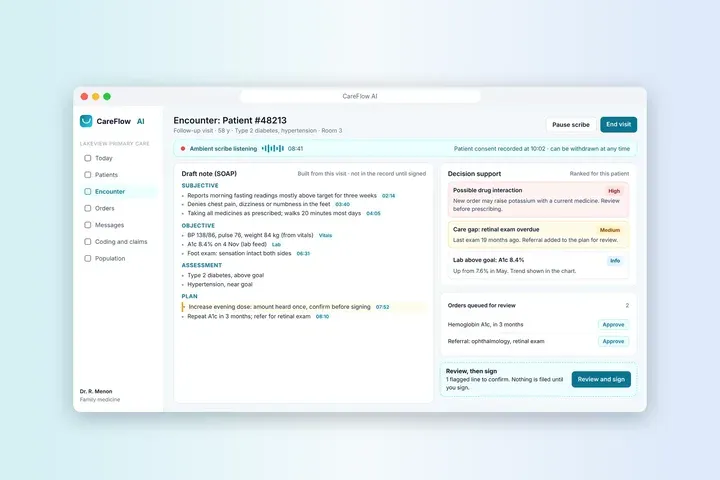
AI took close to half of all venture funding in 2025, and the MVPs founders bring us follow the money. An AI product must prove its output is worth paying for. A B2B SaaS tool must prove one team uses it every week. Fintech must earn trust through KYC and payments, healthtech must fit clinical workflows under HIPAA, and a marketplace must get one side to show up first. For several of these we start from our accelerators, which saves weeks of groundwork.
These MVPs need compliance groundwork from day one. We will show you what our accelerators already cover.
Your timeline is set at scoping, once we know what the MVP has to prove, and most launches land within 4 to 14 weeks. Delivery runs on Clarity, our delivery framework, with working software every week.
A mutual NDA first. Your assumption is written as one testable sentence, every feature is marked in, cut or version two, and the fixed price and date are agreed.
The core flow is prototyped and tested with users, and the architecture is chosen with version two in mind. The analytics plan and CI pipeline are set up too.
Weekly demos of working software, automated testing on every commit, and analytics wired in as each feature lands.
Web or app store launch, with monitoring and error tracking live. Apple reviews most apps within a day, but a new personal Google Play account needs a 14-day closed test first, so we plan for it.
A decision meeting on a set date: the metric against the agreed pass mark, and an honest call on scale, pivot or stop. Support after launch.
We build on what startups hire for today, not what impresses other engineers. TypeScript became the most used language on GitHub in August 2025. So most of our MVPs run on Next.js and React with TypeScript, with React Native or Flutter on mobile. Supabase and PostgreSQL cover the back end, Stripe takes payments, and Claude or OpenAI power the AI features. Where they fit, we also use Tailwind, FastAPI, Firebase, Vercel, AWS, Google Cloud, PostHog and Sentry.
MVP development cost starts from $12,000 for a Launch MVP: one platform, one core flow, analytics and launch. A Growth MVP across web and mobile, with payments, roles and integrations, usually runs $20,000 to $40,000. AI MVPs start from $17,000.
That sits at the low end of the market. TeaCode’s 2026 agency guide puts a custom-coded MVP at $15,000 to $50,000. The gap comes from how we build, not what we leave out. An AI Velocity Pod of senior engineers uses AI tooling inside fixed rules, and a person reviews every line before it merges. Testing, documents and full IP stay in.
Quick launch is the strategy. We ship the smallest version on one platform first, read the numbers, then spend the rest of your budget on what users actually pulled on.
The price is fixed at scoping and only moves if you change the scope. Hosting, third-party fees, app store accounts and AI running costs sit outside it and are listed in the proposal. Support after launch sits under application maintenance.
Web only, or web plus both app stores. The easiest place to halve an MVP budget.
Taking a payment is simple. Payouts, refunds and split payments are not.
Each outside system adds its own contract, failure modes and testing.
HIPAA, GDPR or financial rules add controls and documents from day one.
AI adds evaluation work and running costs, so it goes in only when it is the idea being tested.
Starting from one of our accelerators saves weeks of groundwork on common foundations.
Choose by how much technical leadership you already have. Every route delivers the same MVP software development services, with senior engineers and a written overlap of at least four hours with your working day.
We own the outcome end to end: fixed scope, price and launch date, weekly demos and direct access to engineers. See AI Velocity Pods.
For founders without an in-house tech team.
A committed senior team for version two and beyond. You set priorities, we manage the team. See startup app development.
For a longer partnership after the MVP.
Hire MVP developers who fill a named gap in your team and work to your standards. Hire dedicated developers.
For teams missing one skill or some capacity.
Cutting scope is not building a worse product. It is building the same product in a different order, so the parts that answer your question arrive first.
The single journey your assumption depends on, with sign-up and the data model behind it.
Tracking to read activation and retention, and onboarding clear enough that a no means no, not confusion.
If the question is whether people will pay, they need a way to pay. Otherwise payments wait.
A spreadsheet or database tool covers admin at first. Settings nobody has asked for can wait.
Launch where your users already are. Web or one app store usually answers the question.
More user roles and translations come after one market works for one kind of user.
Send your feature list. A senior architect will mark each item in, cut or version two.
We build MVPs for startup founders across the USA, UK, UAE, Australia, Canada and Europe. US clients contract with Ailoitte LLC, a Delaware entity. Every statement of work sets a written overlap of at least four hours with your working day. Named escalation contacts mean time zones never hold up a decision.
Before you share any data, check us out: meet the team, see our awards, and read our ISO 27001 and ISO 9001 certificates.
Headquarters and engineering hub.
L-148, 5th Main Road, Sector 6, HSR Layout, Bengaluru, Karnataka 560102
Our United States entity, for clients in North America.
8 The Green, STE R, Dover, Delaware - 19901
MVP development services build the smallest version of a product that can prove or disprove your core assumption with real users. The result is a working product in production, not a prototype or a slide deck. The work covers defining the assumption, cutting features, design, build, analytics, launch and a documented handover.
A proof of concept asks whether something can be built. A prototype asks whether users understand a flow. An MVP asks whether they will adopt it and pay for it. Only the MVP is real software in the hands of real customers, and only the MVP usually becomes version one. See the full comparison.
Usually 4 to 14 weeks. We fix your timeline at scoping, once we know what the MVP has to prove. A Launch MVP on one platform sits at the short end, and web plus mobile with payments at the long end. If a quote runs much longer, ask what is being built, because it is probably not an MVP.
A Launch MVP on one platform generally starts from $12,000. A Growth MVP across web and mobile usually runs $20,000 to $40,000, and AI MVPs start from $17,000. The price is fixed at scoping and only moves if you change the scope.
Only what the assumption needs. That means the one core flow, sign-up and the data model behind it, payments if revenue is the test, and analytics to read the result. Admin panels, settings, extra roles, translations and a second platform can wait.
Production-ready. We use a standard stack with tests, CI, infrastructure as code and documentation, so the MVP becomes the base for version two. A throwaway build is cheaper this quarter and dearer the next. When a disposable experiment is the right call, we say so and scope it that way.
Sometimes, yes. No-code suits a demand test with standard workflows, a few hundred users and a tight pre-funding budget. Build custom when your edge is technical, you handle regulated data, or investors will review the code. A no-code MVP that works often needs a rebuild just when you are busiest, so choose it knowingly.
Yes. As an MVP app development company, we build iOS and Android MVPs, usually in React Native or Flutter so one codebase serves both. A new personal Google Play account must run a 14-day closed test with 12 testers before launch. We plan for it, or publish under your company account. See mobile app development.
Because you defined success before we built it. We agree the metric and the pass mark in writing, then track signup to first core action, drop-off at each step and weekly retention cohorts. On a date fixed at launch, the numbers are read against the pass mark.
One of three things, and all three are fine. Scale, if the assumption held, usually with a standing pod for version two. Pivot, if users showed you a different problem. Or stop, if the idea failed and the MVP saved you a year and most of a budget.
Because investors check it during diligence, and a gap is expensive to fix later. You own the source code, cloud and app store accounts, designs and documents on payment, with contractor agreements in order. Read how our IP protection works.
No. We work on a fixed fee, so there is no equity to negotiate and no conflict of interest. We also do not build competing products in your space while we work with you. A mutual NDA is signed before you share your idea.
Not always, and we would rather say so. If a landing page, a manual concierge service or a clickable prototype can test the idea, do that first for a fraction of the cost. Discovery for Success exists to make that call, and you keep the output either way.
In the way that matters, yes. Investors respond to working products with real usage data and clean IP more than to polished prototypes. That data has to arrive within your runway: Carta found the median gap from seed to Series A was 774 days in late 2024.
Only if AI is the idea being tested. If the product’s value depends on an AI capability, it goes in, with an evaluation set to prove the output is good enough. If AI is a nice extra, it waits, because it adds cost, delay and testing. See AI development.
A named architect owns the scope, and every change is priced in writing before it is built. You approve or decline each change with its effect on price and date in front of you. New priorities join the next sprint instead of stopping the current one, so the date never slips quietly.
Yes. We start with a short audit of the code, tests and documents. Then we tell you whether finishing or restarting is cheaper, including when the answer is restart. Where the code is in reasonable shape, onboarding takes one to two weeks.
Yes, and most of our founders are. The fixed-price MVP pod includes a senior architect and a product lead, so you do not need a CTO or product manager to start. You make the product calls. We turn them into scope, explain trade-offs in plain language and demo working software every week.
Yes, by design. You get a standard stack, architecture decision records, tests, infrastructure as code and a handover session. Many founders hire their own team once funding lands, and the handover should be a non-event.
Ask four questions: is the price fixed, who holds the line on scope, how will we know it worked, and do we own everything? Then ask when they last told a client not to build. A partner that never says no is selling hours, not answers. The cheapest quote is often the most expensive route, because rework and a missed window are not free.
Look for four things. Speed: a first version in weeks, not months. We ship in 4 to 14 weeks. Price certainty: a fixed scope and price before the build starts, not an hourly estimate. Proof: live products with named clients, so check their case studies. And honesty: a team that will tell you when a landing page or prototype answers your question for less. Also ask who owns the code. With Ailoitte you keep full IP ownership from day one.
Ours cover the full path from idea to live product: a short discovery phase to fix scope, product design, development for web or mobile, testing, app store launch and analytics wired in from the start. Analytics matters most, because the point of an MVP is to learn what users actually do. After launch we can keep improving it under an app maintenance plan.
A general agency builds what you specify, usually billed by the hour, and success means delivering every feature. An MVP software development company builds the smallest product that proves or disproves your idea, then measures the result. That means cutting scope hard, launching in weeks and choosing tools you can scale later, such as Flutter for one codebase on both platforms. When the MVP works, we can grow it into a full product, or you can extend your team with dedicated developers.
Send it with a line about your users, and a senior architect will reply, usually the same day.
Tell us the assumption you need to test and who your users are. A senior architect will scope it, fix the price, give you a launch date, and tell you if a cheaper test would do. That is what an MVP development company should settle before it writes code.
Loading available times…
Information Security
Management System
Quality Management
System
Response guaranteed within 12 hours.


A senior engineer will review your brief and reply within 12 hours. Want to talk sooner? Pick a time that suits you.
Book a 30-minute call