




Uniting payors, providers, and pharmacies for seamless care.
53M+
Members supported
100%
Compliance Rate
- Strategy
- Web
- App
Ailoitte is a global web application development company. We build SaaS products, customer portals and internal platforms that load fast in any browser, connect to the systems you already run, and grow without a rebuild. You get one fixed price and a launch date before any code is written.
Not sure if you need a web app, a mobile app or both? Ask first. We will tell you where to start.
Core Web Vitals passed
A release gate, not a goal
Your cloud, your code
AWS, Azure or Google Cloud
SSO, roles, audit trails
Enterprise-ready from day one
Our web application development services cover discovery, architecture, UX, front end, back end, testing, cloud deployment and maintenance.
A focused SaaS MVP or portal typically goes live in 6 to 10 weeks. Larger platforms take 3 to 5 months, and you get the date before you sign.
Most builds cost $15,000 to $90,000, quoted as one fixed price. Enterprise scope with SSO and legacy integration is priced after discovery.
A named senior architect leads your custom web application development, with a small pod of front-end, back-end and QA engineers.
If users log in, enter data or run transactions, you need a web application. If they only read, a website will do for far less.
The source code, infrastructure scripts, cloud accounts and documentation, all in your name from the first sprint.
Web application development services cover the strategy, architecture, design, development, testing, deployment and maintenance of software that runs in a browser. People log in, enter data, run transactions and see results built for them. That is what separates a web application from a website, which mostly presents content to read.
A web app reaches every laptop, tablet and phone from one codebase and one address. Nobody installs anything, there is no app store review, and every user gets your update the moment you ship it. Public pages can also rank in Google, which an installed app cannot.
The screens are rarely the hard part. The architecture underneath is. How does each customer’s data stay separate? How does the app talk to your ERP or CRM? What happens when a thousand people sign in at once? We settle those questions before feature work starts, because they cost the most to change later.
In custom web application development, the software is shaped around how your business already works instead of forcing your team into someone else’s process. That holds whether you need a lean SaaS product or enterprise software, and you keep full IP ownership either way.
Describe what your users need to do. We will recommend where to start and put the reasoning in writing.
These browser platforms run at real scale. AssureCare connects 53M+ members with payors, providers and pharmacies. Lifelong sells across 10,000+ pin codes, and ProtoVerify clears background checks in days instead of weeks. Judge any web application development company on work like this, ours included. Browse the full portfolio or every published case study.
Tell us the users, the workflows and the systems it must connect to. A senior architect will tell you what it takes.
Product and technology leaders on working with our web engineers, in their own words. Every reference is signed and can be read in full.



Founder & CEO @Mana
It's fair to say that we didn't just find a development company, but we found a team and that feeling for us is a bit unique. The experience we have here is on a whole new level.


Head Of Product, Apna
We brought Ailoitte in when what we had was an idea rather than a product, and they built the first version from scratch. They understood our requirements immediately and built the team we wanted, on time and on budget. Ailoitte was never a one-project supplier for us. We kept them.


Product Leader, Quantiphi Inc · Boston

Ailoitte helped us ship our MVP in record time, and the launch was a success. Sunil was personally involved throughout to keep execution smooth. What impresses me most is that the team operates as an extension of our own.


Director, Dr. Morepen
They truly understood our vision of putting 'Health in Your Hands' and brought it to life through a beautifully designed, intuitive app. Their team was skilled and aligned with our mission every step of the way.


CEO, Banksathi
We had a concept and no product. Ailoitte built it from the first MVP through to the version that found its market. We ran the engagement on a time-and-materials basis, with their engineers working inside our team rather than at arm's length. Their commitment to quality and attention to detail truly set them apart.


Founder & CEO, OpenFactor Technology Group · Johannesburg
We came to Ailoitte with a capacity and skills problem, not an idea problem. Six of their people delivered our digital lending marketplace, the web portal and both mobile apps, to specification. I would rate them eight out of ten on project performance, and we are on our third project with them.


Head of Operations, Koovs.com, at the time of the engagement
I have worked in ecommerce for fourteen years and this was my first seamless experience with a technology team. They built our iOS and Android app and replaced the old one, confirming every milestone without us ever having to chase.


Lead Product Manager, LinkOMed · United Kingdom
Ailoitte were the driving force behind the success of LinkOMed's MVP launch. Their dedication and teamwork were truly remarkable, and I was grateful to witness the seamless collaboration that overcame every challenge during development.


Co-Founder & CEO, Tripeers Tech · Mangaluru
They did not simply build to the specification. Where they disagreed with our technology choices they proposed alternatives with sound reasoning, which we accepted. Commitments were kept almost every time, and where the team hit a blocker they raised it rather than working around it quietly. A great technology partner, and I would recommend them.


Founder & CEO, AI Innovations Hub
Over six months they produced the site, the tools database with search and filtering, user accounts, a CMS with training for our team, SEO and analytics. What stood out was that nobody behaved like a contractor. When we hit problems they would contact third-party support services on our behalf to get things resolved.


CEO, Sanskritly
They executed the core requirements effectively and contributed several valuable suggestions that strengthened the overall solution. Their recommendations on architecture for our voice recognition workflows improved performance, scalability and long-term maintainability.


Co-Founder, Reveza
Their team delivered seamless AI integration and a user-friendly experience that our clients love. We've seen a clear 25% boost in in-store engagement and loyalty.


Co-Founder & CEO, SupDup
A referral brought us to Ailoitte after we had evaluated around five firms. The project started with workshops that gave them a clear view of what we wanted to achieve. Their project management and team spirit are outstanding.
End-to-end web application development services, from architecture and design through launch and scale, for products you sell and systems you run. Not sure which kind of platform you need? Describe the problem and we will tell you.

Multi-tenant architecture, subscription billing, usage metering and admin tooling for a product you can sell.

SSO, role-based access, audit trails and ERP or CRM integration, built for scale and governance from day one.

Shaped around how your teams already work instead of a template, with your integrations, design system and security rules.

Customer, partner, vendor, patient and employee portals with secure sign-in, role-based views and self-service workflows.

Offline access, push notifications and home-screen install, with app-like speed on weak mobile networks.

Serverless functions and containers on auto-scaling infrastructure that grows with your user base.
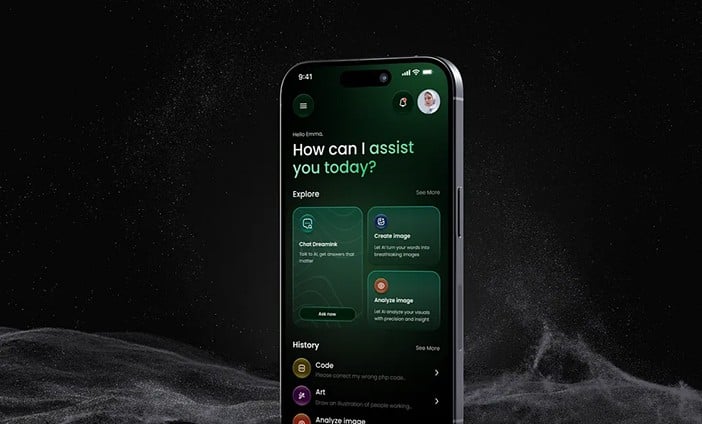
Our AI web application development puts AI inside how we architect, code and test from the first day, not bolted on at the end. Senior engineers stay in control of every commit, so you get the speed without a fragile codebase.
AI drafts much of the routine TypeScript on a web platform. These four steps are how that becomes an earlier launch rather than code nobody wants to maintain.
Module boundaries, data models and tenant isolation are set first and enforced by automated checks, so AI-written code cannot drift outside them.
AI drafts typed front-end and back-end code inside a rules firewall that blocks invented packages and scans every change for leaked secrets.
Unit, integration and end-to-end suites run on each change, alongside OWASP vulnerability scans and page speed budgets.
A senior engineer approves architecture, security and performance before anything reaches production, and that name is in your contract.
Off-the-shelf software is the right answer more often than agencies admit. Here is how the two compare, so you can decide on the facts. Need more hands on a product you already run? Hire dedicated developers.
Compared on the five things that decide whether custom pays off.
| On | Off-the-shelf platform | Custom web application |
|---|---|---|
| Feature fit | You bend your process to the tool and pay for modules nobody uses. | Features that match how your business works, and nothing you do not need. |
| Cost over time | Per-seat licences rise every time your team or customer base grows. | A one-time build, then maintenance. Usually cheaper once you reach scale. |
| Integrations | Only what the vendor supports, often through paid connectors. | Any system you run, connected directly through its API. |
| Data and IP | Your data lives on the vendor's platform, with limits on export. | You own the code, the data and the IP outright. |
| Best for | Standard jobs like payroll, email or a basic CRM, where the tool already fits. | Workflows that set you apart, products you sell, and anything licences make costly at scale. |
Tell us who will use it, what they need to do and which systems it must talk to. Within 12 hours a senior architect sends a fixed price, a scope and a launch date.
Every build is led by a named senior architect who owns the data model, the security and the plan for growth.
TypeScript across front end and back end, so the compiler catches broken contracts before your users do.
OWASP checks on every commit and data encrypted in transit and at rest, under our ISO 27001 certified process.
Deployed to your own AWS, Azure or Google Cloud account, with the code in your repository from the first sprint. No lock-in.
If an off-the-shelf tool already fits your process, we will say so before you spend anything on a build.
A patient portal and a warehouse dashboard fail in different ways. Healthcare needs HIPAA audit trails and HL7 or FHIR integration. Fintech needs PCI DSS scope and records nobody can quietly edit. Logistics needs live tracking across thousands of shipments. These are the sectors where, as a web application development company, we carry the heaviest load.
Tell us who the users are and the rules you work under. We will tell you what the platform needs.
Every stage ends with something you can see and sign off. Delivery runs on Clarity, our delivery framework, with a working demo of the platform every week.
Users, workflows and integrations mapped, then an architecture and a costed plan. About discovery.
UX flows, a design system and clickable prototypes tested with real users. UI and UX design.
Senior-led, AI-assisted development in two-week sprints, with a demo at the end of each one.
Automated suites, OWASP security scans and Core Web Vitals checks on every release.
CI/CD pipelines into your own cloud, then maintenance and new features on a steady cadence.
React, Next.js and TypeScript on the front end, Node.js, Python, Go and .NET behind them, PostgreSQL, MongoDB and Redis for data, shipped in Docker and Kubernetes to AWS, Azure or Google Cloud.


Web application development typically costs from about $15,000 to $90,000. A focused SaaS MVP or portal runs $15,000 to $40,000 over 6 to 10 weeks. A multi-tenant platform with integrations and reporting runs $40,000 to $90,000 over 3 to 5 months. Enterprise web application development, with SSO, audit trails and legacy integration, is priced after discovery.
The screens are rarely what drives the price. Back-end logic and integrations usually take the largest share of the effort, often around 40 percent. So a clear list of the systems you need connected is the fastest route to an accurate quote.
Six factors set a web app price, and most projects only trigger a few of them. Running costs after launch sit under application maintenance.
Each extra role, workflow and admin screen adds design and build effort.
A few modern APIs are quick. ERP, mainframe or older in-house systems add real work.
Selling one platform to many customers needs tenant isolation and billing built in.
SOC 2, HIPAA, PCI DSS or GDPR scope adds controls, audit logs and documentation.
RAG search, copilots and data pipelines add architecture and evaluation work.
Budget 15 to 20 percent of the build cost a year for framework updates, security patches and cloud costs.
Pick the one that matches how clear your scope is today. As a web app development company, we give each one the same senior team and the same code ownership.
A senior pod ships a production-ready platform on a fixed scope and a fixed date, deployed into your cloud account.
For a defined scope and a firm budget.
Senior engineers who join your stand-ups and work only on your roadmap. Hire Node.js, Angular or Python developers, or a full dedicated team.
For a product whose roadmap changes every sprint.
A paid discovery that produces the spec, architecture and costed plan, or an architecture review of the platform you already run.
For ideas that need testing, or systems that need a second opinion.
Beyond how we build, this is the intelligence we put inside the product itself, each feature grounded in your own data.
Answers grounded in your own documents and records, so users find things without hunting.
Conversational help and guided actions inside the interface, tuned to your domain.
Churn, risk, demand and lead scores shown on the screen where the decision is made.
Contracts, forms and invoices read, sorted and summarised at scale.
Agents that handle the routine steps and pass exceptions to a person.
Image and document processing built into your upload and review flows.
Some pay back within weeks, others never do. In 30 minutes we will tell you which is which for your platform.
We deliver web application development services to clients across the USA, UK, UAE, Australia, Canada and Europe. Each market has its own rules on where data may be stored, how payments are taken and which privacy notices users must see. We plan hosting regions and consent flows around them from the first sprint.
Want to check us first? Meet the team, see our awards, and read our ISO 27001 and ISO 9001 certificates.

Headquarters, and home to our in-house architects, web engineers and QA team.

L-148, 5th Main Road, Sector 6, HSR Layout, Bengaluru, Karnataka 560102

Our US entity, for contracts, invoicing and support during North American hours.
8 The Green, STE R, Dover, DE 19901
Web application development services cover the strategy, architecture, design, development, testing, deployment and maintenance of software that runs in a browser. That includes SaaS products, customer portals, internal business tools and data dashboards. As a web application development company, we deliver them AI-native: AI speeds up coding and testing while senior architects own the design and security.
A website mainly presents content to read, while a web application lets people do things: sign in, enter data, run transactions and get results made for them. Websites are mostly the same for every visitor. Web applications remember who you are and sit on a database and business logic, which is why they cost more to build.
Most web applications we build cost between $15,000 and $90,000. A focused MVP or portal sits at the low end, and a multi-tenant platform with integrations sits at the high end. Enterprise platforms are priced after discovery. You get one fixed price before work starts.
A focused SaaS MVP or portal typically launches in 6 to 10 weeks, and a larger platform in 3 to 5 months. Links to older systems and compliance reviews are the usual reasons a timeline grows. We flag both in the first week, so the date you sign is the date you get.
AI web application development builds AI into how the platform is designed, coded and tested from the first day, instead of adding it at the end. AI drafts typed code inside strict architecture rules, automated tests and security scans run on every commit, and a senior architect approves each release. It can also mean AI features inside the product, such as search that answers questions.
Multi-tenant SaaS products, customer and partner portals, internal business tools, admin dashboards, marketplaces, eCommerce platforms and analytics apps. Most of our work is either a product the client sells or a system their teams use every day. See the portfolio for examples.
Yes. Enterprise web application development is a large part of our work: SSO, role-based access, audit logs, multi-region hosting and ERP or CRM integration. We plan for the approvals, data rules and security reviews that large organisations need. More on our enterprise software development page.
Yes. We keep each customer’s data separate at the database and access layers, and build in subscription billing, usage metering and admin tooling. The platform can then grow tenant by tenant without a rebuild. Our SaaS app development page covers the product side in more depth.
Buy when your process is standard and a tool already fits it. Build custom when the tool forces you to change how you work, licence fees keep climbing, or the software itself is your edge. Custom web application development usually costs less over the life of the system once you reach scale. We will tell you plainly which side you are on.
Most products should start as a modular monolith, one deployable app with clean internal boundaries, then split out services only where scale or team size demands it. Starting with microservices too early adds hosting cost and operational work without a real benefit. We recommend the architecture during discovery.
A web portal is a type of web application that gives one group of people a single, personal place to reach information and services after they sign in. Customers, vendors, patients or employees each see their own view, pulled from your back-end systems. A public site, by contrast, shows the same content to everyone.
Yes. A progressive web app behaves like an installed app: it works offline, sits on the home screen and sends push notifications. It still opens from a normal link. It can also be found in search engines, which makes it a strong choice when reach matters more than deep access to phone hardware.
Start with the web when your users work at a desk, when you sell to businesses, or when you need search traffic. Start with mobile when people use the product on the move, several times a day, or need the camera and sensors. Many clients launch on the web first and add mobile apps once the product is proven.
React, Next.js and TypeScript on the front end, with Node.js, Python, Go or .NET on the back end. Data sits in PostgreSQL, MySQL, MongoDB or Redis, and everything ships through Docker and Kubernetes to AWS, Azure or Google Cloud. We choose per project, not by habit, and explain the choice in writing.
Yes. We audit the codebase first, then modernise in stages, replacing the weakest layers and moving to a current framework while the platform stays live. You keep your product, your data and your users throughout. For a second opinion before you decide, start with an architecture review.
Yes. We plan the migration, move data and services in stages and cut over without unplanned downtime. A simple application typically moves in 2 to 3 months, while larger platforms take longer. See our cloud application development services.
Security is built in from the first sprint: OWASP checks on every commit, encryption in transit and at rest, and role-based access with audit logs. Ailoitte holds ISO 27001 and ISO 9001 certification, and we build client platforms to SOC 2, HIPAA, GDPR, PCI DSS and WCAG where they apply. More on our security and compliance page.
We ship releases every 2 to 3 weeks and fix urgent issues within 1 to 2 days. Support is tiered across usage questions, configuration and code-level fixes, with warranty terms agreed per project. Ongoing application maintenance is optional.
Healthcare, fintech and banking, retail and eCommerce, logistics, education, real estate, manufacturing and SaaS companies. As a web app development company we see the most demand from healthcare, fintech, retail and logistics. Browse every sector we serve.
Send it with a line about what you are building and a web architect will reply, usually the same day.
Describe your users, your workflows and the systems it must connect to. We come back with an architecture, one fixed price and a launch date. Good custom web application development starts with honesty, so if an off-the-shelf tool fits, you hear it from us first.
Loading available times…

Information Security
Management System

Quality Management
System
Information Security
Management System
Quality Management
System
 India
 Job Portal

"Ailoitte understood our requirements immediately and built the team we wanted. On time and budget. Highly recommend working with them for a fruitful collaboration."
Head of product, Apna
USAEduTech
My experience working with Ailoitte was highly professional and collaborative. The team was responsive, transparent, and proactive throughout the engagement. They not only executed the core requirements effectively but also contributed several valuable suggestions that strengthened the overall solution. In particular, their recommendations on architectural enhancements for voice‑recognition workflows significantly improved performance, scalability, and long‑term maintainability. They provided data entry assistance to reduce bottlenecks during implementation.
CEO, Sanskritly
IndiaFinTech
On paper, Banksathi had everything it took to make a profitable application. However, on the execution front, there were multiple loopholes - glitches in apps, modules not working, slow payment disbursement process, etc. Now to make the application as useful as it was on paper in a real world scenario, we had to take every user journey apart and identify the areas of concerns on a technical end.
CEO, Banksathi
IndiaHealthTech
“Working with Ailoitte was a game-changer for us. They truly understood our vision of putting ‘Health in Your Hands’ and brought it to life through a beautifully designed, intuitive app. From user experience to performance, everything exceeded our expectations. Their team was proactive, skilled, and aligned with our mission every step of the way.”
Director, Dr.Morepen
IndiaRetailTech
“Working with Ailoitte was a game-changer. Their team brought our vision for Reveza to life with seamless AI integration and a user-friendly experience that our clients love. We've seen a clear 25% boost in in-store engagement and loyalty. They truly understood our goals and delivered beyond expectations.”
Co-Founder, Reveza
IndiaHealthTech
“Ailoitte truly understood our vision for iPatientCare. Their team delivered a user-friendly, secure, and scalable EHR platform that improved our workflows and helped us deliver better care. We’re extremely happy with the results.”

CMO, iPatientCare
IndiaEduTech
"Working with Ailoitte was a game-changer for us. They truly understood our vision of putting ‘Health in Your Hands’ and brought it to life through a beautifully designed, intuitive app. From user experience to performance, everything exceeded our expectations. Their team was proactive, skilled, and aligned with our mission every step of the way."
Director, Dr. Morepen





You have a Vision, we are here to help you Achieve it!

It's fair to say that we didn't just find a development company, but we found a team and that feeling for us is a bit unique. The experience we have here is on a whole new level.

Founder & CEO, Mana
We came to Ailoitte with a capacity and skills problem, not an idea problem. Six of their people delivered our digital lending marketplace, the web portal and both mobile apps, to specification. I would rate them eight out of ten on project performance, and we are on our third project with them.

Founder & CEO, OpenFactor Technology Group
We brought Ailoitte in when what we had was an idea rather than a product, and they built the first version from scratch. They understood our requirements immediately and built the team we wanted, on time and on budget. Ailoitte was never a one-project supplier for us. We kept them.

Head of Product, Apna
We had a concept and no product. Ailoitte built it from the first MVP through to the version that found its market. We ran the engagement on a time-and-materials basis, with their engineers working inside our team rather than at arm's length. Their commitment to quality and attention to detail truly set them apart.

CEO, Banksathi
They truly understood our vision of putting 'Health in Your Hands' and brought it to life through a beautifully designed, intuitive app. Their team was skilled and aligned with our mission every step of the way.

Director, Dr. Morepen
They executed the core requirements effectively and contributed several valuable suggestions that strengthened the overall solution. Their recommendations on architecture for our voice recognition workflows improved performance, scalability and long-term maintainability.

CEO, Sanskritly






Your idea is 100% protected by our Non-Disclosure Agreement.




You have a Vision, we are here to help you Achieve it!
It's fair to say that we didn't just find a development company, but we found a team and that feeling for us is a bit unique. The experience we have here is on a whole new level.
Founder & CEO, Mana
We came to Ailoitte with a capacity and skills problem, not an idea problem. Six of their people delivered our digital lending marketplace, the web portal and both mobile apps, to specification. I would rate them eight out of ten on project performance, and we are on our third project with them.
Founder & CEO, OpenFactor Technology Group
We brought Ailoitte in when what we had was an idea rather than a product, and they built the first version from scratch. They understood our requirements immediately and built the team we wanted, on time and on budget. Ailoitte was never a one-project supplier for us. We kept them.
Head of Product, Apna
We had a concept and no product. Ailoitte built it from the first MVP through to the version that found its market. We ran the engagement on a time-and-materials basis, with their engineers working inside our team rather than at arm's length. Their commitment to quality and attention to detail truly set them apart.
CEO, Banksathi
They truly understood our vision of putting 'Health in Your Hands' and brought it to life through a beautifully designed, intuitive app. Their team was skilled and aligned with our mission every step of the way.
Director, Dr. Morepen
They executed the core requirements effectively and contributed several valuable suggestions that strengthened the overall solution. Their recommendations on architecture for our voice recognition workflows improved performance, scalability and long-term maintainability.
CEO, Sanskritly
Your idea is 100% protected by our Non-Disclosure Agreement.