


Uniting payors, providers, and pharmacies for seamless care.
53M+
Members supported
100%
Compliance Rate
- Strategy
- Web
- App
Most GenAI pilots do not fail on the model. They fail when no one can say where an answer came from, what it costs, or who owns it when accuracy drifts. Ailoitte is a generative AI development company that builds RAG pipelines, AI agents and LLM products grounded in your own content, live in as little as 4 weeks.
Not sure GenAI is the right tool? Ask first. If your data is thin or the task is fully rule-based, we will tell you to save your budget.
4 weeks
To a live RAG pilot
Cited answers
Grounded in your own content
Any model
Claude, GPT, Gemini, Llama
Our generative AI development services cover RAG pipelines, AI agents and copilots, LLM apps, document intelligence and private LLM hosting.
A focused RAG pilot can be live in about 4 weeks. Production products with agents and integrations take 4 to 8 weeks.
GenAI builds generally start from $17,000, and single-workflow agentic automation from $8,000. The fixed figure follows discovery.
A named senior architect with retrieval, LLM and platform engineers. No junior bench on your production system.
Claude, GPT, Gemini, Llama, Mistral or DeepSeek, routed by task behind one layer, so you can switch on cost or quality.
Code, prompts, retrieval pipelines and evaluation sets. Prompts and evals are the real asset, and they are yours.

Sunil Kumar 
Generative AI development is building production software on large language models and other generative models. The system produces text, code, images or structured decisions grounded in your own data. It is software engineering with a probabilistic part, not a research project.
The demo is the easy half. The hard half is everything around the model. Retrieval grounds every answer in your content. Evaluations prove accuracy. Guardrails catch bad output before users see it, tracing shows what the system did, and cost controls keep inference spend predictable. That is the gap between a prototype and a product.
GenAI is usually a good fit in four situations. Your knowledge is hard to search. Support teams answer the same questions all day. Documents are still read and re-keyed by hand. Or a promising prototype has stalled. If none of those sound familiar, we will tell you to keep your budget.
We deliver generative AI development solutions on a fixed scope and price, with a named architect, weekly demos and full IP ownership. Generative AI is one branch of our wider AI development services, alongside machine learning and computer vision.
Our readiness check looks at quality, coverage and access rights, then tells you to proceed, fix the data first or drop the idea.
The fair test of a gen AI development company is what its systems do with real users. Our clinical documentation assistant turns consultations into EMR notes at 99.2% medical accuracy, handing each doctor 12+ hours a week back. Our multimodal RAG turns a whole knowledge base into a conversation, and Sanskritly builds language intelligence into learning. Every measured result sits on our ROI case studies page.
Send us what you have. We will tell you what production needs, from retrieval to evals, and how long it takes.
Product leaders on working with our GenAI, data and platform engineers. Each reference is signed and readable in full.


Founder & CEO @Mana
It's fair to say that we didn't just find a development company, but we found a team and that feeling for us is a bit unique. The experience we have here is on a whole new level.


Co-founders @Apuphi
Dependable, reliable and fast. There will always be bugs, but what matters is how fast the team resolves them. When universities asked for a pilot, Ailoitte sorted out the features we needed in 7 or 8 hours, and the officials approved it the next day.


Head Of Product, Apna
We brought Ailoitte in when what we had was an idea rather than a product, and they built the first version from scratch. They understood our requirements immediately and built the team we wanted, on time and on budget. Ailoitte was never a one-project supplier for us. We kept them.


Product Leader, Quantiphi Inc · Boston

Ailoitte helped us ship our MVP in record time, and the launch was a success. Sunil was personally involved throughout to keep execution smooth. What impresses me most is that the team operates as an extension of our own.


Manager @ Dr. Morepen
They truly understood our vision of putting 'Health in Your Hands' and brought it to life through a beautifully designed, intuitive app. Their team was skilled and aligned with our mission every step of the way.


CEO, Banksathi
We had a concept and no product. Ailoitte built it from the first MVP through to the version that found its market. We ran the engagement on a time-and-materials basis, with their engineers working inside our team rather than at arm's length. Their commitment to quality and attention to detail truly set them apart.


Founder & CEO, OpenFactor Technology Group · Johannesburg
We came to Ailoitte with a capacity and skills problem, not an idea problem. Six of their people delivered our digital lending marketplace, the web portal and both mobile apps, to specification. I would rate them eight out of ten on project performance, and we are on our third project with them.


Head of Operations, Koovs.com, at the time of the engagement
I have worked in ecommerce for fourteen years and this was my first seamless experience with a technology team. They built our iOS and Android app and replaced the old one, confirming every milestone without us ever having to chase.


Lead Product Manager, LinkOMed · United Kingdom
Ailoitte were the driving force behind the success of LinkOMed's MVP launch. Their dedication and teamwork were truly remarkable, and I was grateful to witness the seamless collaboration that overcame every challenge during development.


Co-Founder & CEO, Tripeers Tech · Mangaluru
They did not simply build to the specification. Where they disagreed with our technology choices they proposed alternatives with sound reasoning, which we accepted. Commitments were kept almost every time, and where the team hit a blocker they raised it rather than working around it quietly. A great technology partner, and I would recommend them.


Founder & CEO, AI Innovations Hub
Over six months they produced the site, the tools database with search and filtering, user accounts, a CMS with training for our team, SEO and analytics. What stood out was that nobody behaved like a contractor. When we hit problems they would contact third-party support services on our behalf to get things resolved.


CEO, Sanskritly
They executed the core requirements effectively and contributed several valuable suggestions that strengthened the overall solution. Their recommendations on architecture for our voice recognition workflows improved performance, scalability and long-term maintainability.


Co-Founder, Reveza
Their team delivered seamless AI integration and a user-friendly experience that our clients love. We've seen a clear 25% boost in in-store engagement and loyalty.


Co-Founder & CEO, SupDup
A referral brought us to Ailoitte after we had evaluated around five firms. The project started with workshops that gave them a clear view of what we wanted to achieve. Their project management and team spirit are outstanding.
Our GenAI development services cover the whole path, from strategy and retrieval to private hosting and LLMOps after launch, each scoped to a business outcome. Unsure where to begin? Start with GenAI strategy and consulting for an honest go or no-go, or tell us the use case.
Chunking, embeddings, hybrid search and re-ranking over your content, so answers are grounded, current and cited.
Full products built on foundation models: assistants, generators, summarisers and reasoning layers inside your app.
Copilots that draft while a person decides, and agents that plan, call tools and finish multi-step work with approval gates.
Provider integration, prompt architecture, and fine-tuning only where format or tone truly needs it.
Contracts, claims and forms read, sorted and summarised at scale, with structured output you can validate.
Open or enterprise models inside your own cloud or data centre, so regulated data never leaves your environment. Plus LLMOps after launch.

Anyone can call an API. Our generative AI development services add what makes output safe to show customers. Every answer has a citation and every query has a trace. People step in when confidence is low, and the model layer can be swapped.
Answer quality is decided here, not when you pick a model. These are the stages we engineer and tune on every build.
Connectors pull from wikis, drives, tickets and databases, with OCR for scanned PDFs. Chunks are cut by meaning and structure, not by character count.
We pick an embedding model for your domain and language, and size the vector store for your scale. Each team or tenant gets its own space.
Hybrid keyword and vector search finds candidates, and a re-ranking pass sharpens them. Permission filters mean people only see what they are allowed to.
Answers with inline citations, then a labelled test set scores accuracy on every change before it ships. See how our team works.
Most teams over-engineer this choice. Our default is a foundation model with strong retrieval, because it delivers most of the value for a fraction of the cost. For the wider AI picture, see AI development services.
We only propose training when there is a reason you can defend.
| Approach | Trade-off | When it fits |
|---|---|---|
| Foundation model with RAG | Fastest and cheapest to build. You pay per token and rely on a provider. | Almost every business use case: your knowledge, their model. |
| Fine-tuning or adapters | Adds training and evaluation cost, and knowledge freezes at training time. | A consistent format, tone or narrow task the base model keeps getting wrong. |
| Self-hosted open model | You run the servers and GPUs, but cost per query falls as volume grows. | Regulated data, high volume or strict data residency rules. |
| Knowledge graph with RAG | Needs a graph of your entities and links to be built and kept current. | Questions that hop across relationships, like which suppliers a policy change affects. |
| Training from scratch | Very high cost and time. We usually advise against it and explain why. | Rare: a new modality or scientific data with no suitable base model. |
Tell us who will use it, the content it should draw on and the systems it must reach. Within 12 hours a senior GenAI engineer sends a feasibility view and a starting price for your generative AI development services.
Scope, success metric, timeline and price agreed before the build. No open-ended research billing.
A layer over every provider, so you switch models on cost or quality, never on our preference.
A labelled test set and automated evals, so accuracy is a number you can check, not a claim.
If GenAI is the wrong tool for the job, we tell you before you spend a thing.
Zero retention, no training on your data and ISO 27001 certified processes, set out in the contract.
The GenAI systems we are asked to build most often. Healthcare wants clinical notes and guideline Q&A. Banks want KYC document reading and credit memo drafts. Retailers want product copy and shopping assistants. Insurers want claims extraction and adjuster copilots, and legal teams want contract clause extraction and risk summaries.
We will show you a similar GenAI system, the number it changed, and how long it took to launch.
Five phases, each with working software at the end. Delivery runs on Clarity, our delivery framework, and accuracy and cost are reported every week against the metrics you signed off.
Use cases ranked, content and access rights audited, and a labelled test set built from real questions. About AI discovery.
Chunking, embeddings and hybrid search designed, models picked per task, and guardrails and hosting decided.
Pipeline, orchestration and product integration built, with evals scored against the test set on every change.
Prompt-injection and jailbreak testing, latency and token cost tuning, and a security review with compliance evidence.
A staged rollout with tracing and alerts live, prompts versioned, then ongoing support as models change.
Claude, GPT, Gemini, Llama, Mistral and DeepSeek for language, orchestrated with LangChain, LlamaIndex, LangGraph and MCP. Retrieval runs on Pinecone, Weaviate, Qdrant or pgvector with Cohere re-ranking. Quality is tracked in Ragas, promptfoo, LangSmith and Langfuse. The platforms below host most of it.


Generative AI development generally starts from $17,000 for a focused RAG pilot with cited answers. Agentic automation for one workflow, such as ticket triage, claims intake or lead follow-up, starts from $8,000, depending on the use case.
The exact figure is fixed once discovery is done. Discovery takes up to four weeks. It shows how clean your content is, how deep the integrations go and how high the accuracy bar sits, so the price you sign holds.
Plan for the running cost too. Tokens, model choice and call volume drive the monthly inference bill. We estimate it in discovery, then cut it after launch with tighter retrieval, caching and smaller models for easy tasks. Our AI Cost Calculator uses the same model as our proposals.
Clean, reachable content keeps cost down. Scanned PDFs, messy structure or unclear rights add work.
Answers that must be clinical or financial grade need a much bigger test set and more review.
An assistant that stands alone is cheaper than one that reads and writes to your CRM or ERP.
A privately hosted model with audit evidence costs more than calling a provider's API.
Adding images, voice or video to text adds models, safety filters and testing.
Budget 15 to 20 percent of the build cost a year to keep prompts, models and test sets current.
Pick the route that matches how settled your use case is. Every route includes the same GenAI development services, senior team and evaluation harness.
A senior pod takes one scoped use case to production in 4 to 8 weeks on a fixed price. The evaluation harness and documents are included.
For a clear use case and content you can share.
An embedded team of GenAI, data and platform engineers working through your roadmap on fixed milestones. See AI Velocity Pods.
For a product adding GenAI features every sprint.
Senior GenAI and ML engineers who join your team with no long ramp. Hire AI developers.
For teams with an architect already in place.
Most agencies build chat and stop. We deliver generative AI development solutions across six modalities, and combine them when a use case needs it.
Assistants, summaries, drafting, translation and structured extraction on Claude, GPT, Gemini, Llama or Mistral.
Product visuals, design variations and virtual staging on Stable Diffusion, Flux or Imagen, with brand and safety controls.
Transcription, voice agents and call summaries with Whisper, Deepgram or ElevenLabs, and voice cloning only with consent.
Developer copilots, test writers and migration assistants that follow your codebase conventions.
Short-form clips, avatar presenters, dubbing and automatic highlight reels.
Schema-valid JSON for your systems, and synthetic datasets where real data is scarce or sensitive.
A claims agent that reads a photo and a PDF, then drafts a decision, is now a normal build. In 30 minutes we will map yours.
We build for clients across the USA, UK, UAE, Australia, Canada and Europe, and GenAI now carries its own rules. Under the EU AI Act, people must be told when they are talking to an AI from 2 August 2026. AI-generated content must also carry a machine-readable mark, and systems already on the market have until 2 December 2026. We build disclosure and marking into the pipeline from day one.
Want to check us first? Meet the team, see our awards, and read our ISO 27001 and ISO 9001 certificates.

Headquarters and engineering hub.

L-148, 5th Main Road, Sector 6, HSR Layout, Bengaluru, Karnataka 560102

Our United States entity, for clients in North America.
8 The Green, STE R, Dover, DE 19901
Generative AI development is building production software on large language models and other generative models, so the system produces text, code, images or structured decisions grounded in your own data. It covers use-case scoping, retrieval engineering, prompt and model design, evaluation, guardrails, integration, deployment and monitoring.
Nine GenAI development services, from strategy to running systems. They are GenAI strategy, RAG pipelines, agents and copilots, LLM applications, model integration and fine-tuning, document intelligence, prototype modernisation, private LLM hosting and LLMOps.
Teams with knowledge that is hard to search, a lot of repetitive language work, or a product an assistant would set apart. Support, claims, contracts and onboarding are common starting points. If your data is thin or the task is fully rule-based, GenAI is usually the wrong tool, and we will say so.
Generative AI development generally starts from $17,000, and agentic automation for one workflow from $8,000. Most of the difference above that comes from how ready your content is, how many systems it connects to and how strict your compliance needs are. The exact price is fixed when discovery ends, within four weeks.
Most builds reach production in 4 to 8 weeks, and a focused RAG pilot can be live in about 4. Multi-agent systems, private hosting and compliance reviews add time, and you get a dated plan before the build starts.
RAG fetches passages from your knowledge base at the moment a question is asked, so answers stay current and can cite a source. Fine-tuning retrains the model to learn a format, tone or narrow task, and its knowledge freezes at training time. Most business cases are solved by RAG plus good prompts, which is cheaper and easier to update.
It is the chain that turns your documents into knowledge a model can use: ingest, chunk, embed, store, retrieve, re-rank, then generate with citations. Answer quality is usually decided by chunking and retrieval, not by which model you pick. The pipeline section above shows each stage.
We build the retrieval layer, and it is usually the bigger part of the work. That covers parsing, semantic chunking, embedding and indexing, hybrid search with re-ranking, and permission-aware filtering. Prompting an API with no retrieval is exactly the chatbot wrapper we do not build.
With four layers working together. Retrieval grounds each answer in your content. Structured output schemas make responses machine-checkable. Confidence thresholds send uncertain cases to a person. And an automated evaluation suite runs on every change, so accuracy drops never reach users.
It depends on the task, and mixing is normal. Long documents go to frontier models with large context. High-volume classification goes to smaller or open models, code to code-specialised models, and regulated work to privately hosted open models. One abstraction layer makes each choice a setting, not a rewrite.
Yes. We work across six modalities: text, images, speech and audio, code, video, and structured or synthetic data. Multimodal builds are increasingly normal, such as an assistant that takes a voice note and replies with a cited answer. See our AI voice agents for the speech side.
It can, but only with grounding and measurement. Deflection is real when answers come from your own help content, uncertain cases go to people, and you track resolution rate rather than message count. Ungrounded chatbots usually increase escalations instead. Our AI chatbot development page covers support use cases.
Traditional AI classifies, scores or predicts from structured data. Generative AI creates new content such as text, code or images, usually from a foundation model. Many production systems use both: a classifier routes the request and a generative model drafts the reply. Our machine learning team covers the traditional side.
Yes, in the practical sense. We deploy open models such as Llama or Mistral inside your own environment and compress them to cut compute cost. They connect to private retrieval that respects each user’s permissions. Nothing calls an external API, so you keep full control of the data and avoid a per-token vendor bill.
Yes, where relationships matter more than passages. GraphRAG combines a knowledge graph with vector search. It answers multi-step questions, such as which suppliers a policy change affects, far better than passage retrieval alone.
Yes, and it is one of the most common requests we get. We audit the prototype, then add what production needs: proper retrieval, an evaluation harness, guardrails, tracing, cost controls and integration. You keep what already works instead of starting again.
Brand and safety rules are built into the pipeline. Style and negative prompts and reference images keep output on brand. Filters catch unsafe results, and a person approves anything before it is published.
Measure four things against a baseline taken before the build. They are time saved per user each week, cost per resolved task, automation or deflection rate, and accuracy or error reduction. Subtract build cost plus yearly running cost, including inference. We set the baseline in discovery, so the comparison is real.
If you serve users in the EU, yes. From 2 August 2026, people must be told when they are talking to an AI, and AI-generated content must carry a machine-readable mark. Systems already on the market before that date have until 2 December 2026 for marking. We build both into the pipeline. See security and compliance.
Ask how many GenAI systems they run in production with real users, then ask to see a sample evaluation report. Check their retrieval method, named hallucination controls, model neutrality and cost per query estimates. Get their data policy in writing and confirm you will own the prompts and evals. Finally, ask when that gen AI development company last told a client GenAI was the wrong tool.
Send it with a line about the use case, and a senior GenAI engineer will reply, usually the same day.
Thirty minutes with a senior engineer, not a salesperson. You describe the use case. We tell you whether your content supports it and which approach fits. You leave with a straight answer from a generative AI development company, whether or not you work with us.
Loading available times…

Information Security
Management System

Quality Management
System
Information Security
Management System
Quality Management
System
 India
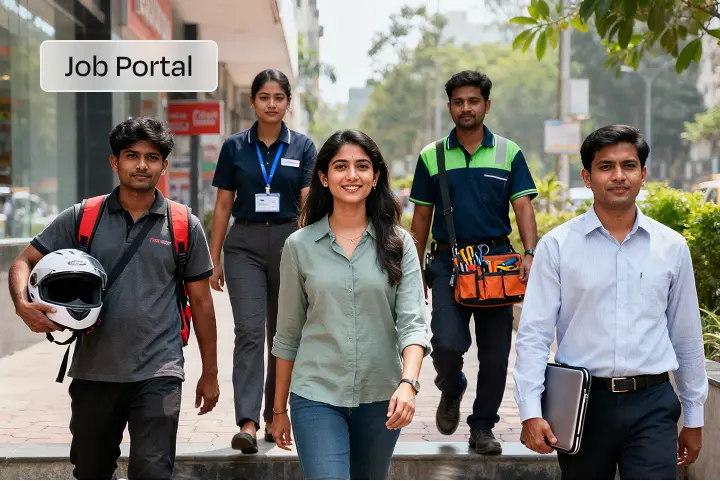
 Job Portal

"Ailoitte understood our requirements immediately and built the team we wanted. On time and budget. Highly recommend working with them for a fruitful collaboration."
Head of product, Apna
USAEduTech
My experience working with Ailoitte was highly professional and collaborative. The team was responsive, transparent, and proactive throughout the engagement. They not only executed the core requirements effectively but also contributed several valuable suggestions that strengthened the overall solution. In particular, their recommendations on architectural enhancements for voice‑recognition workflows significantly improved performance, scalability, and long‑term maintainability. They provided data entry assistance to reduce bottlenecks during implementation.
CEO, Sanskritly
IndiaFinTech
On paper, Banksathi had everything it took to make a profitable application. However, on the execution front, there were multiple loopholes - glitches in apps, modules not working, slow payment disbursement process, etc. Now to make the application as useful as it was on paper in a real world scenario, we had to take every user journey apart and identify the areas of concerns on a technical end.
CEO, Banksathi
IndiaHealthTech
“Working with Ailoitte was a game-changer for us. They truly understood our vision of putting ‘Health in Your Hands’ and brought it to life through a beautifully designed, intuitive app. From user experience to performance, everything exceeded our expectations. Their team was proactive, skilled, and aligned with our mission every step of the way.”
Director, Dr.Morepen
IndiaRetailTech
“Working with Ailoitte was a game-changer. Their team brought our vision for Reveza to life with seamless AI integration and a user-friendly experience that our clients love. We've seen a clear 25% boost in in-store engagement and loyalty. They truly understood our goals and delivered beyond expectations.”
Co-Founder, Reveza
IndiaHealthTech
“Ailoitte truly understood our vision for iPatientCare. Their team delivered a user-friendly, secure, and scalable EHR platform that improved our workflows and helped us deliver better care. We’re extremely happy with the results.”

CMO, iPatientCare
IndiaEduTech
"Working with Ailoitte was a game-changer for us. They truly understood our vision of putting ‘Health in Your Hands’ and brought it to life through a beautifully designed, intuitive app. From user experience to performance, everything exceeded our expectations. Their team was proactive, skilled, and aligned with our mission every step of the way."
Director, Dr. Morepen


Response guaranteed within 12 hours.




A senior engineer will review your brief and reply within 12 hours. Want to talk sooner? Pick a time that suits you.
Book a 30-minute call