


Uniting payors, providers, and pharmacies for seamless care.
53M+
Members supported
100%
Compliance Rate
- Strategy
- Web
- App
When your most experienced person leaves, their judgment leaves with them. Ailoitte builds AI knowledge cloning solutions that capture how a named expert thinks through problems in their field, then put it in an AI agent your team can ask. Every answer cites its source, and the agent says when it does not know. Built with the expert’s written consent, labeled clearly as AI, and never an impersonation.
Tell us who the expert is, what they decide and when they are leaving. Within a week: whether it can be captured, how, and the fixed price.
Cites or refuses
Every answer shows its source. No source, no answer.
Affordable by design
Fixed price from $4,000 per expert agent.
Consent first
Written, revocable consent before any capture.
An AI digital twin of an expert's decision-making within one defined domain. Colleagues query it and receive the expert's reasoning, with the underlying source cited.
A copy of a person, a brain upload, or a chatbot that pretends to be them. It is clearly labeled as AI trained on that expert's documented knowledge.
A first working agent in 2 to 3 weeks and a validated production agent in 6 to 12. The expert gives 8 to 15 hours in total, spread over 3 to 5 weeks.
A fixed price per expert agent, $4,000 to $39,000 by scope and AI complexity, quoted after a free knowledge risk read. No fee per question.
It answers only from captured material, cites every answer, and refuses when it does not know. It is tested against the expert before anyone relies on it.
You do. Captured material, rule set, configuration and code are assigned to you on payment, and the expert's consent covers use after they leave.

Sunil Kumar 
AI mind cloning builds an AI agent that answers questions the way a named expert would, using their documented reasoning, decisions and worked examples, with every answer traced back to its source. The name oversells it, so let us be precise. There is no brain upload and no copy of a person. It is an AI digital twin of an expert’s decision-making in one defined area, and it knows nothing that was never captured.
Why it matters: a workplace survey found that 42 percent of institutional knowledge is unique to the person in the role, so colleagues cannot simply pick it up when they leave (Panopto, via HR Dive). And more people are leaving. In the US alone, over 4.1 million people a year turn 65 between 2024 and 2027, the largest wave in history (Alliance for Lifetime Income).
As knowledge retention AI software, it occupies the space between a wiki, which contains whatever someone remembered to document, and the expert, who is busy and will eventually leave. It preserves the reasoning, not just the conclusions, and answers questions directly instead of making people search.
Tell us the role and the date. We will estimate what can realistically be captured in the time remaining, and what cannot.
The architecture is similar. The urgency and the definition of success are not. When someone is leaving, time is the binding constraint and expert knowledge capture comes first. When someone is a bottleneck, the objective is to free their calendar for the decisions only they can make.
The problem: 18 years of judgment and 90 days left.
The problem: everyone waits for one person.
The expert still matters. The difference is that their judgment no longer depends on their availability, or on their continued employment.
| Moment | Today | With an expert agent |
|---|---|---|
| When the expert leaves | A handover document and a farewell lunch. Most of the reasoning goes with them. | Their decision rules, exceptions and reasoning stay, reviewed by them before they go. |
| A colleague has a question | They wait for a reply, or guess. | They ask the agent and receive the reasoning, with its source, in seconds. |
| A new hire starts | Months of shadowing before they make good calls alone. | They learn how the expert thinks from day one, with sources to read. |
| An unusual case appears | Someone repeats a mistake the expert saw years ago. | The agent knows what was tried and why it failed. |
| A decision is questioned | Nobody remembers why it was made. | The reasoning and its source are on record. |
This is the whole difference between AI knowledge cloning solutions and a knowledge base. A wiki records conclusions. Expertise lives in tacit knowledge: the reasoning, the exceptions and the failures nobody documented.
An expert agent that guesses with confidence is more dangerous than no agent at all, because people act on its answers. These six controls are standard in every agent we deliver.
Answers come only from the expert's captured material, never from the model's general knowledge.
Users see where each answer came from, so they check the reasoning instead of trusting a confident tone.
When the material does not cover a question, the agent says so. We test this on purpose before launch.
We ask it questions the expert has already answered. The agreement rate decides whether it goes live.
New decisions and corrections are added as reviewed changes, never learned from its own answers.
Your content never trains outside models, and the whole system can run inside your own cloud.
Name the role and the decisions people queue for. We will tell you if it can be captured and what it would cost.
A first working agent in 2 to 3 weeks, and a validated production agent in 6 to 12. The review stage earns its place: experts routinely disagree with the first draft of their own rules, and that disagreement is where the accuracy comes from. Delivered on Clarity, our delivery method.
The area of expertise defined narrowly enough to answer well. Written consent and ownership agreed, existing material gathered, and a set of test questions put aside.
Sessions built around real cases, not abstract questions. The expert is shadowed on live problems and asked about exceptions and failures. Sessions are spaced so memory keeps working.
Decisions are translated into an explicit rule set that the expert reviews and corrects. Disagreements are resolved rather than averaged, and remaining gaps are captured in a follow-up session.
The agent is engineered over the captured material, with citations, refusal behavior and scope limits, then integrated where people already ask questions, such as Slack or Teams.
The reserved test questions are asked and the agreement rate is measured. The go-live decision rests on that evidence, and afterwards reviewed updates continue, or your team takes ownership.
You are proposing to capture a named person's judgment. That raises questions the technology cannot answer for you. Settling them first is what makes the project possible, and what makes the expert willing to take part.
What is captured, how it is used, whether it may be used after they leave, and their right to review and correct it. An expert who has not agreed will not engage with capture, and capture is where the value is.
Knowledge developed during employment usually belongs to the employer, and everything we deliver is assigned to you. It is more complicated for contractors, prior expertise, voice or likeness, so we flag those situations for your counsel.
This is the main reason to build one, so it goes in the consent before capture. Without it, you own an agent you cannot use when you need it most.
From 2 August 2026, EU rules require people to be told when they are talking to an AI system (McCann FitzGerald). Our agents say what they are, everywhere.
The common feature of a good fit is a queue of colleagues waiting for one person’s opinion. If the real obstacle is a gatekeeper rather than missing knowledge, that is a management problem, and we will tell you so.
Judgment that repeats, and people queue for it.
We find this out in the first session, not the last.
Not clones of individuals, but the same discipline: taking what specialists know, in regulatory compliance and in clinical care, and embedding it in systems that answer and act on it every day. See ROI case studies.
An expert agent costs $4,000 to $39,000, fixed, depending on the scope and how much AI it needs. One expert in a narrow area with good existing documents sits toward the low end; a broad area with little written down, several systems and private hosting sits toward the top.
The price moves with how much must be captured live, how many sources the agent draws on, and where it runs. Running costs such as AI usage and hosting are listed separately, post-launch support is optional, and programs covering several experts can run as an AI Velocity Pod from about $15,000 a month.
An expert agent nobody opens delivers nothing. We place it inside the tools your team already uses all day, and connect it to the original material the expert’s knowledge came from.
Ask the agent in the chat tools your team already has open.
A simple chat window on your intranet or internal portal.
Inside Salesforce, HubSpot or ServiceNow, next to the work.
An endpoint your own tools can call for answers and sources.
Draws on Confluence, Notion, SharePoint, email and past reports.
Learns from past pull requests, reviews and incident notes.
Your choice of provider, configured never to train on your data.
Run privately, even fully offline, for the most sensitive knowledge.
An AI agent that answers questions the way a named expert would, using their documented reasoning, decisions and worked examples. It is not a copy of a person or a brain upload. Every answer can be traced back to the material it came from.
No. The term is useful shorthand that oversells what any technology can do. We build an AI digital twin of an expert’s decision-making in one defined area: how they weigh a problem, what they check first, and the exceptions they know. It cannot reason outside the material it was given.
A wiki stores what someone documented; this preserves the reasoning behind it and answers questions. A colleague asks in their own words and receives a direct answer with the reasoning and the source, instead of searching for a page that may never have existed.
Four things documents usually miss. Unstated decision rules, exceptions learned the hard way, the reasoning between a situation and a call, and negative knowledge: what was tried and did not work.
Retrieval grounding plus deliberate refusal. Answers are generated only from the captured material, each one cites its source, and the agent admits it does not know rather than filling a gap. We verify that before launch by asking questions the material cannot answer.
Yes, in writing, and they can withdraw it. It covers what is captured, how it is used, whether it can be used after they leave, and their right to review and correct it. We will not build a clone of a named person without it.
Almost always your organization. Knowledge developed during employment usually belongs to the employer, and everything we deliver is assigned to you on payment. Contractors, prior expertise and voice or likeness are more complicated, so we flag those situations for your counsel.
Yes, if their consent covers it. That is the main reason to build one, so we agree it before capture starts rather than argue about it afterwards.
No. It never speaks as the person in the first person or copies their voice or face. It is labeled as an AI assistant trained on their documented knowledge, which EU rules also require from August 2026.
Usually 8 to 15 hours in total, over 3 to 5 weeks. Spaced sessions outperform one long interview, because experts recall edge cases between sessions. We also analyze past decisions, reviews and reports, so live sessions concentrate on reasoning.
We can start from what they left behind, such as reports, email threads, reviews and peer interviews, and the agent starts with narrower coverage. But we will not build an agent that names an individual who has not consented.
A first working agent in 2 to 3 weeks, and a validated production agent in 6 to 12 weeks. Complex or regulated areas may need extra review cycles.
Between $4,000 and $39,000 per expert agent, fixed, depending on the scope and the AI involved. Running costs such as AI usage and hosting are listed separately. We quote after a free knowledge risk read.
Yes, under supervision. New decisions and corrections are incorporated as reviewed changes, exactly like a code change. It never learns unsupervised from its own answers, because that compounds errors quietly.
No. Your content is configured never to train shared models, and where policy requires it, the entire system operates inside your own infrastructure, even completely offline.
Send it over. An AI agents lead replies within 12 hours.
Tell us who the expert is, what they decide and when they are leaving. A senior architect will tell you whether it can be captured, what consent you need, and where a person has to stay in the loop.
Loading available times…

Information Security
Management System

Quality Management
System
Information Security
Management System
Quality Management
System
 India
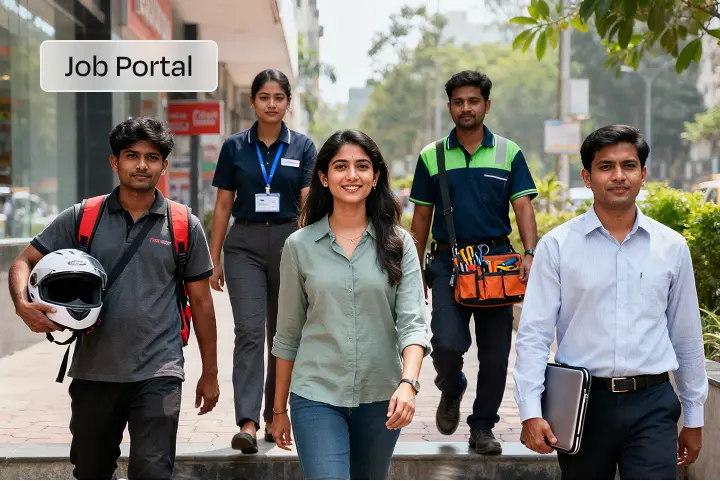
 Job Portal

"Ailoitte understood our requirements immediately and built the team we wanted. On time and budget. Highly recommend working with them for a fruitful collaboration."

Head of product, Apna
USAEduTech
My experience working with Ailoitte was highly professional and collaborative. The team was responsive, transparent, and proactive throughout the engagement. They not only executed the core requirements effectively but also contributed several valuable suggestions that strengthened the overall solution. In particular, their recommendations on architectural enhancements for voice‑recognition workflows significantly improved performance, scalability, and long‑term maintainability. They provided data entry assistance to reduce bottlenecks during implementation.

CEO, Sanskritly
IndiaFinTech
On paper, Banksathi had everything it took to make a profitable application. However, on the execution front, there were multiple loopholes - glitches in apps, modules not working, slow payment disbursement process, etc. Now to make the application as useful as it was on paper in a real world scenario, we had to take every user journey apart and identify the areas of concerns on a technical end.

CEO, Banksathi
IndiaHealthTech
“Working with Ailoitte was a game-changer for us. They truly understood our vision of putting ‘Health in Your Hands’ and brought it to life through a beautifully designed, intuitive app. From user experience to performance, everything exceeded our expectations. Their team was proactive, skilled, and aligned with our mission every step of the way.”
Director, Dr.Morepen
IndiaRetailTech
“Working with Ailoitte was a game-changer. Their team brought our vision for Reveza to life with seamless AI integration and a user-friendly experience that our clients love. We've seen a clear 25% boost in in-store engagement and loyalty. They truly understood our goals and delivered beyond expectations.”
Co-Founder, Reveza
IndiaHealthTech
“Ailoitte truly understood our vision for iPatientCare. Their team delivered a user-friendly, secure, and scalable EHR platform that improved our workflows and helped us deliver better care. We’re extremely happy with the results.”

CMO, iPatientCare
IndiaEduTech
"Working with Ailoitte was a game-changer for us. They truly understood our vision of putting ‘Health in Your Hands’ and brought it to life through a beautifully designed, intuitive app. From user experience to performance, everything exceeded our expectations. Their team was proactive, skilled, and aligned with our mission every step of the way."
Director, Dr. Morepen





Response guaranteed within 12 hours.




A senior engineer will review your brief and reply within 12 hours. Want to talk sooner? Pick a time that suits you.
Book a 30-minute call