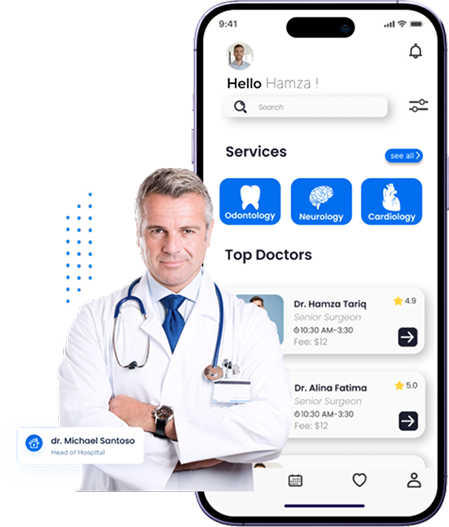
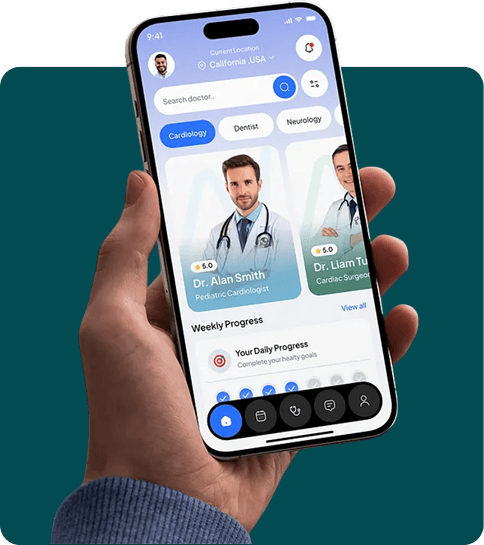
Develop fully compliant healthcare apps that cater to HIPAA regulations and
protect patient data with high-end security protocols.
We offer necessary solutions that align with unique healthcare workflows, resulting in improved efficiency, security, and patient care. We create healthcare software, including custom EHR systems, telemedicine platforms, and more.
With the secure HIPAA-compliant cloud infrastructure, we ensure data security, regulatory compliance, and smooth scalability for healthcare organizations.
Our applications automate the billing and claims cycle with compliant, accurate, and transparent systems. These solutions reduce errors and improve efficiency in healthcare revenue management.
For smooth clinical documentation and efficient patient data management, we provide customized interoperable Electronic Health Record (EHR) and Electronic Medical Record (EMR) systems.
We develop HIPAA-compliant remote patient monitoring (RPM) platforms that help healthcare providers track patient vitals in real time, reduce hospital visits, and enable proactive care through connected devices.
Our HIPAA-compliant CRM solutions allow healthcare providers to manage patient relationships, schedule appointments, and enhance communication while maintaining the security of sensitive health data.
HIPAA, the Health Insurance Portability and Accountability Act, is a U.S law that protects medical information and ensures secure handling of Protected Health Information (PHI) in digital systems. It sets certain rules and regulations to protect and manage healthcare data.
Adhering to HIPAA will ensure legal compliance, along with strengthening the trust between healthcare providers and patients.
HIPAA regulations strictly control who can access patient records, ensuring that only authorized individuals can modify sensitive health information. With access control and encryption, HIPAA ensures data integrity, accuracy, and security of patients.
Organizations that do not comply with legal regulations face potential lawsuits, financial penalties, and reputational damage. Whereas, following HIPAA guidelines help healthcare organizations protect themselves from lawsuits, fines, and regulatory sanctions.
HIPAA-compliant systems show that you value patient privacy and security, building confidence among all the stakeholders and maintaining long-term trust.
HIPAA promotes robust cybersecurity practices, including encryption, access control, and audit logging. This way, you can protect sensitive patient data and unauthorized access, breaches, and cyber attacks.
The healthcare market is highly competitive, and Being HIPAA-compliant can set you apart from competitors by showing a commitment to patient privacy, data security, and regulatory compliance.
With HIPPA, healthcare organizations can improve their processes through automation, streamlined workflows, and better documentation. All these refinements make operations more efficient, reducing manual work and minimizing errors.
By deeply understanding HIPAA regulations and having a proven track record in healthcare IT,
we provide secure and fully compliant software solutions.
We implement advanced intrusion detection systems and real-time monitoring tools to safeguard your healthcare applications from unwanted access and cyber threats.
With the installation of multi-layered security protocols, such as encryption, secure authentication, and role-based access, we protect sensitive patient data from breaches.
We offer complete assistance in navigating HIPAA compliance from consultation to deployment, ensuring your software aligns with all regulatory safeguards and industry best practices.
Our development practices follow guidelines set by both HIPAA and HITECH to ensure security, privacy, and regulatory compliance in healthcare systems.
The software we deliver is high-quality, technically reliable, and fully compliant with regulatory requirements. It has been first tested and thoroughly evaluated to meet industry standards.
All our solutions are tailored to your specific requirements, ensuring usability, scalability, and compliance while maintaining security, efficiency, and smooth integration.
|
Criteria |
HIPAA |
GDPR |
|---|---|---|
| Jurisdiction | United States | European Union |
| Data Covered | Protected Health Information (PHI) | Personal Data (broad scope) |
| Consent Required | Implied for treatment/payment | Explicit consent required |
| Penalties for Violations | Up to $1.5 million per violation | Up to €20 million or 4% of global revenue |
The checklist below helps developers implement essential safeguards to ensure
HIPAA Compliance throughout the software lifecycle.
Comprehensive development services for HIPAA-compliant healthcare solutions, covering everything from concept creation to launch and ongoing support after deployment.
Our consultants provide expert guidance to help healthcare organizations achieve and maintain HIPAA compliance, ensuring commitment to privacy, security, and regulatory standards.
Enhance your in-house team with our experienced developers and compliance specialists, effortlessly integrating with your existing operations.
To ensure HIPAA compliance in 2025, your healthcare app must implement end-to-end encryption, secure data storage, and strict access control. Regular security audits and adherence to updated regulations help maintain compliance.
To protect PHI in apps, AES-256 encryption is widely recommended for securing data at rest, while TLS ensures safe transmission. End-to-end encryption prevents unauthorized access by encrypting data throughout its journey.
Cloud services like AWS, Microsoft Azure, and Google Cloud offer HIPAA-compliant solutions with secure data storage, encryption, and access controls. Picking a cloud service that already follows HIPAA rules helps keep your app secure and compliant.
HIPAA protects healthcare data in the U.S., focusing on patient privacy and security, whereas GDPR applies broadly in the EU and UK and covers all personal data with stricter consent regulations.
No, it is not, because developing a HIPAA-compliant application requires specialized knowledge of healthcare regulations, data security, and privacy laws. Not every app development company has the expertise to implement a security framework.
For HIPAA Compliance software development, developers and organisations must include these elements in the checklist: established physical and technical safeguards, evaluated risks, conducted a HIPAA pre-audit, integrated data backup and recovery solutions, and many more.
HIPAA compliance has a number of advantages, including enhanced patient data security, protection against intrusions, preventing data breaches, ensured HIPAA-HITECH compliance, reliable security solutions, and custom-built for your needs.
Yes, we provide end-to-end support and maintenance to ensure that your HIPAA-compliant app remains secure, up-to-date, and fully functional. Our ongoing maintenance services include regular security audits, compliance checks, software updates, bug fixes, and performance optimizations.
An application that stores, transmits, and processes Protected Health Information (PHI)- such as EHR/EMR systems, telemedicine platforms, medical billing software, and health tracking apps- must be HIPAA compliant to ensure the security, privacy, and integrity of sensitive patient data.
Yes, mobile health (mhealth) apps can be HIPAA compliant if they record and process Protected Health Information (PHI) and meet all administrative, technical, and physical safeguards.
You have a Vision, we are here to help you Achieve it!
Your idea is 100% protected by our Non-Disclosure Agreement.
You have a Vision, we are here to help you Achieve it!
Your idea is 100% protected by our Non-Disclosure Agreement.