



User journey maps are a lot more complex today compared to a few decades back. Business owners and developers today are more concerned about how customers’ emotions and behavior impact the entire product journey. So much so that the customer experience and sentiments are now driving the customer lifecycle strategies for many companies.
According to the Aberdeen Group’s Report, companies see an average of 24.9% YOY growth in revenue by managing the customer experience. Effective customer journey mapping can help you achieve your digital strategy without setbacks.
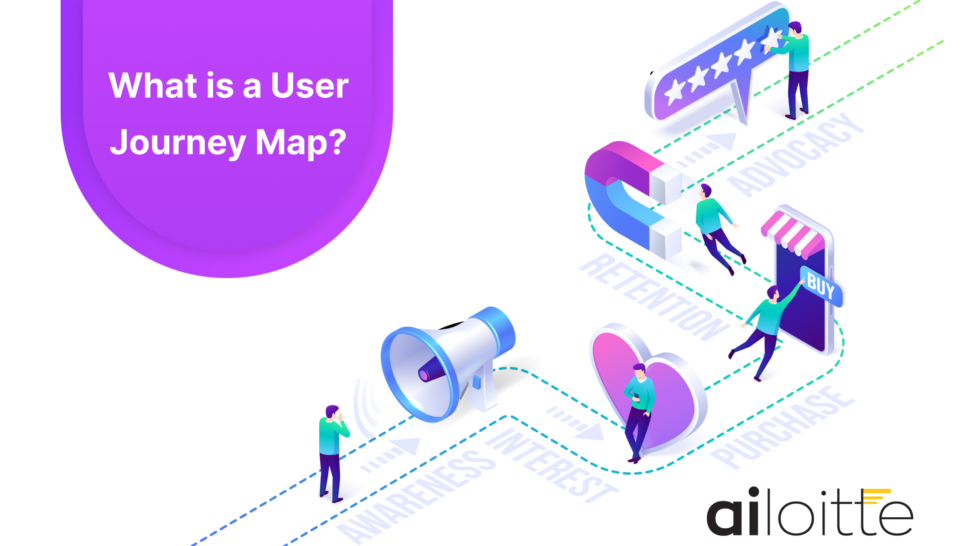
A user journey map, also referred to as a customer journey map, is a simple diagrammatic visualization of a user’s interaction with a business or brand over time across different digital platforms. It is a simple representation of all touchpoints between the user and the software product.
This map contains critical information about all possible channels users might use to interact with your software. The customer journey map begins with the simple initial contact and turns into a continued engagement. It ultimately leads the visitor to become a long-term customer.
A user journey map for an app or website aims to identify crucial interactions and touchpoints of the customer. It also focuses on developing a customer-centric approach to building a software product that leads to better customer relationships. For example, you might feel the need to remove a specific step from your home page flow that changes the method for collecting the email ids of users.
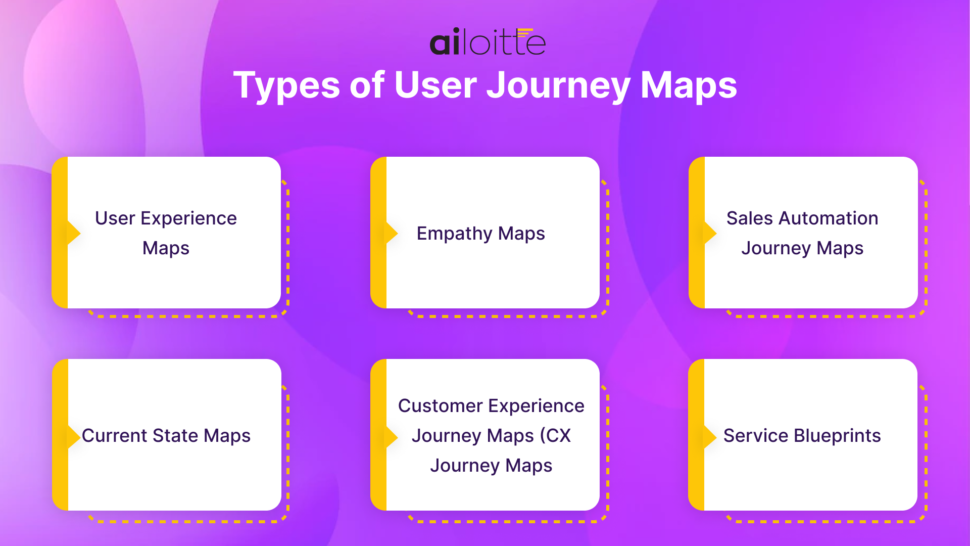
Types of User Journey Maps
Go through the different types of user journey maps to get a better idea of the whole concept.
User Experience Maps
User experience maps aim to track the customer behaviors at each customer journey mapping stages flow. It calculates the user moves from beginning to end to achieve the desired business goal, which can be anything like buying the product or service. The user experience maps are designed cumulatively for all the potential customers, meaning there is no specific focus on any particular demographic, company, or user base.
The user journey mapping exercise makes you think about the needs of users. An understanding that guides you toward productive actions on your software.
Empathy Maps
Empathy maps are not concerned about the customer journey steps that lead them to the destination. Its goal is to analyze what the user says, thinks, does, and feels when exploring your software. You can create empathy maps by conducting user interviews for your product and services. Find ways to interact with your target audience and fetch their responses to improve your software.
Empathy maps also help you observe user reactions and incorporate that response into your software for improvements.
Sales Automation Journey Maps
Sales automation journey maps are also called marketing automation or sales journey maps. This helps the sales and marketing team map the customer’s journey toward sales. The aim here is to generate product or service awareness to convert them into prospects. For example, as the number of email marketing methods through CRM and other automation systems increases every day, you will have to strategize potential communication channels by understanding the precise user/customer experience.
It would be easy to miss a vital touchpoint or flow of the user journey without a journey map. Sales automation journey maps can help consider every possibility of the sales journey without missing out on any stage.
Current State Maps
The current state map tracks the daily behavior of users during software interaction. It focuses on gaining valuable insights into how your design can help the customer eliminate their hurdles and reach their destination quickly. These help you analyze the customer’s thinking process, behavior, and difficulties while exploring your product.
The map helps you visualize all the possible obstacles a user might encounter in their journey and counter those issues. The aim is to provide the user with a flawless journey and solve the problems well before they notice them. Its end goal is to provide your users with an excellent UX to keep them satisfied with your product.
Customer Experience Journey Maps (CX Journey Maps)
The different maps examine various aspects of the customer’s experience with your software product. A simple customer journey map typically seeks to document the complete user journey. This map aims to improve user experience significantly for satisfied users to convert them into loyal brand followers.
Every software has a different customer experience journey map with multiple goals so businesses also use this map to document all possible customer journeys to streamline software operations.
Service Blueprints
Service blueprinting helps organizations gain strong evidence of their business reality. It puts a spotlight on the customer and employee experience with service providers. This blueprint helps eliminate hurdles in the business processes as it focuses on the interaction between customers, employees, and service providers.
Service blueprints create a combination of different essential factors for more customer-centric mapping. It helps achieve your software goals by solving problems efficiently to uncover minute issues.
Now that we have looked into individual user journey maps, it is critical to note that they have their specific reasons and goals. You need to select the map that helps your organization achieve its goals with maximum benefits.
Creating a Customer Journey Map for Your Software Development Project
The requirement for creating a user journey map is thorough user research. You need to consider the qualitative and quantitative aspects of the user journey process to design the correct B2B customer journey map.
- Make sure you understand your customer’s pain points, behaviors, and reactions to your software product.
- Interact with your customers to listen to their thoughts and feelings at each step of the journey.
- Observe their reactions to your customer journey mapping process and note feedback with all details to create an impressive user journey.
Here are the steps to follow for user journey software development:
Step 1: Define the goal and scope of your map
- Determine the goals you want to achieve through this B2B journey map.
- This goal will determine the scope of your development project.
- Attain a fixed mission to cover certain parts of the journey.
- These fixed targets will help you stay focused throughout the mapping process.
Step 2: Profile your personas and collect information
- Personas represent your target customer and their details such as age, occupation, location, and preferred device.
- You have to create a customer journey map collectively to target these personas.
- Conduct intensive research to reach out to your customer base or prospects.
- Take constructive feedback from the users who might be interested in purchasing your products or services.
Step 3: Map the touchpoints
- List the series of user journey testing goals that you want to achieve.
- Create an action plan with a timeline to create these steps.
- Make sure your process flow moves continuously without any breaking points.
- Consider all the essential steps that lead a buyer’s journey through awareness, prospects, and sales perspective.
- Each of these steps involves many touchpoints with your software product; make sure to represent all.
Step 4: Create a strong narrative
- Brainstorm with your team to understand user thoughts and emotions for each journey stage.
- Don’t forget to include user actions, reactions, motivations, and feelings during each interaction with the product.
- Consider all the emotional responses like emotional highs and lows while moving ahead.
Step 5: Create the visualization
- The last and most critical step is user journey visualization of your text or Excel-based narrative.
- You will need experienced professionals to create these advanced designs for your journey.
- And you can guide your designer with a simple whiteboard design and supporting notes.
- The vibrant visual representations will be able to illustrate the user journey effectively.
Read Here – How To Build An MVP
Benefits of User Journey Maps
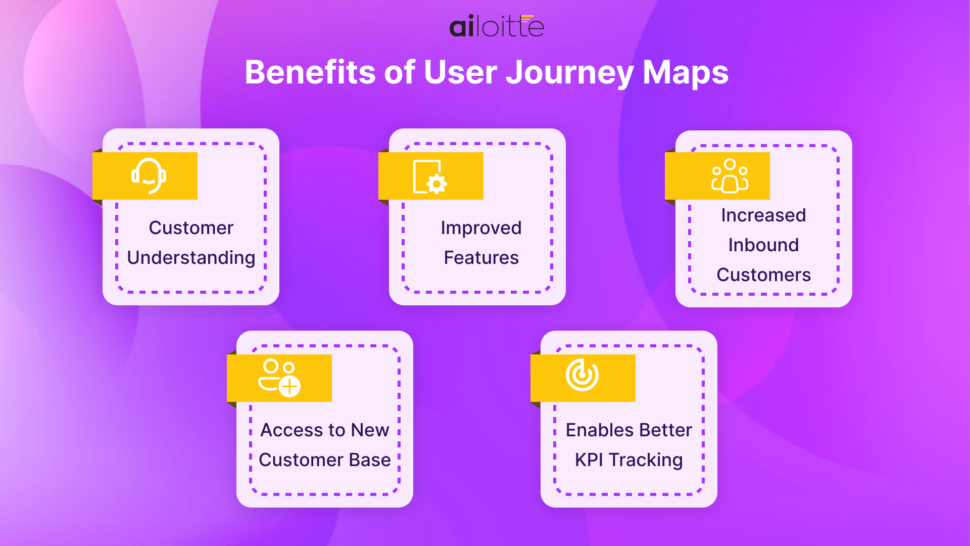
What you can get from user journey maps should help you understand their importance in your project.
Customer Understanding
The ability to understand how a customer uses your software product is one of the most essential customer journey mapping benefits.
Improved Features
The brainstorming of the maps brings out the latest features to provide an excellent user experience for your product.
Increased Inbound Customers
You get plenty of inbound customers with a good journey map instead of struggling to gain customers through outbound marketing techniques.
Access to New Customer Base
You can focus on a small prospect of customers interested in your products or services instead of wasting your time targeting a broad segment of the audience.
Enables Better KPI Tracking
Using customer journey mapping tools helps you keep track of important user journey metrics that lead to better decisions. For example, a sign of a long journey is when users often bounce before completing the purchase.
How to Hire Developers for Startup
Conclusion
Understanding and implementing a good user journey across the organization will lead to many benefits like increased revenue and better customer engagement. An efficient user journey enhances your marketing campaigns, reduces operational costs, and accelerates your sales cycle. It will enable you to be consistent in your user interaction and satisfaction while helping you convert your visitors into a part of the customer base.
Your company can design more straightforward software for users with the help of a user journey map guide. For more guidance and help, you can contact the design experts at Ailoitte. We are an established mobile app development company with notable years of experience in software development and charting user journeys as they move within your application.
Frequently Asked Questions
User journey helps businesses interact with the customer at every stage and reveals customer pain points, feelings, actions, and reactions. It helps organizations understand customers better and provide a personalized experience for them. The final goal of the user journey is to improve user experience and the growth of your business through it.
You can get many inbound customers with good journey mapping and get access to a new customer base. It helps you empathize with your customers and improve your services. You can detect any flaws in your products/services, improve customer experience with journey mapping, improve marketing campaigns, reduce operational hassles, accelerate your sales cycle, and increase your revenue.
Whenever you have to identify customer pain points and behavior, improve empathy for your customers and understand how they feel about your products/services, change the company perspective from both sides (inside-out & outside-in), understand the behavioral pattern of specific customer personas, create a single vision for the entire organization by breaking down silos, and improve the effectiveness of your marketing campaigns.
Understand the buyer persona of existing customers/visitors/potential customers and figure out the goals and needs of buyers. Then list all the pain points of existing and potential customers, figure out the impact of different touchpoints on buyers, improve your service by analyzing customer actions and behavior, and understand the customer experience to empathize with them.

Share this article:
Leave a Reply







100+
Project Launched

80+
Happy Clients

18+
Countries Served

91%
Returning client base




.png)
.png)
.png)



Leave a Comment