On this page
Retailers now use AI in retail operations to forecast demand, set prices, answer shoppers and watch shelves. This page covers where it delivers results, what gets in the way and how to start your first project.
How does AI work in retail?
AI in retail works by learning patterns from sales, customer and store data, then using those patterns to predict outcomes and automate decisions. It covers the front end, where shoppers browse and buy, and the back end, where teams plan stock, set prices and move goods.
Five technologies do most of the work in retail today:
- Machine learning (ML) finds patterns in purchase and inventory data and predicts what will happen next.
- Predictive analytics combines ML with statistics to forecast demand, churn and campaign results.
- Computer vision reads camera images to monitor shelves, run checkout-free stores and spot theft.
- Natural language processing (NLP) lets chatbots, voice assistants and site search understand what shoppers type or say.
- Generative AI creates new text and images, and it powers conversational shopping assistants.
Most systems for AI in retail combine several of these technologies. A shopping assistant, for example, uses generative AI to talk with the shopper. It uses ML to rank products and live inventory data to show only what is in stock.
Why are retailers investing in AI in 2026?
Investment in AI in retail is rising because it has moved from pilot projects into daily operations, and the results now show up in sales and costs. NVIDIA’s third annual State of AI in Retail and CPG survey found that 91% of respondents use or are assessing AI, and nine in 10 expect their AI budgets to rise in 2026.
Treat vendor surveys as directional. NVIDIA sells AI hardware and software, and its respondents are likely to be further along than the average retailer.
Three pressures drive AI in retail:
- Margins are thin, so small gains in stock accuracy and pricing add up.
- Shoppers expect personal recommendations and instant answers on every channel.
- Supply chains face more disruption, which makes manual planning slower and riskier.
The next wave is AI agents: software that can plan and complete multistep tasks with limited human input. In the same NVIDIA survey, 47% of respondents said they use or are assessing AI agents, and 20% said agents are already active in their organizations.
10 AI in retail use cases with real examples
The 10 use cases below show where AI in retail delivers results today, from the shopping app to the warehouse. Each one explains what the system does, the data it needs and the kind of retailer it suits best.
1. Product recommendations and personalization
Product recommendations are the most common form of AI in retail. Recommendation engines suggest items each shopper is likely to buy, based on browsing history, past purchases and what similar shoppers chose. These recommendation systems run on machine learning. They do not use artificial general intelligence (AGI), the human-level AI that no commercial product offers today.
Amazon is the best-known example. McKinsey’s 2013 report on how retailers can keep up with consumers estimated that about 35% of what consumers buy on Amazon comes from recommendations. The figure is old but still widely cited, so read it as a sign of scale rather than a current measurement.
Best for: online stores and apps with large catalogs and repeat shoppers.
2. Demand forecasting and inventory planning
Demand forecasting is one of the highest-value uses of AI in retail. It predicts how many units of each product will sell, in each store, each week. ML models combine sales history with promotions, seasonality, weather and local events, and they update as new sales data arrives.
Better forecasts cut stockouts and overstock at the same time, which means fewer lost sales and fewer markdowns. Smart shelves with weight sensors and radio-frequency identification (RFID) tags make forecasts sharper by feeding live stock counts into the same models.
Best for: grocery, fashion and any retailer with perishable or seasonal stock.
3. Dynamic pricing
With dynamic pricing, AI in retail changes prices automatically in response to demand, competitor prices and stock levels. Ride-hailing apps such as Uber made the idea familiar with surge pricing. Retailers now apply the same logic online, and in stores through electronic shelf labels that can update a price in seconds.
Dynamic pricing and personalized pricing are different practices. Dynamic pricing changes the price for everyone at a given moment. Personalized pricing sets a different price for each person based on their personal data, and regulators in the US and EU are examining that practice closely.
Best for: online retailers and price-sensitive categories such as electronics and household goods.
4. Virtual assistants and customer service chatbots
Virtual assistants are one of the most visible forms of AI in retail. They answer shopper questions, track orders, process returns and guide purchases 24 hours a day. Modern assistants use large language models (LLMs) to understand questions in everyday language, and they hand complex cases to a human agent.
Amazon’s Rufus is a shopping assistant inside the Amazon app that answers product questions and compares items. Smaller retailers deploy similar assistants on their websites and messaging apps to cut support costs. If you are weighing a scripted bot against a system that can act on its own, see this comparison of AI agent vs chatbot.
Best for: retailers with high support volume or products that need explaining.
5. Computer vision for shelves and checkout-free stores
Computer vision brings AI in retail onto the shop floor. It lets store cameras recognize products, gaps and movement on the shop floor. Retailers use it to spot empty or untidy shelves, check that displays match the planogram (the planned shelf layout), map foot traffic and run checkout-free stores.
Amazon’s Just Walk Out technology is the best-known checkout-free system. Today it runs mostly in stadiums, airports and other high-traffic venues. For more on shelf analytics and loss prevention, read our guide to computer vision in retail.
Best for: grocery chains, convenience stores and high-traffic venues.
6. Fraud detection and loss prevention
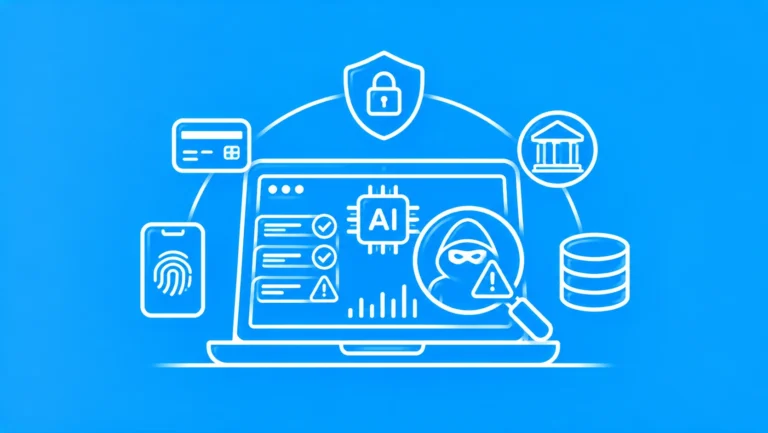
Fraud detection is a core use of AI in retail. It scores every transaction and account action for risk in real time, then blocks or flags the suspicious ones. Online, it catches stolen cards, account takeovers, fake returns and promo-code abuse. In stores, camera and sensor data help spot self-checkout errors and theft.
Fraud models improve as they see more transactions, and they need retraining as fraudsters change tactics. This overview of ecommerce fraud detection covers the main signals and model types.
Best for: online retailers and marketplaces with high transaction volumes.
7. Supply chain and logistics optimization
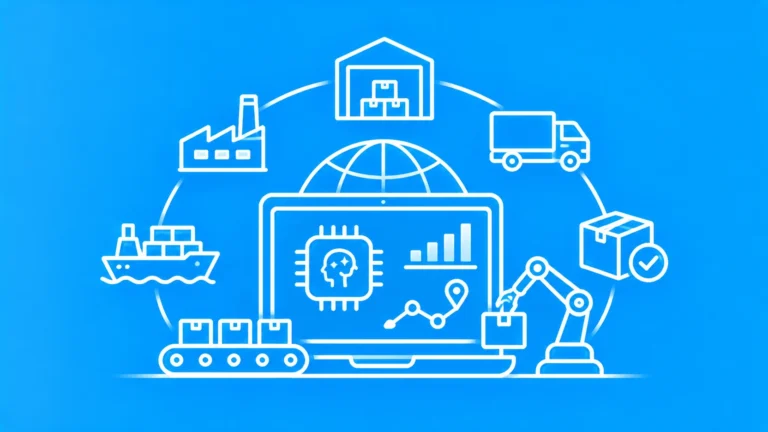
In the supply chain, AI in retail tools plan the cheapest reliable path for goods from supplier to shelf or doorstep. They optimize delivery routes, decide where products sit in a warehouse, plan picking paths and alert planners when a supplier is likely to be late.
Planners also use AI for scenario planning, testing what happens to costs and service levels if a port closes or demand spikes. Supply chain models are only as good as the order, inventory and supplier data behind them.
Best for: retailers that run their own distribution centers or delivery fleets.
8. Generative AI for product content and marketing
Generative AI in retail writes product descriptions, ad copy, emails and images at catalog scale. A retailer with tens of thousands of stock-keeping units (SKUs) can draft descriptions for every item far faster than a copy team working alone, then have editors check facts and brand voice.
Human review matters because generative models can invent product details. In the EU, the AI Act also adds transparency duties for some AI-generated content.
Best for: marketplaces and brands with large or fast-changing catalogs.
9. Visual search and virtual try-on
Visual search and virtual try-on bring AI in retail to the product page. Visual search lets shoppers find products by uploading a photo, and virtual try-on uses augmented reality (AR) to show how a product looks on them or in their home. Both remove the guesswork that drives returns in fashion, beauty and furniture.
Sephora’s Virtual Artist lets shoppers try makeup shades on their own face through the app.
Best for: fashion, beauty, eyewear and home furnishing retailers.
10. AI shopping agents and agentic commerce
Agentic commerce is shopping in which an AI agent searches, compares and sometimes buys on a shopper’s behalf. OpenAI’s Instant Checkout in ChatGPT and Google’s Agent Payments Protocol (AP2) are early examples of agents completing purchases.
Agentic commerce changes who reads the product page. Product data must be accurate, structured and available through APIs so that agents can find and trust it. Retailers also build internal agents for tasks such as reordering stock or answering store staff, often with an AI agent development company that can connect the agent to inventory and order systems.
Best for: retailers with clean product data and API-ready systems.
Retail AI use cases at a glance
The table below compares all 10 AI in retail use cases by what they improve, the data they need and the retailers they suit.
Retail AI use cases compared by outcome, data and best fit
| Use case | What it improves | Main data needed | Best for |
|---|---|---|---|
| Recommendations | Conversion and basket size | Browsing and purchase history | Large online catalogs |
| Demand forecasting | Stock levels and waste | Sales history, promotions, weather | Grocery and fashion |
| Dynamic pricing | Margin and sell-through | Demand, competitor prices, stock | Price-sensitive categories |
| Virtual assistants | Support cost and speed | Product, order and FAQ data | High support volume |
| Computer vision | Shelf availability and checkout speed | Store camera feeds | Grocery and convenience |
| Fraud detection | Losses and chargebacks | Transaction, device and account data | Online stores and marketplaces |
| Supply chain AI | Delivery cost and reliability | Order, route and supplier data | Retailers with own logistics |
| Generative AI content | Content speed and cost | Product attributes, brand guidelines | Brands with many SKUs |
| Visual search and try-on | Shopper confidence and returns | Product images, 3D models | Fashion, beauty, furniture |
| Shopping agents | A new sales channel | Structured product feeds, APIs | API-ready retailers |
Benefits of AI in retail
The main benefits of AI in retail are higher efficiency, a better customer experience, faster decisions and revenue growth. Each benefit depends on clean data and a clear metric to measure it against.
Higher efficiency
AI in retail raises efficiency by taking over repetitive work such as counting stock, answering routine questions and updating prices. Staff spend more time on customers and exceptions, and data stays more accurate across logistics, stores and support.
Better customer experience
AI in retail improves the customer experience by making shopping more personal and support faster. Shoppers see products that match their taste, get answers at any hour and can try products virtually before they buy.
Faster, data-driven decisions
AI in retail speeds up decisions by turning large volumes of sales, stock and customer data into clear forecasts and alerts. Buyers, merchandisers and finance teams can plan budgets and assortments with less guesswork and lower investment risk.
Revenue growth
AI in retail grows revenue by timing targeted promotions and upsell offers to each shopper’s behavior.
Challenges retailers face with AI
The main challenges of AI in retail are data privacy, fast-changing pricing and AI rules, upfront cost, integration with older systems and a shortage of skills. A narrow first project and good data governance address most of them.
Data privacy and security
Data privacy is the first challenge because AI in retail runs on personal data such as purchase history, location and browsing behavior. The EU General Data Protection Regulation (GDPR) and the California Consumer Privacy Act (CCPA) set rules for consent, access and deletion. A single breach or misuse can bring fines and lasting damage to customer trust.
Pricing and AI regulation
Regulators now watch how retailers use personal data to set prices. The Federal Trade Commission’s January 2025 surveillance pricing findings reported that retailers often use personal information, from location and demographics to mouse movements on a webpage, to set tailored prices.
The FTC’s August 2026 proposed enforcement policy statement on personalized pricing warns that undisclosed personalized pricing may be deceptive or unfair, although it does not ban the practice. Some states go further, and New Jersey has expanded its restrictions on algorithmic and personalized pricing.
In Europe, the EU AI Act bans some AI practices outright and requires transparency, such as telling people when they are talking to a chatbot. Its Article 50 transparency duties became enforceable in August 2026, while the strictest rules for stand-alone high-risk systems, which include AI used in hiring, now apply from 2 December 2027.
High implementation costs
AI in retail projects need investment in data infrastructure, software, integration and training before they pay back. For small and mid-sized retailers, that upfront cost is often the biggest barrier, which is why a narrow pilot with a clear metric is the safer starting point.
Integration with legacy systems
Integration is hard because many retailers still run older point-of-sale (POS), inventory and enterprise resource planning (ERP) systems that were not built to share data in real time. Connecting AI tools to those systems can take longer than building the model itself. If your stores still run on-premise tills, this comparison of Cloud POS vs Legacy POS explains the trade-offs.
Skills gaps and governance
Retailers need data scientists, ML engineers and AI-literate staff, and those people are hard to hire. Coverage of NVIDIA’s 2026 report named a lack of skilled talent as the top barrier to AI adoption in retail. The NIST AI Risk Management Framework offers a free, voluntary structure for managing risks such as bias, errors and security, so smaller teams can set up governance without starting from zero.
How to start your first retail AI project: 5 steps
Start AI in retail with one measurable problem, not a platform. The five steps below keep the first project small, testable and easy to scale.
- Pick one problem with a clear metric, such as stockouts in one category or support response time.
- Audit your data, including where sales, stock and customer data live, how clean they are and who owns them.
- Decide whether to buy an off-the-shelf tool, build a custom model or work with a partner.
- Run a small pilot in one category, store or channel, and compare results against a control group.
- Scale what works, retrain models on a schedule and set clear rules for privacy, pricing and human review.
Off-the-shelf tools suit common needs such as chatbots and basic recommendations. Custom models make sense when your data or process gives you an edge, and a partner offering AI development services can build and integrate them before you hire a full ML team.
What comes next for retail AI?
AI in retail is moving from tools that suggest to systems that act. Four shifts are likely to shape the next few years.
Agentic shopping
AI agents will handle more of the shopping journey, from finding products to reordering household staples. Retailers that publish accurate, structured product data will be easier for these agents to find and recommend.
Autonomous and checkout-free stores
Computer vision and sensors will make checkout-free formats cheaper to run. Small stores and venues where speed matters most are likely to adopt them first.
AI-driven sustainability
AI will help retailers cut waste by matching stock more closely to demand. It will also lower energy use in stores and warehouses and track the environmental impact of products across the supply chain.
Real-time personalization
Personalization will move beyond “customers also bought” lists. Offers, content and store experiences will adjust to each shopper’s behavior in the moment, within the limits that privacy and pricing rules allow.
Summing up
AI in retail is no longer experimental. Retailers use it to recommend products, forecast demand, set prices, answer shoppers and fight fraud. The strongest results come from one clear problem, clean data and a pilot you can measure. Privacy, integration and new pricing rules are real hurdles, so plan governance from the first day.

Sunil Kumar is CEO of Ailoitte, an AI-native engineering company building intelligent applications for startups and enterprises. He created the AI Velocity Pods model, delivering production-ready AI products 5× faster than traditional teams. Sunil writes about agentic AI, GenAI strategy, and outcome-based engineering.
About Ailoitte