On this page
- The Challenge of Scaling Job Matching for Millions
- Understanding Apna’s User Base
- How Apna Built a Scalable AI Infrastructure
- Key AI Strategies for Job Matching at Scale
- Overcoming Common AI Challenges in Job Matching
- How You Can Replicate Apna’s Success (With Ailoitte’s Expertise)
- What Makes Ailoitte Stand Out?
- Final thoughts
- FAQ
AI in recruitment is transforming the hiring process by automating tasks like resume screening, candidate matching, and interview scheduling. It helps businesses save time, reduce bias, and improve the overall candidate experience while finding top talent efficiently.
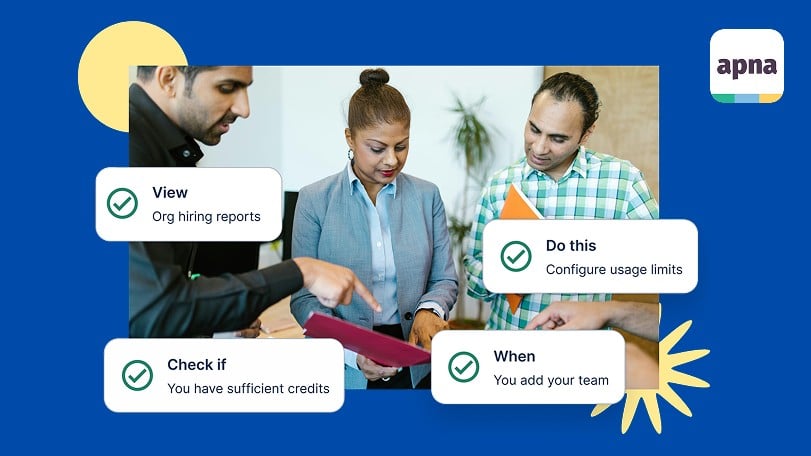
Finding the right job can be challenging, especially for blue-collar workers who face limited access to digital job portals, language barriers, and skill mismatches. Apna, India’s leading job-matching platform, recognized this struggle and leveraged AI-driven recruitment solutions to connect millions of job seekers with employers efficiently.
Apna’s success in scaling to 50 million users offers valuable insights into building a robust, AI job matching platform. How did they do it? And more importantly, how can you apply these strategies to improve job matching in your own organization? Read on to find out.
The Challenge of Scaling Job Matching for Millions
AI-based job matching is not an entirely known concept, especially in fast-growing countries like India, but it is definitely growing in popularity. What is not simple, is the fact that scaling a platform to equitably and adequately serve millions of users with jobs, is not a walk in the park. Challenges such as user heterogeneity, data dissimilarity, or bias consideration must be addressed which can only be solved with great technological creativity and specific market solutions tailored to that region. Apna is a prime illustration of how these obstacles can be overcome.
Understanding Apna’s User Base
Taking a deeper look at Apna’s target audience, we see that they mainly focus on the blue-collar segment in India, which remains untouched as far as job opportunities are concerned. Reportedly, they have users from the delivery executive, electrician, sales executive, and a multitude of other professionals who do not have conventional ways of searching for jobs.
So, why is this audience significant, you might ask? They are the fundamental building blocks of the ever-growing Indian economy and still remain unnoticed by platforms that majorly deal with white-collar jobs. Apna bridges this gap with an AI in talent acquisition strategy tailored to their needs:
- Multilingual support: With over 11 Indian languages integrated into the platform, Apna ensures that language is never a barrier.
- Simplified access: Job seekers can connect with employers and recruiters in just a few steps, even if they’re new to using mobile apps.
- Community features: Workers can join interest-based groups to ask questions, seek advice, and grow their skills.
How Apna Built a Scalable AI Infrastructure

Real-time data processing and robust infrastructure were essential to scale AI in recruitment for millions of users. Apna built its platform with:
The Role of Data Lakehouse Technology
To unify data for storage and processing, Apna adopted an AI-powered data lakehouse. Data lakehouse architecture merges data lakes and warehousing to lower costs while simultaneously increasing performance. For Apna, this model provided a single source of truth that their AI models could rely on.
- Improved Data Storage: The Apna organization can streamline structured, semi-structured, and unstructured data sets in a single place because of the Medallion architecture integrated into the lakehouse.
- Real-Time Access: Using Apache Hudi, Apna can now access and analyze multi-terabyte datasets in real-time as the core of the system.
- Machine Learning Use Cases: Apna engineers can test, train, and deploy as many as seven AI models every day with the lakehouse, which allows constant innovation.
Workflow Optimization Using Google Cloud
To support its machine learning operations, Apna deployed its infrastructure on Google Cloud and utilized Kubernetes Engine, BigQuery, and Vertex AI.
- Kubernetes Engine: Enables microservices management and deployment for applications.
- BigQuery: An analytics service that stores and queries massive amounts of data making it useful in decision-making processes.
- Vertex AI: Allows unsupervised model retraining and can run several AI refinement processes daily.
Are you ready to take your job-matching platform to the next level?
Key AI Strategies for Job Matching at Scale
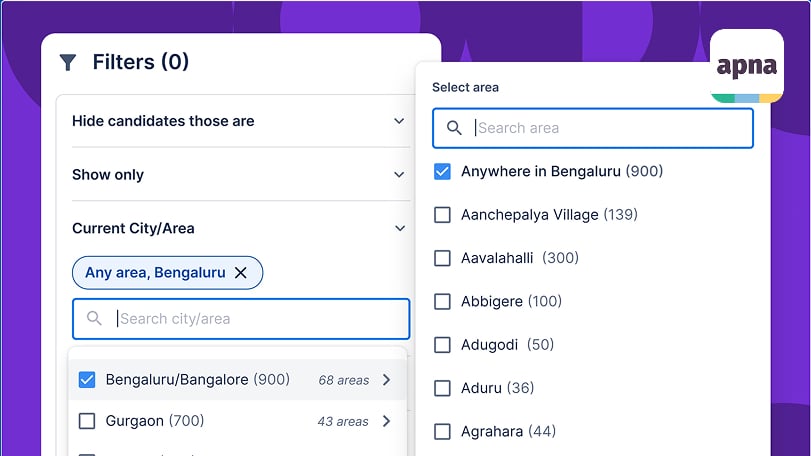
It is not straightforward to expand AI-powered job matching to millions of users. The story of Apna teaches us how to do it right.
1. AI-Powered Recommendation Engines
Apna’s advanced AI job matching algorithms assess multiple factors to deliver highly relevant job recommendations:
- Skills & qualifications
- Location preferences
- Past job searches & applications
This hyper-personalized approach increases job relevance and application success rates.
2. Continuous Model Optimization
- A/B testing and feedback loops refine AI recommendations.
- Learning in real-time changes job suggestions based on other data.
3. Real-Time Data Processing
- Instant job updates ensure seekers get fresh listings.
- Automated profile matching accelerates hiring.
4. AI-Powered NLP & Multi-Language Support
- Voice & text-based searches make job discovery easier.
- Auto-translation of job descriptions for wider accessibility.
5. Automated CV Parsing & Fraud Detection
- AI suggests offers for the jobs based on the profiles that have been scanned.
- Fake job postings & spam applications are flagged using machine learning models.
6. Performance Optimization (Latency & Load Balancing)
- Distributed computing ensures platform speed.
- Smart caching & load balancing manage high traffic without downtime.
7. AI-Powered Hiring Insights for Employers

- Data-driven hiring trends & salary benchmarks improve recruitment efficiency.
- Predictive analytics for workforce planning helps in forecasting hiring needs and predicting attrition rates.
Overcoming Common AI Challenges in Job Matching
1. Addressing Bias in AI Algorithms
Apna addresses bias issues by implementing diverse datasets and fairness audits to ensure proper equity checks and job recommendations. AI models, for instance, have biases that stem from the data used during training.
2. Ensuring Data Quality and Accuracy
The accuracy of job matches depends on the quality of the data. Apna employs robust data validation techniques to maintain clean and reliable datasets.
3. Handling User Privacy and Security
Apna follows strict privacy policies and complies with data protection regulations, ensuring user trust in the platform.
How You Can Replicate Apna’s Success (With Ailoitte’s Expertise)
The level of expertise required in using data engineering and machine learning, designing infrastructure, and user interface is profound for building a scalable AI-based job-matching platform.

Businesses looking to understand how to use AI in hiring can implement solutions like AI-powered applicant screening, automated interview scheduling, and predictive analytics to improve recruitment efficiency. Ailoitte assists companies in building, fine-tuning, and expanding job-matching systems using advanced AI technologies. Here’s what we do:
1. Laying a Strong Data Foundation
A successful AI-powered job platform starts with structured and well-managed data pipelines. Ailoitte ensures:
- Seamless data collection from multiple sources, including job listings, resumes/CVs, user interactions, and employer preferences.
- Real-time data processing to keep job recommendations fresh and accurate.
- Data cleansing and normalization to improve AI model accuracy and reduce inconsistencies.
2. Developing Scalable AI Models
Our ML experts design AI models tailored for job matching, ensuring precise and relevant recommendations. We specialize in:
- Skill-based job-matching algorithms that analyze user qualifications, preferences, and experience.
- Context-aware NLP models to process job descriptions and match them with candidate profiles in multiple languages.
- AI-driven fraud detection to identify fake job listings and prevent spam applications.
- Continuous model retraining using real-time feedback to refine job recommendations.
3. Infrastructure Best Practices for High Performance
A scalable and resilient infrastructure ensures your platform can handle millions of users while maintaining low latency. Ailoitte helps in:
- Cloud-native architecture design for flexible and cost-effective scaling.
- Kubernetes-based deployment to manage high traffic efficiently.
- Event-driven microservices for real-time job notifications and seamless platform performance.
- Optimized storage solutions using data lakehouses for faster AI processing.
4. Enhancing User Experience with AI-Powered Recommendations
An excellent job-matching platform goes beyond merely having AI; it also incorporates an above-average UX. Ailoitte improves:
- Hyper-personalized job recommendations based on skills, location, career goals, and past searches.
- AI-driven chatbots that assist both job candidates and employers during hiring activities.
- NLP-supported multilingual interfaces for users from different demographic backgrounds.
- Web and mobile UI/UX designs for higher user engagement and easy-to-navigate interfaces.
5. Avoiding Common AI Challenges
The use of AI on platforms comes with certain challenges, and we at Ailoitte make sure that your experience with them is streamlined by:
- Implementing fair and diverse data training to reduce bias in AI models.
- Increased compliance with privacy and security measures for sensitive user data.
- Diverse cloud infrastructure designed to handle high traffic loads and prevent system downtime.
- Greater accuracy of AI models through active learning techniques to reduce job market mismatches.
What Makes Ailoitte Stand Out?
Here at Ailoitte, we not only develop AI solutions; we create effective platforms that are embedded with intelligence and are highly scalable to tackle real-life challenges. Ailoitte helps you maintain your competitive edge in the dynamic world of recruitment, whether you are introducing a new job portal or upgrading an existing one.
- Unmatched AI & ML Expertise – Efficiently implemented AI-enabled job-matching solutions for several clients, making the hiring process seamless.
- Advanced Performance AI Models – Utilized advanced ML algorithms to outperform in accuracy of job recommendations by over 30%.
- Scaled Infrastructure Optimization – Ailoitte-built platforms that support over one million daily active users experience minimal lag.
- Security & Fraud Prevention – The platform is AI-enabled, which makes fraud detection efficient by ensuring 40% fewer fake job postings.
- User Engagement & Retention – Application rates increase by 35% because of personalized AI job recommendation solutions, while employer response time improves.
- Fast Scalability & Deployment – Businesses can grow from 100K to 10 million users without hassle due to cloud-native architecture.
- Affordable Cost of AI Implementation – Our cloud-optimized strategies lower the infrastructure costs by twenty to thirty percent while still performing effectively.
Ailoitte specializes in building AI-driven recruitment solutions that make AI-powered job matching efficient and scalable.
Boost engagement and retention like Apna did for 50M users.
Final thoughts
Apna’s case demonstrates how AI can automate and enhance job-matching processes at scale, making it more efficient and accessible for countless individuals. Their leverage of AI through real-time data processing, a highly scalable infrastructure, and personalized recommendations is commendable. Ailoitte helps organizations create the same value with AI-powered recruitment solutions that guarantee faster time-to-fill positions, improved match quality, and higher user satisfaction.

Sunil Kumar is CEO of Ailoitte, an AI-native engineering company building intelligent applications for startups and enterprises. He created the AI Velocity Pods model, delivering production-ready AI products 3x faster than traditional teams. Sunil writes about agentic AI, GenAI strategy, and outcome-based engineering.
About Ailoitte
 India
 Job Portal