How Computer Vision Optimizing Shelf Share Calculation in Retail
March 4, 2025


Computer vision is revolutionizing retail by automating shelf share calculation, enabling real-time tracking of product placement, stock levels, and competitor presence.

Retailers face stockouts in all but one of three shopping trips because traditional shelf monitoring takes too much time and leads to mistakes. AI-powered computer vision technology now lets retailers track inventory levels through live monitoring. The technology helps optimize product placement and cuts manual labor costs substantially. These innovations don’t just fix the retail industry’s 8% out-of-stock rate – they also help companies learn about customer behavior and shopping patterns. This allows retailers to make evidence-based decisions that boost their operations and customer satisfaction.
The Current State of Retail Shelf Monitoring
Retail stores in general struggle to keep their shelves stocked properly. Store employees dedicate most of the time to restocking items instead of helping customers. Their manual monitoring system involves tedious paperwork that creates long delays between audits and management reports.
Manual Monitoring Process and Its Challenges
Store auditors follow formal plans to count stock and document inventory levels as part of traditional shelf monitoring. The process becomes clumsy and slow when field agents visit stores with paper forms to capture limited information. Store managers can’t see field activities as they happen, which delays any fixes they need to make.
Time and Labor Costs: A $82 Billion Problem
Poor shelf monitoring costs retailers a fortune. Retailers lost $82 billion in CPG sales during 2021 because products weren’t available when customers wanted to buy them. The COVID-19 wave made things worse as on-shelf-availability dropped to 91% in some areas, which meant stores lost almost 10% of potential sales.
Effect on Customer Experience and Sales
Bad shelf monitoring hurts customer satisfaction and loyalty. Studies show that 70-90% of stock-outs happen because stores don’t restock shelves efficiently, even though products sit in their warehouses. Between 21% and 43% of customers will shop at competitor stores if they can’t find their favorite products regularly.
Empty shelves change how customers shop:
- 20% postpone their purchase
- 16% switch to online shopping
- 10% go to different retailers
These numbers show why stores need better shelf monitoring solutions quickly. Beverage availability dropped to 91% during the fourth COVID-19 wave, which led to big revenue losses. Paper products, plastic items, pet foods, and salty snacks suffered the most from low on-shelf availability.
Transform your Retail Analytics with Custom Computer Vision Solutions.
How Computer Vision Detects Shelf Issues
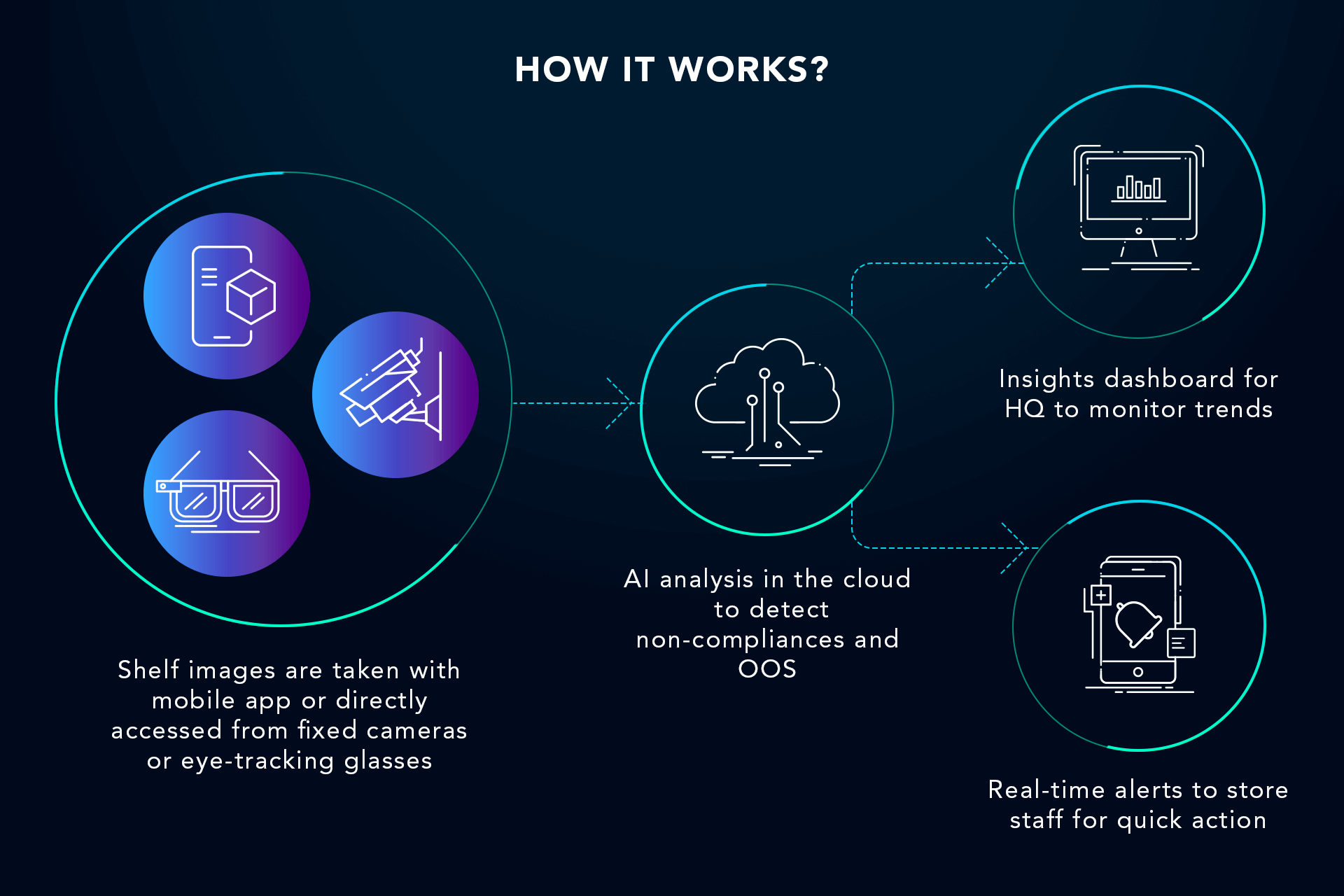
Computer vision systems use sophisticated algorithms and monitor retail shelves through cameras and sensors placed at strategic locations. These advanced systems analyze shelf conditions immediately to ensure optimal product availability and placement.

Real-time Product Detection Technology
Modern retail stores make use of YOLOv8, a state-of-the-art object detection algorithm that identifies products on shelves with remarkable precision. The system achieves an f1 score of 92% and maintains a high intersection over union threshold of 0.7. Shelf-mounted cameras provide continuous video feeds while the technology processes images at the camera level with edge computing. This reduces latency and network bandwidth requirements.
Empty Space Recognition System
High-resolution cameras and machine learning models work together to detect empty spaces. These models analyze historical sales data and current shelf conditions to predict potential stockouts early. Store staff receive immediate alerts when the system detects vacant shelf areas, which helps them respond quickly to restocking needs. The computer vision algorithms trained on annotated shelf images show exceptional accuracy in spotting empty shelf spaces.
Inventory Level Monitoring Algorithms
AI algorithms track stock levels by analyzing data from multiple sources immediately. The system works with 4,088 images and their labels, split between training and testing sets at a 70:30 ratio. This detailed approach helps the detection system maintain a 93% hit rate for first-result product identification.
Price Tag and Label Verification
The system’s specialized OCR technology captures and processes pricing information automatically. This approach saves up to 70% in processing time compared to manual methods. The technology reduces error rates found in manual price checking processes through automated data entry and verification. Natural language processing helps identify characters in both light and dark patterns within price tags. This extracts vital pricing data, including merchant names, product descriptions, and discount information.
Impact On Store Operations
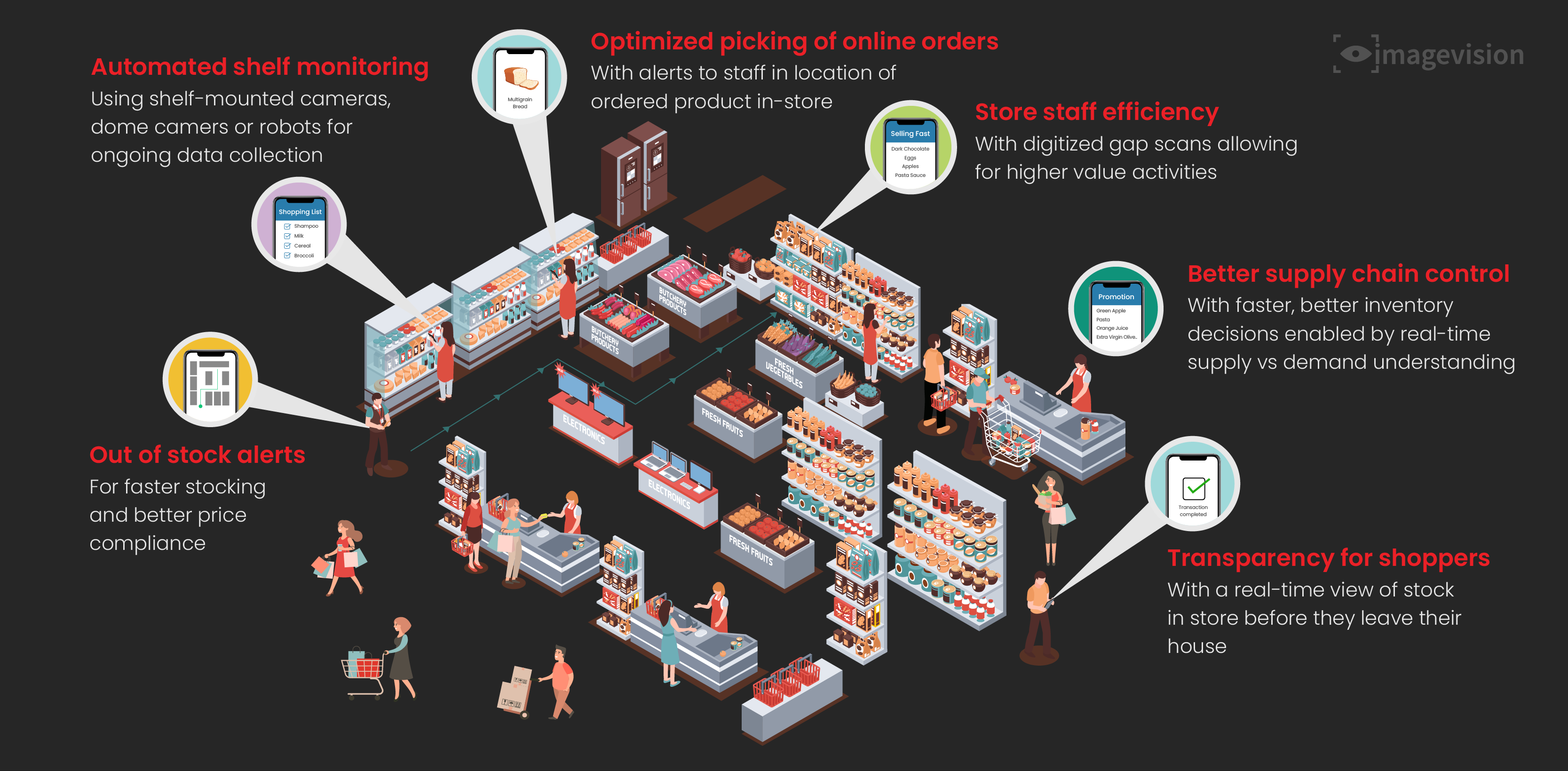
Smart cameras with computer vision technology are changing how retail stores operate through automated monitoring and immediate analytics. These systems make store management easier by providing instant insights about shelves and customer behavior.
Automated Alert System Benefits
Computer vision alert systems notify staff right away about shelf problems. The system sends notifications before shelves become empty while products are still available, which gives enough time to restock. This approach makes sure customers never see empty shelves.
The automated system watches inventory levels by analyzing visual data continuously and sends immediate alerts for:
- Products running low that need restocking
- Items in wrong places that need fixing
- Display layouts that don’t match required standards
Pride Mobility’s revenue went up 26% monthly after they started using computer vision alerts. The system flags products that sit too long on shelves, which lets managers fix delays quickly instead of finding problems during manual checks.
Staff Productivity Improvements
Computer vision technology has changed how retail stores use their workforce. The Centers for Disease Control and Prevention’s data shows companies lose about INR 142,181 yearly per employee through wasted work. All the same, computer vision systems make employees more efficient by handling routine tasks automatically.
- Staff can now focus on important activities instead of watching shelves manually. Store employees used to spend 12.5 hours every week restocking, but computer vision has cut this time substantially by automating inventory checks. So workers can spend more time helping customers and handling strategic work.
- Managers can schedule staff better because the system tracks everything in real time. They can adjust worker schedules by learning about customer traffic patterns and busy shopping times. This analytical approach stops stores from having too many or too few workers, which cuts operating costs.
- The technology also checks if employees follow rules properly. It automatically verifies if staff wear correct uniforms and greet customers as required. This automated checking keeps service standards high without needing constant supervision.
Computer Vision Implementation Journey
Computer vision in retail stores needs proper planning and execution. A well-laid-out approach will give a smooth integration with current store operations.
Original System Setup and Infrastructure
The base starts with smart placement of high-resolution cameras across the store. Edge computing helps process images immediately at the camera level. This cuts down delays and reduces network bandwidth needs. The system uses RetinaNet for object detection and reaches 0.752 mAP accuracy. Deep Hough transform technology spots shelf rows as semantic lines with an F1 score of 97%.
Staff Training Program Development
The training programs give teams the analytical skills to read visual data. Store staff learn to:
- Use computer vision dashboards for inventory tracking
- React to automated alerts quickly
- Use data insights for merchandising decisions
Hands-on sessions with the technology make the training practical. Team members become skilled at using computer vision algorithms, which helps them make better decisions and run operations smoothly.
Integration with Existing Store Systems
Computer vision tools must connect with several store systems smoothly. The setup uses middleware to bridge old and new systems. Retailers usually start with a pilot program. They test the system in one store or specific product categories to check accuracy in detection, classification, and recognition tasks. Regular AI model updates with new data and refined algorithms help the system work well as retail needs change.
Real-World Performance Metrics
Computer vision implementations in retail chains show remarkable operational improvements through real numbers. Major retailers report substantial gains in efficiency and cost savings when they use automated shelf monitoring systems.
80% Reduction in Monitoring Time
State-of-the-art image analysis makes merchandising data collection easier and cuts traditional audit times dramatically. Store managers complete shelf monitoring tasks 75% faster with automated systems. RetinaNet architecture achieves precision rates of 0.752 mAP in object detection. This enables quick shelf analysis without sacrificing accuracy.
45% Decrease in Out-of-Stock Incidents
Retailers who use computer vision technology see impressive improvements in stock management. A leading European supermarket chain cut out-of-stock cases by 30%. Kroger’s AI-powered forecasting system reduced overstocks by 16%. The technology maintains an 89.6% success rate when monitoring on-shelf availability.
ROI Analysis: 6-Month Payback Period
The financial benefits of computer vision show up quickly. Here are the key performance indicators:
- Customer base grew 40% after implementation
- Customer conversion rates improved 25%
- Inventory turnover increased 20%
- HR-related expenses dropped 10%
The payback period uses a simple calculation: Initial Investment ÷ Annual Cash Flow. Retailers break even within six months. This beats traditional retail technology investments that need 7-10 years.
Retailers using AI for shelf share calculation report a 35% boost in sales efficiency.
Conclusion
Computer vision technology proves its worth in retail shelf monitoring with amazing results in every performance metric. Store operations now run 80% faster with automated monitoring systems. Out-of-stock incidents have dropped by 45%, which leads to happier customers and more revenue.
The numbers make a strong case for computer vision. Retailers get their money back within six months of implementation. Big retail chains report impressive gains – their customer base grew by 40%, conversion rates improved by 25%, and inventory turnover jumped 20%. These results show how this technology tackles the $82 billion stockout problem that U.S. retailers face.
Retailers have found smart ways to deal with setup challenges. Successful stores use a mix of solid privacy measures, detailed staff training, and careful infrastructure planning. This approach helps them adopt the technology smoothly and keeps their customers’ trust intact.
Computer vision marks a big leap forward in retail automation. Stores that welcome these trailblazing solutions are ready to meet customer needs and run efficiently. The benefits are clear in the data – from stopping revenue losses to getting inventory levels right. Computer vision has become a must-have tool in today’s retail operations.

 India
India Job Portal