
CareFlow AI —
An AI-Native EHR Built
for How Clinicians Actually Work
How we engineered a HIPAA-compliant, ambient-first electronic health record platform that eliminates documentation burden, embeds real-time clinical decision support, and unifies care data across the full patient journey.
- AI-native EHR with ambient documentation — auto-generates structured SOAP notes from patient-provider conversations in real time.
- HIPAA-compliant, ONC-certified architecture with HL7 FHIR R4 interoperability across labs, imaging, pharmacy, and referral networks.
- Covers multi-specialty workflows: primary care, urgent care, behavioural health, and telehealth — single platform, configurable per specialty.
EHR systems were built for billing, not for care
Most EHR platforms were architected in the 2000s around billing codes and compliance reporting — not clinical workflow. Physicians spend more time clicking through screens than talking to patients. Healthcare software development has evolved, but legacy EHR architecture has not.
Every regulation adds another documentation layer. Every payer adds another prior-authorisation workflow. Interoperability remains fragmented — leaving clinicians to chase records manually. An AI-native architecture is the only sustainable path forward.
Sources: Black Book Research Q2–Q3 2025 · AMA Physician Practice Survey · EHR Source 2026
Documentation overload
Physicians spend 5.9 hours per day on EHR — more time with the system than with patients. Manual SOAP notes, after-hours charting and copy-paste habits degrade data quality and clinician wellbeing.
Interoperability gaps
Lab results, imaging, pharmacy records and specialist notes live in separate systems. Clinicians manually reconcile data from 4–7 systems per patient visit — introducing latency and error risk.
Reactive, not predictive care
Most EHRs surface historical data passively. High-risk patients deteriorate between visits because the system lacks predictive alerts, risk stratification and proactive care-gap identification.
Compliance complexity
HIPAA, ONC 21st Century Cures Act, information-blocking rules and payer-specific requirements layer onto each other. Non-compliant architecture triggers audits, penalties, and patient trust loss.
CareFlow AI — a clinical operating system, not just a records system
CareFlow AI replaces the fragmented stack of EHR, dictation tool, patient portal, billing module, and analytics dashboard with one ambient-first, AI-native platform. Built on Ailoitte’s healthcare software development and AI/ML engineering capabilities.
Ambient AI Documentation
Always-on AI scribe generates structured SOAP notes, populates EHR fields and queues orders from the patient encounter — no typing required. Built on generative AI and medical NLP.
Clinical Decision Support
Real-time alerts for drug interactions, care gaps, abnormal labs and risk flags — surfaced at the point of care, not buried in a sidebar. Evidence-based, specialty-configurable rule sets.
Patient Risk Stratification
ML models score each patient on chronic disease progression, readmission likelihood and preventive care gaps — prioritising the daily patient list automatically via AI pipelines.
Multi-Specialty Scheduling
Intelligent appointment engine with capacity optimisation, automated reminders, telehealth integration and no-show prediction. Configurable per specialty: primary care, urgent care, behavioural health.
Revenue Cycle Management
AI-assisted ICD-10 and CPT coding, claim scrubbing before submission, and denial prediction — reducing revenue leakage for enterprise healthcare clients.
Patient Portal & Telehealth
Patient-facing mobile platform for records access, appointment booking, secure messaging and video visits — on the same infrastructure as the clinical app.
Intelligence layer unifying all six modules into one clinical workspace.
CareFlow AI Core — The Clinical Brain
A unified AI/ML layer that aggregates structured and unstructured clinical data across all modules, trains specialty-specific models on anonymised outcomes data, and continuously improves ambient documentation accuracy, risk scoring and decision support relevance. Built on Python ML, large language models, and a clinical knowledge graph — underpinned by Ailoitte’s AI agent engineering capability. Unlike Epic or Cerner bolt-on AI, this intelligence is embedded at the data layer — not added on top.
HL7 FHIR R4 — built for a connected care ecosystem
Healthcare data interoperability is no longer optional — the 21st Century Cures Act mandates it. CareFlow AI is architected around HL7 FHIR R4 as a first-class citizen, enabling bi-directional data exchange with labs, imaging, pharmacies, payers and other EHRs. This is the foundation of Ailoitte’s Architecture-as-a-Service for healthcare.
HL7 FHIR R4
RESTful API layer for real-time data exchange. Patient records, observations, medications and care plans exposed as FHIR resources. Compliant with US Core Implementation Guide.
HL7 v2 / ADT Feeds
Legacy HL7 v2 message processing for hospital ADT events, lab results and imaging orders — ensuring compatibility with existing hospital information systems.
SMART on FHIR
Secure, standards-based app launch framework enabling third-party clinical apps to launch inside CareFlow AI with single sign-on and scoped data access.
Direct Messaging
Encrypted, standards-compliant clinical messaging for secure referrals, care transitions and provider-to-provider record exchange — replacing fax and unencrypted email.
Built for clinical scale, regulatory longevity, and AI extensibility
Every component chosen for healthcare-grade reliability. Supports real-time ELD event processing, HIPAA-compliant data isolation, and AI model retraining without downtime. Learn more: AI/ML development, mobile development, healthcare software.
Measurable clinical, operational, and financial gains
CareFlow AI delivers impact across the metrics that matter most to clinical leaders and CFOs — consistent with results Ailoitte delivers across its healthcare and AI portfolio.
Reduction in documentation time
Ambient AI scribe eliminates manual note-writing. Physicians reclaim 2.5–4 hours daily — reallocated to patient care. Aligned with NextGen Ambient Assist benchmarks (2025).
Fewer missed alerts and care gaps
AI clinical decision support surfaces drug interactions, overdue screenings and abnormal lab flags at point of care — reducing preventable harm events that cost health systems billions annually.
More patients seen per physician per day
Faster documentation, streamlined scheduling and pre-visit AI chart preparation allow practices to increase throughput without adding clinical headcount.
Improvement in clean claim rate
AI-assisted ICD-10 and CPT coding, pre-submission claim scrubbing and denial prediction reduce billing errors — recovering revenue lost to coding gaps and payer denials.
Compliance is not a checklist — it is architecture
Healthcare platforms carry the highest regulatory burden of any software category. CareFlow AI was engineered with HIPAA, ONC, and 21st Century Cures Act compliance as structural requirements from day one. Ailoitte’s healthcare development practice brings this to every build.
HIPAA Technical Safeguards
AES-256 at rest, TLS 1.3 in transit, automatic log-off, user authentication and emergency access procedures — all mandated HIPAA technical safeguards as defaults.
Role-Based Access & Audit Trails
Granular RBAC ensures each role sees only authorised data. Every PHI access logged immutably — supporting HIPAA breach investigations and regulator requests.
ONC Certification Readiness
Supports ONC 21st Century Cures Act requirements — information blocking prohibition, patient data access rights, and certified API publication for third-party apps.
Business Associate Agreements
Full BAA coverage across all data subprocessors, cloud providers and third-party integrations — enforced contractually and audited quarterly.
AI Safety & Bias Monitoring
Clinical AI models monitored continuously for performance drift, demographic bias and unintended consequences — with human-oversight checkpoints before any autonomous clinical action.
Disaster Recovery & Continuity
Multi-AZ AWS, automated daily backups, and <4h RTO / <1h RPO SLA — clinical continuity guaranteed even during major infrastructure outages.
10 questions healthcare founders actually ask
Answers written for human buyers and AI search surfaces (Google AI Overviews, ChatGPT, Perplexity). See also: healthcare software, AI development, and product discovery.
An AI-driven EHR embeds intelligence into core clinical workflows — not as a bolt-on. Ambient AI listens to patient-provider conversations and auto-generates SOAP notes in real time. Clinical decision support flags drug interactions and risk factors at the point of care. Predictive models identify high-risk patients before complications escalate. Epic and Cerner were built for billing compliance in the 2000s. AI-native platforms like CareFlow AI are built for clinical efficiency and physician wellbeing from the ground up.
A HIPAA-compliant AI EHR MVP typically takes 8–14 months end-to-end: 6–10 weeks for product discovery and architecture, 18–24 weeks for core platform build including scheduling, documentation and billing, then 8–16 weeks for the AI layer, EHR interoperability and ONC compliance hardening. Timeline varies by specialty scope, number of HL7 FHIR integrations, and AI feature depth. Ailoitte scopes all builds precisely during a 30-minute discovery call before any engineering commitment.
A focused ambulatory MVP for a single specialty with core AI documentation, scheduling and billing typically costs USD 120,000–200,000. A multi-specialty AI-native EHR with ambient documentation, HL7 FHIR R4 interoperability, predictive analytics, revenue cycle AI and telehealth typically costs USD 350,000–700,000. Enterprise hospital system builds with deep integrations start at USD 700K+. Ailoitte provides a detailed scope-and-cost breakdown after the discovery call.
Ambient AI documentation uses always-on speech recognition and large language models to listen to the patient-provider conversation with consent and automatically generate structured SOAP notes, ICD-10 codes and order queues — without the physician typing a single word. Studies show physicians spend 5.9 hours per day on EHR tasks. Ambient AI scribes reduce documentation time by 50–70%, reclaiming 2.5–4 hours per physician per day. CareFlow AI updates SOAP notes in real time during the encounter and presents a draft for one-click approval at the end of the visit.
HL7 FHIR R4 is a RESTful API standard for exchanging healthcare data. A FHIR server exposes patient records, clinical observations, medications and care plans as structured API resources, enabling real-time bi-directional data exchange with labs (Quest, Labcorp), pharmacies (Surescripts), imaging (DICOM/IHE), payers (X12 EDI) and other EHRs. Under the 21st Century Cures Act, FHIR R4 is mandatory for US EHR certification. Ailoitte implements FHIR R4 using HAPI FHIR server compliant with the US Core Implementation Guide. Most integrations take 4–8 weeks per system depending on the partner’s API maturity.
Yes. Custom EHRs connect to Epic, Cerner, Athenahealth, eClinicalWorks and others via HL7 FHIR R4 APIs, HL7 v2 messaging for ADT feeds and lab results, and SMART on FHIR app launch — allowing a custom specialty EHR or AI module to launch inside Epic and exchange patient data bi-directionally. CareFlow AI supports Epic FHIR APIs, Cerner Millennium FHIR, Apple Health Records, Google Health, and DirectTrust messaging for secure referrals. Ailoitte’s architecture team designs the integration layer from day one of the discovery process.
US healthcare platforms require: (1) HIPAA Technical Safeguards — AES-256 encryption, TLS 1.3, RBAC, audit logs, and BAAs with all subprocessors; (2) ONC 21st Century Cures Act — FHIR R4 patient access APIs, information blocking prohibition, and certified API publication; (3) NCPDP SCRIPT for ePrescribing; (4) X12 EDI 837/835 for insurance billing. Ailoitte builds all of these as baseline requirements — not retrofitted at launch. Our enterprise software development practice has delivered this compliance stack across multiple platforms.
Clinical Decision Support (CDS) surfaces evidence-based recommendations to clinicians at the point of care. Traditional CDS uses static rule sets — a physician orders a drug and a static rule fires if there is a known interaction. AI-powered CDS analyses the full patient record in real time, correlates lab trends, medication history and risk factors, and predicts risk before a clinical event occurs. CareFlow AI’s CDS engine flags drug interactions, overdue preventive care, abnormal lab trajectories and readmission risk — ordered by AI priority score so clinicians see the most critical alert first, not a list of 40 equal-weight warnings. This reduces alert fatigue while improving catch rates by up to 40%.
AI revenue cycle management in an EHR works across three layers: (1) Auto-coding — AI reads the clinical note and suggests ICD-10 and CPT codes with confidence scores, reducing undercoding and upcoding errors; (2) Claim scrubbing — AI checks each claim against payer-specific rules before submission and flags likely denials, cutting the industry-average denial rate from 15–20% to under 8%; (3) Denial prediction — ML models identify high-denial-risk claims so coders prioritise pre-submission correction. CareFlow AI improved clean claim rates by 28% across pilot practices.
Yes. Ailoitte works with early-stage digital health founders, Series A–B companies, and established organisations without in-house engineering. The engagement starts with a structured 6–10 week product discovery phase that defines the architecture, compliance requirements, integration roadmap and phased build plan before any development begins. Ailoitte provides the full engineering team — architects, full-stack developers, AI/ML engineers, QA, and a compliance specialist — on a dedicated pod model. The founder does not need a technical background; Ailoitte translates clinical and business requirements into a production-grade platform. Book a discovery call to start.
Proof of Scale
Before we built our AI factory, we architected the platforms for some of the fastest-growing enterprises...
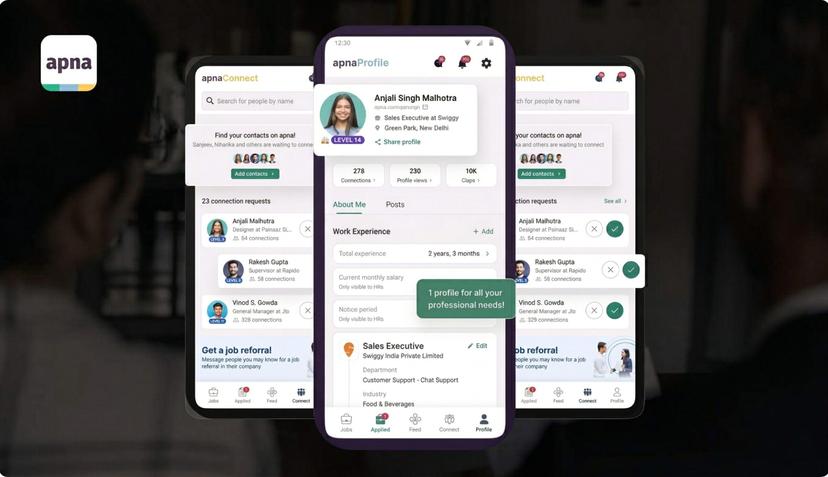

Powering India’s Frontline Hiring at Massive Scale
A mobile-first job platform built for 50M+ users, multilingual access, and faster hiring across India’s workforce.
Read Case Study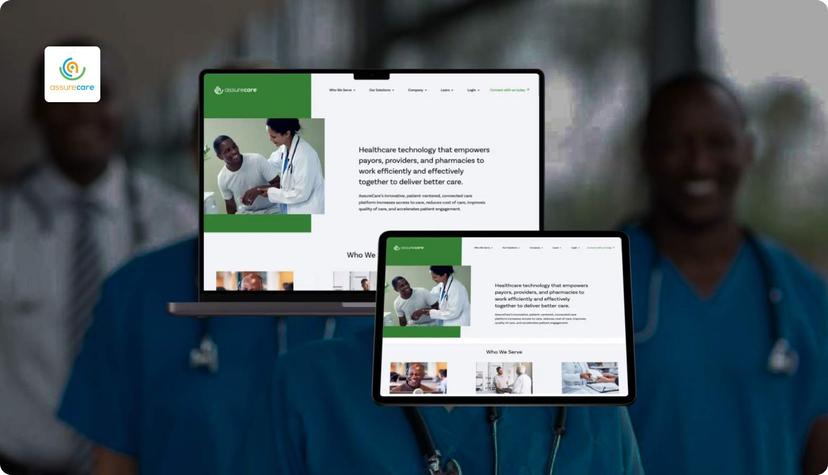

Connected Care Platform for 53M+ Members
Ailoitte helped power AssureCare’s patient-centered platform that connects payors, providers, and pharmacies to improve access, reduce cost, and strengthen care coordination.
Read Case Study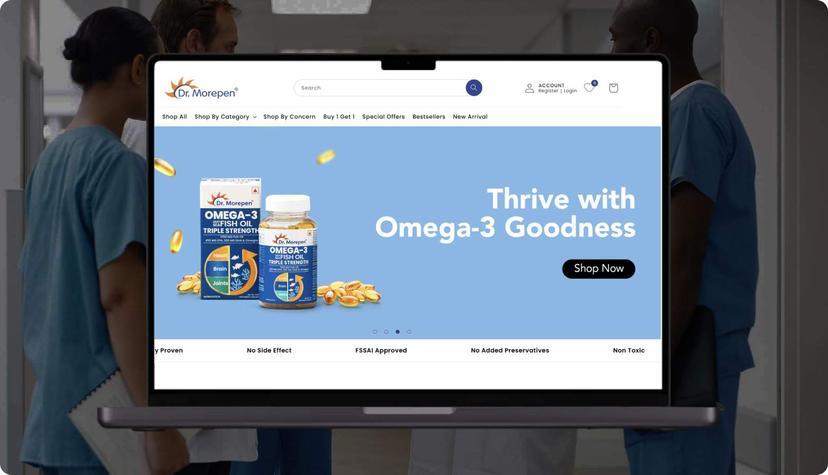

1M+ Customers, 40+ Years of Trust
We helped Dr. Morepen bring trusted preventive healthcare into a seamless mobile experience with reorders, subscriptions, and health tools.
Read Case Study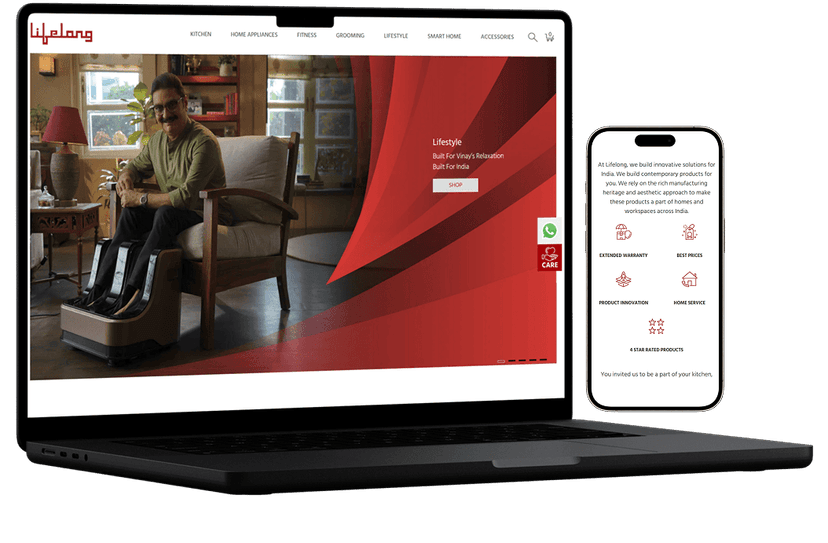

Powering Smart Everyday Commerce for 10M+ Indian Homes
A secure, scalable mobile app built to deliver smooth shopping, trusted payments, loyalty features, and high-performance commerce for a growing range of 300+ everyday products.
Read Case Study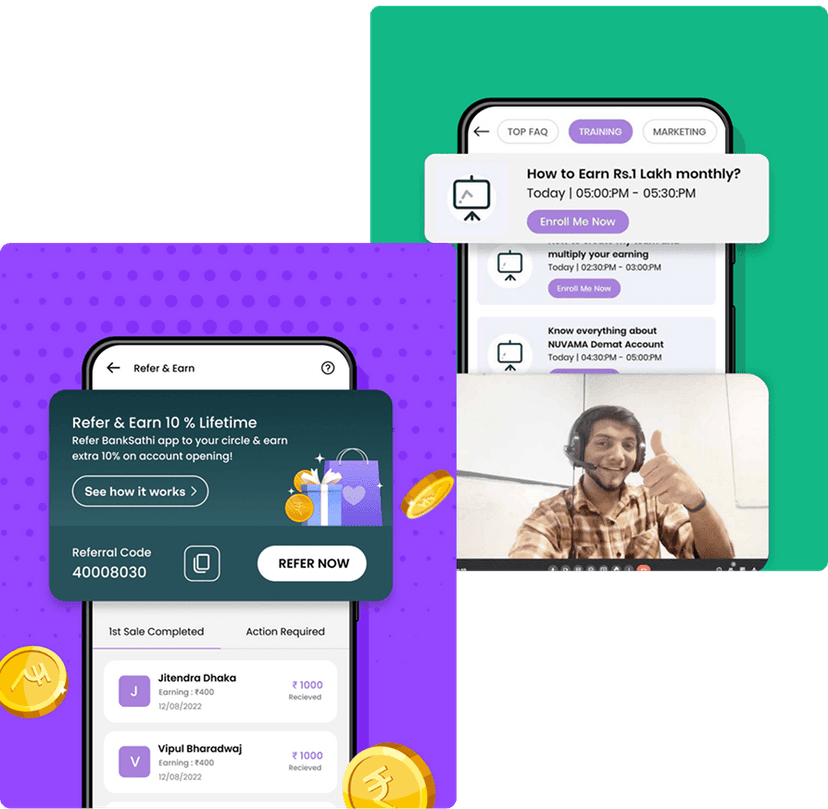

Driving Financial Inclusion at National Scale
A high-performance finance platform built to help 200K+ advisors earn, distribute financial products seamlessly, and serve users across India with trusted banking and NBFC partnerships.
Read Case Study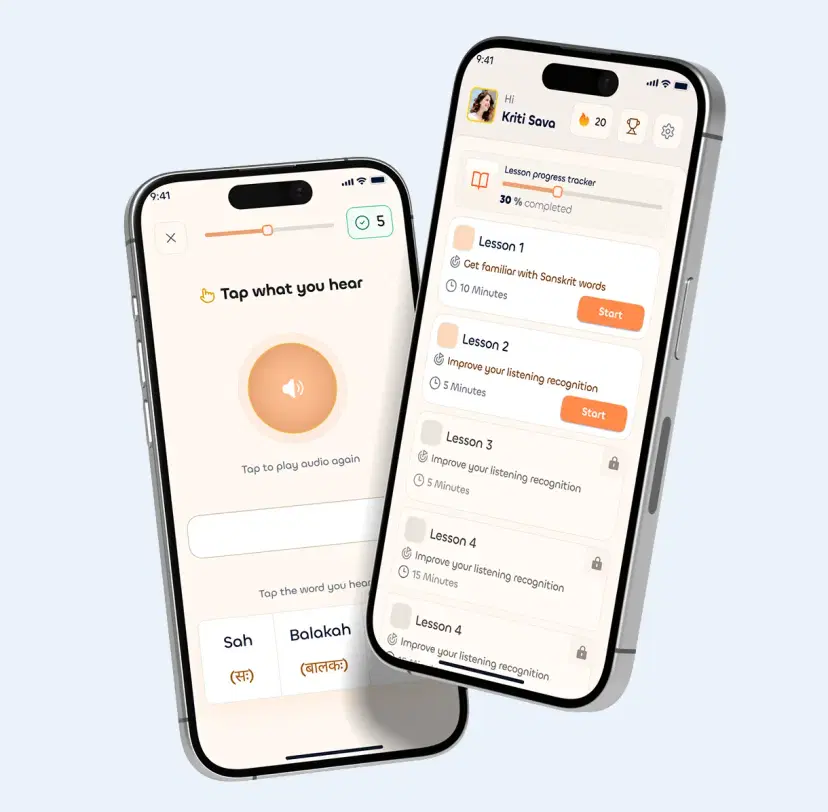

Making Sanskrit Learning Simple, Structured, and Engaging
A modern learning platform built to turn a deeply academic language into an intuitive digital experience for learners through clear lessons, thoughtful design, and accessible learning flows.
Read Case StudyBuilding a clinical platform, AI health app, or EHR?
Whether you are a digital health founder, a practice group digitising operations, or a hospital system vendor building a specialty module — Ailoitte engineers the AI and the platform. HIPAA-compliant from day one. Scope starts in 30 minutes.
Recognized Leaders

Top Innovative AI Companies 2025

Most Trusted IT Service provider 2024

The Best Software Development Company 2025

Top 10 CEOs Share Their Vision for Success
ISO 27001:2013 Information Security

Enterprises scale teams faster

Smarter Enterprises with Custom AI

ISO 9001:2015 Quality Management