



Scrum in software development is a project management framework applicable to software with complex requirements and tight deadlines.
Many IT industry businesses have adopted the agile development methodology which is based on iterative and incremental processes in their development project to increase efficiency and product quality. According to a report by CA Technologies, teams that adopt Scrum into their process improve product quality by 250%.
Benefits of Scrum in software development include:
- Value-based Prioritization
- Better Teamwork
- Collaborative Learning
- Self-organization
- Increased Business Value
- Better Quality & Transparency
A survey by Digital.ai reported that 66% of agile software delivery experts recognize the importance of the scrum framework. The fact that scrum makes it easy for a team to self-organize every process, deal with unpredictable outcomes, and resolve complex problems makes it the most preferred Agile approach in the IT industry. In this article, we are going to dive into the different aspects of agile and the role it plays in software development.
What is Agile?
Agile in software development is the methodology that speeds up delivery and improves software quality with frequent releases and improvements. It encourages a team to develop the software across processes from the beginning, identifying weak points and addressing them in real-time.
Agile Methodology: Agile is a Project Management Methodology that breaks the project into smaller doable tasks and focuses on continuous collaboration and improvement.
This methodology prevents a scenario where the team conducts the entire software development process in a single time frame and errors/bugs are identified only after it is complete.
Scrum agile software development is a project management approach that helps development teams create products/services of value with faster deliveries, frequent and continuous feedback, and improvements from the early stage.
Agile Methodology
Scrum, Kanban, Scrumban, and Extreme Programming (XP) are the most commonly followed agile frameworks for product development.
However, the guarantee of top-notch quality and timely deliveries with every project has made the scrum framework a widely used agile approach compared to the rest. It’s backed by a primary goal to fulfill customer demands through an environment of communication transparency, shared accountability, and continuous development.
Scrum Framework Basics
Scrum takes an iterative and incremental approach to predictability and risk management.
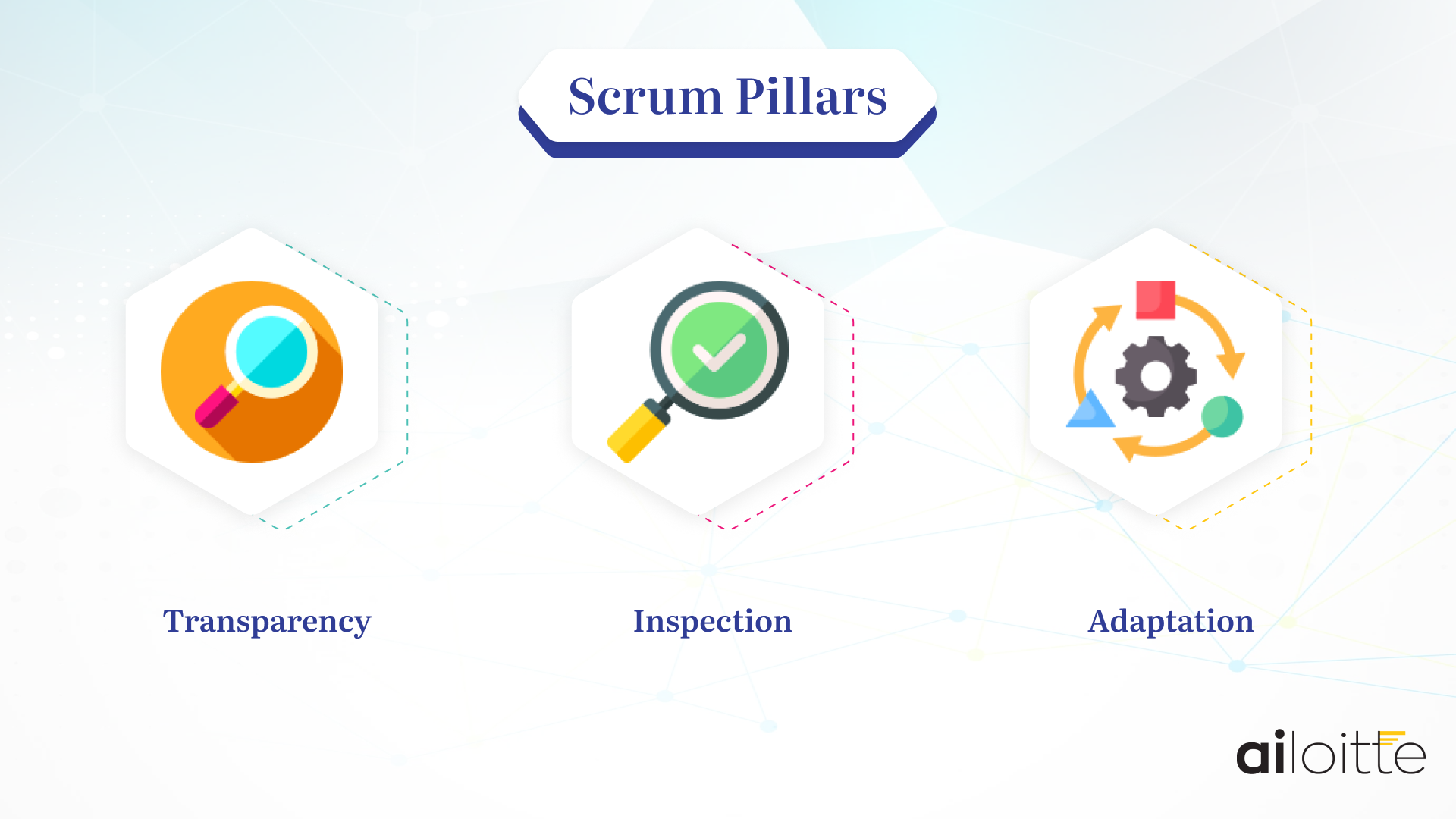
Transparency:
The determined process and work must be apparent to both teams who do and receive the work. Important scrum choices are dependent on the perceived status of the three formal artifacts – product backlog, sprint backlog, and increment that make up the framework.
Inspection:
Regular inspection is necessary to monitor the progress toward established goals and identify potential deviations or issues. Scrum delivers rhythm in the form of its five events, which are: Sprint, Sprint Planning, Daily Scrum, Sprint Review, and Sprint Retrospective to help with the inspection.
Adaptation:
It is necessary to rapidly adapt to the changes in the process and perform the necessary corrections if any part of a process deviates beyond acceptable timelines or if the final product is unsatisfactory.
Scrum Team Roles
The fundamental unit of the scrum framework is a small team of people. It includes a product owner, scrum master, and developers.
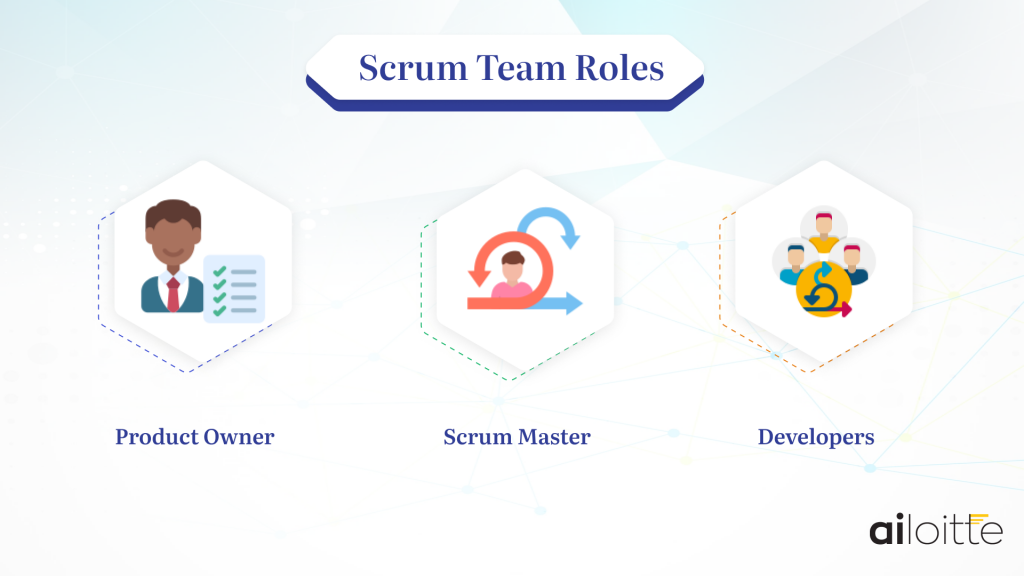
Product Owner:
Team supervision and keeping the backlog up to date are the primary responsibilities of a product owner.
Scrum Master:
Scrum master monitors and ensures the correct application of agile scrum. They also monitor the team’s performance and resolve any problems that arise.
Developers:
Developers are responsible for the software development and testing phases.
Scrum Team: Product Owner
Product owners ensure that the development team delivers a product that meets business requirements.
The product owner in a scrum team must:
- Create a product goal that outlines the product’s future state. The team will plan their upcoming work based on this.
- Build the product backlog with a list of all the tasks/items for the team.
- Ensure everyone understands the work items in the product backlog.
- Give the team clear guidance on which features to deliver next.
- Define work priorities and organize the work.
- Boost the value of the Scrum team’s efforts.
Scrum Team: Scrum Master
Scrum masters guide the teams, product owners, and the business on the Agile scrum process flow. They evaluate the work done by the team and help optimize their transparency and delivery flow. They also schedule the essential resources for sprint planning, stand-up, sprint review, and the sprint retrospective.
The Scrum Master in the team must:
- Ensure that every team member knows and applies the scrum principles correctly.
- Deal with obstacles and provide a feasible working environment to ensure team productivity.
- Facilitate the creation of product backlog items or the product goal.
Scrum Team: Developers
Developers are the most significant aspect of any scrum team created for the app development process. They are the ones that conduct the final execution of the planned sprints effectively.
The scrum developers in an ideal team must:
- Integrate the business requirements with the scrum agile development process.
- Meet sprint goals by creating backlog plans for specific activities like a feature or design development.
- Report everyday tasks in the scrum team meetings.
- Keep the product owner and scrum master in the loop to avoid moving forward in the wrong direction.
- Help product owners create better user stories.
- Ensure the final product or service meets every requirement without needing improvements for a long time.
Scrum Events
Agile scrum phases make it easy for a team to adapt to the process, the product, and the progress in a scrum.
Sprint:
A sprint is a predetermined time period with a deadline for specified work. The scrum team has to complete the work by that deadline and present it for review. It defines the basic unit of work for a scrum team and what sets the scrum architecture apart from other agile development methodologies.
Sprint Planning:
Sprint planning is a process that determines and categorizes tasks for sprints. The goal here is to determine the deliverables and required methods.
Daily Scrum:
Daily Scrum is a brief meeting held every day during the sprint phase. It aims to assess progress and trends until the end of the sprints to establish a strategy for the next day.
It includes and answers questions like:
- What tasks did you perform yesterday?
- What are your objectives for today?
- Do you require any support?
- Are you facing any problems with the project?
These problems are reviewed and resolved by the scrum master.
Sprint Review:
Sprint review is a meeting where the team reviews the completed work, identifies any mistakes/weak points, and determines a new strategy to improve in the next sprint.
Sprint Retrospective:
Sprint retrospective includes the monitoring of the sprint process, team, tools, and deliverables. Its goal is to identify new or potential improvements in the sprint process and implement them in the next one.
The team reviews the accomplished goals of a sprint, identifies the strong and weak points, and keeps a record of them to prevent them in the future.
Scrum Artifacts
Scrump artifacts provide insights that can help improve the performance of a sprint. They ensure that all the critical information is transparent during decision-making.
Product Backlog (PB):
The backlog lists everything a product needs to delight potential consumers. Typically, the product owners are responsible for designing the product backlog.
They prioritize the product backlogs according to their significance to the business and provide a solution to the problem “What should be done?”.
Sprint Backlog (SB):
It is a subset of product backlog with work items that the team is required to complete during the sprint. Every team determines the duration of each sprint. The development process is made easily visible and accessible to everyone by displaying the sprint backlog on the ‘Scrum Boards’.
Increment:
The increment includes all the tasks like user stories, use cases, and product backlogs created during the sprint. It shows every product/service solution made available to the end user. Increments help get early feedback for improvements.
Benefits of the Scrum Development Model
Scrum outperforms other agile development methodologies in a variety of ways. It is currently the most widely used and acknowledged framework in the software industry because of reasons like –
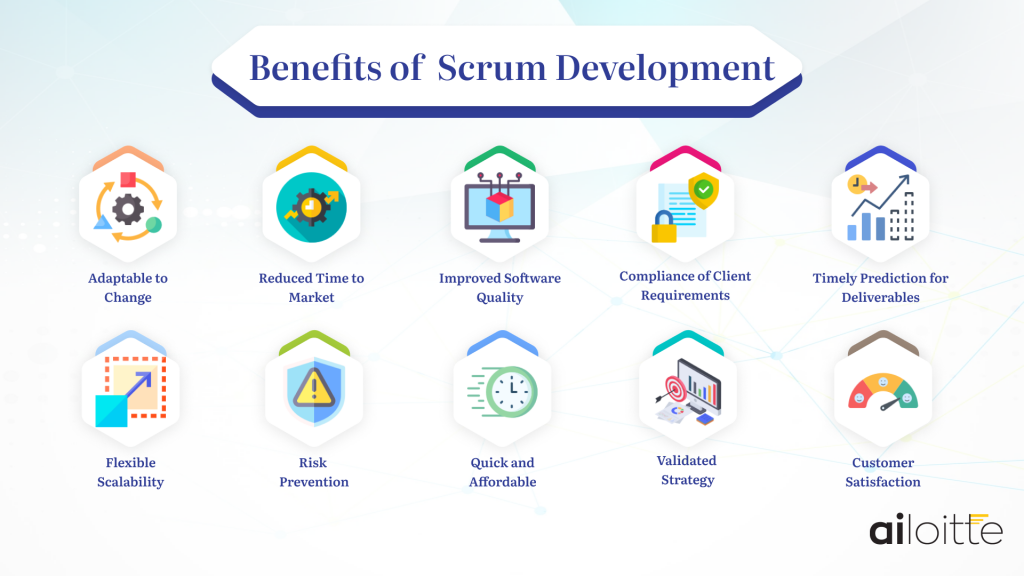
Adaptable to Change
Scrum features are adaptable to changes in requirements caused by new consumer needs or market developments. The approach can adapt to the changing requirements of complex projects in a lean manner. Scrum includes weekly deliveries, review meetings, feedback, and change implementation, which makes it possible to include a new element or development approach at any stage to ensure the final product meets market requirements.
Reduced Time to Market
The core functionalities of the product are available for use by the client before the development project is complete. The scrum approach also includes early feedback and helps create a final product that is ready to succeed and survive in the competitive market.
Improved Software Quality
The scrum process provides a usable version of the product after each interaction. It leads to early product testing, user feedback, and improvement to ensure superior product quality.
Compliance with Client Requirements
The product owner can verify whether the client requirements are met or not in every sprint demo. They can share feedback for further improvements if required, thus keeping the client’s expectations at the center of focus.
Timely Prediction for Deliverables
The sprint duration for each team helps predict the availability of various functionalities still in the backlog.
Flexible Scalability
The scrum process includes a planned time period for specified work. The team has to focus on a single functionality or design during that time. This process makes it easy for the team to adapt to any expansion required with functionality or design.
Risk Prevention
The scrum process includes the development of core functionality in the initial state, revealing the team capabilities, and determining the sprint duration. All of this helps prevent potential risks associated with the final version of the product.
Quick and Affordable
The scrum framework accelerates the pace of any software development project while going easy on the development budget.
Validated Strategy
Many software industry professionals recognize the effectiveness of the scrum framework. It divides every aspect of your project to help your team accomplish them one after another. The process is similar to building your own app from the ground up.
Ensures Customer Satisfaction
The primary goal of the Scrum framework is to ensure customer satisfaction. A software development scrum team is able to analyze the changing customer needs due to sprints and create a final product that can meet the needs of the current and future target audience.
Disadvantages of the Scrum Development Model
Using the scrum framework without the guidance of an expert may lead to unexpected and expensive consequences for the project.
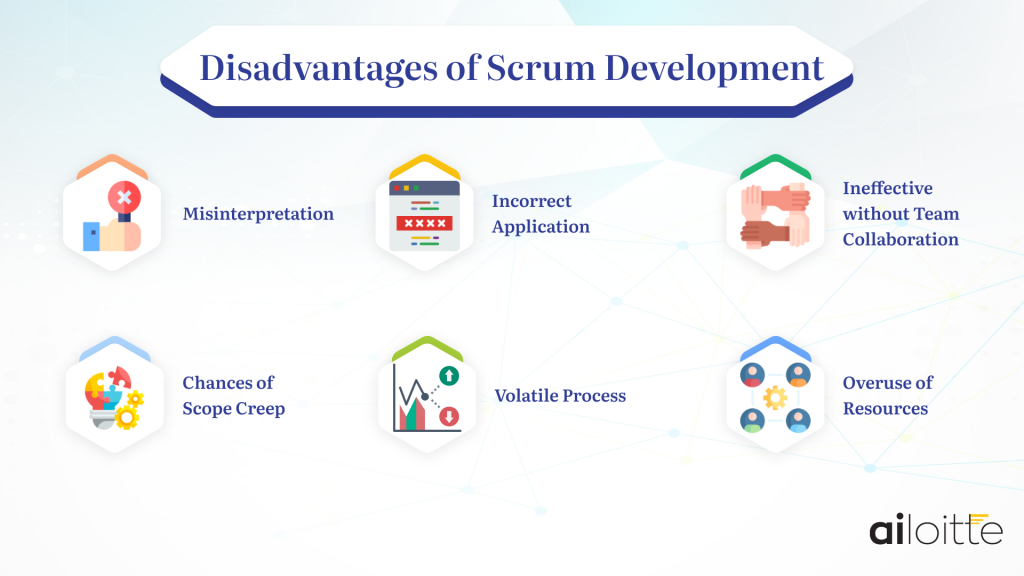
Misinterpretation
The team may misinterpret the scrum requirements for their project if it does not have a scrum expert.
Incorrect Application
Every app or software development scrum project can have different or specific requirements. Not customizing the scrum framework for those requirements will not produce the desired results.
Ineffective Without Team Collaboration
The scrum framework does not work if the team does not take an active interest in the approach or engage in frequent collaboration.
Chances of Scope Creep
Poor communication between team members, stakeholders, and customers during the scrum process leads to scope creep. It can increase the workload while the timeframe and budget stay the same.
Volatile Process
Weekly deliveries and feedback require every team member on deck. The absence or leave of any team member and miscommunication can damage the stability and efficiency of the scrum framework.
Overuse of Resources
Daily scrum meetings, frequent reviews, and feedback implementation will require many resources on a flexible budget, which can be counterproductive for the software development agency.
Scrum Best Practices
Teamwork and collaboration are essential for the scrum framework to work and help agile software developers create quality products.
Here are some scrum practices you can keep in mind to ensure such results:
- Integrate the scrum framework within the development process from beginning to end. You can ensure the desired results if the scrum framework guides every development stage.
- Get the assistance of a scrum expert to use the framework effectively.
- Avoid creating too many scrum teams to avoid confusion and miscommunication.
- Make sure every team member knows and understands the product goal.
- Prepare the team for new requirements based on the changing project requirements every day.
- Test the product every day and implement product owner feedback.
- Keep the whole team and investors/stakeholders on the same page about the project direction.
- Make sure the meetings and feedback are face-to-face to avoid miscommunications.
- Confirm the absence of micromanagement in every scrum team.
- Avoid burnout in team members by giving them a small break between sprints.
Conclusion
Scrum and its fundamentals are beneficial in structuring a team’s work and collaboration from the start. But even though the scrum approach may be a widely used framework with validated principles, it is not easy to practice without the right expertise.
Analyze the framework to customize its methods for your software development project. You can also get assistance from a scrum software development company like ours to make things easy in the beginning. Our experts can help guide you through the planning and execution of every sprint. And eventually, your project will run itself after a while once you understand the applications of the framework correctly.
Frequently Asked Questions
Initiation
Planning and Estimation
Implementation
Reviewing
Releasing
The scrum framework ensures better product quality with improved teamwork and collaboration, frequent product releases, regular meetings, early feedback, and continuous improvements/changes in the product from beginning to end.
Agile is a methodology that helps a development team create and deliver top-quality products faster with regular feedback and frequent improvements. Scrum is one of the agile frameworks used to manage the project.
There are three pillars in the scrum.
1. Transparency
2. Inspection
3. Adaptation

Share this article:
Leave a Reply







100+
Project Launched

80+
Happy Clients

18+
Countries Served

91%
Returning client base




.png)
.png)
.png)



Leave a Comment