



The AI domain has grown to an extent where it is predicting wars, driving vehicles, and making energy renewable. While on a micro level, these capabilities are far-reaching in nature and carry industry-grade impact, AI has developed enough to make massive micro-level impacts as well through supply chain efficiency, better data analysis, etc.
A recent, micro-level use case of AI that is taking the digital space by storm is ChatGPT and Generative AI.

The fact that you are here shows that you already know what is ChatGPT and are some inches away from finding its application in your business.
When we recently worked on a ChatGPT integration project, our research showed that the technology could be used in two crucial phases of a business – when starting a business and during its growth stage. In this article, we are going to look into both stages in detail on the front of ChatGPT business use cases.
Business use cases of ChatGPT during your inception phase
The most difficult part of starting a business is the planning stage. It is where the foundation of your brand’s success is set. Now, the way ChatGPT is built ensures that you get all the answers you need to set up a brand backed by extensive market research and customer insights.
Business strategy
Building the business strategy becomes easier when you ask ChatGPT questions like –
- Which domain has the biggest scope for disruption?
- How would you estimate the target market size of eScooter apps?
- Can you share 10 companies that are active in the healthcare space?
- Could you build a SWOT analysis for the restaurant app business?
Insights gathering
One of the crucial ChatGPT business applications lies in getting insights generating customers’ points of view, building design briefs, etc. Here are the requests you can make to get the right answers –
- Can you give some insights into what users think about education apps?
- Please share a high-level brief for a content marketing agency
- Can you share some healthcare app trends?
- Can you make a rough outline of what the customer journey should be on Apple?
Business ideation
ChatGPT for enterprise solutions can also be seen in how it can help businesses ideate a new product launch by doing the basic groundwork. Some prompts for the ideation stage can be –
- Can you suggest some business names and prospective URLs
- Please share some value propositions for Uber
- What features should I keep in the app
Business model
The technology can help businesses with creating different documents that can play a critical role in setting the business’s foundation in front of internal and external stakeholders.
- Share 10 ideas to create revenue for the fintech app
- Please build a business model for a gaming platform
- Outline a go-to-market plan to get the first 50 customers
- Please draft a LinkedIn outreach message to get funding
Now that we have looked into the ChatGPT business use cases that come in handy during the inception stage, let us get down to the everyday processes the technology can streamline and expedite.
Custom Application Development: A guide
ChatGPT Business use cases across domains
Once you have gathered the necessary insights and done the groundwork for setting up your business, the next stage that comes is using the technology for working on everyday business processes.
Marketing
The primary goal of a business’s marketing efforts is to get customers. However, achieving this takes several interconnected steps which start with a thorough understanding of the users. Here are the ways ChatGPT can help with it –
- Creating buyer persona based on audience research
- Building a go-to-market strategy
- Creating documents and templates to support market research
- Performing competitor analysis
Content creation
Content, over time, has emerged as the secret to business success. Right from textual content to video based, it has become the source through which businesses connect with their audience. ChatGPT helps with the content creation process through –
- Writing blog posts
- Creating video scripts
- Building templates to create content standards
Search Engine Optimization
SEO is your answer to get audiences to your digital platform organically. While the technique has been fairly manual in nature, let us look into the ways ChatGPT can better it in some ways.
- Keyword research
- Keyword clustering based on the stages of the funnel
- Creating backlinking strategy
- Preparing blog outline
- Building a content promotion strategy
Social media
There comes a time in every business’s life when they are unable to think of new topics to share on social media and create differentiation on crowded platforms. The technology here can help with –
- Writing social media posts
- Creating video scripts
- Building a social media Strategy
Emails
Emails are the lifeline of multiple businesses looking to attract and retain their customers. However, building the right email campaigns that would help with the objective can be difficult. Here are some ways emails based ChatGPT business applications are helping companies with the time-intensive process –
- Creating an email list
- Writing email copies in a way that the click rates get improved
Digital advertisement
Digital advertisements – on social media, websites, and search engines – are deemed a sure-shot way to get users’ attention and give businesses a necessary boost. ChatGPT can help with creating conversion-friendly copies that would get your business straight in front of your prospective customers.
- Creating an ad strategy
- Writing ad copy
- Running A/B testing on the advertisements through fast content creation.
User Experience
Crafting an impeccable UI and UX of an application ultimately defines the product’s success. While ChatGPT is not advanced enough to create designs, it can help with multiple other activities related to product design.
- Giving inspiration around design
- Building a usability testing questionnaire
- Drafting in-app user flows
Customer service
The biggest area where the application of ChatGPT for enterprise solutions is most seen is customer service. Let us see how the technology can improve customer experience.
- Give smart replies to the customers
- Draft customer’s pain points and needs
- Create a customer retention strategy
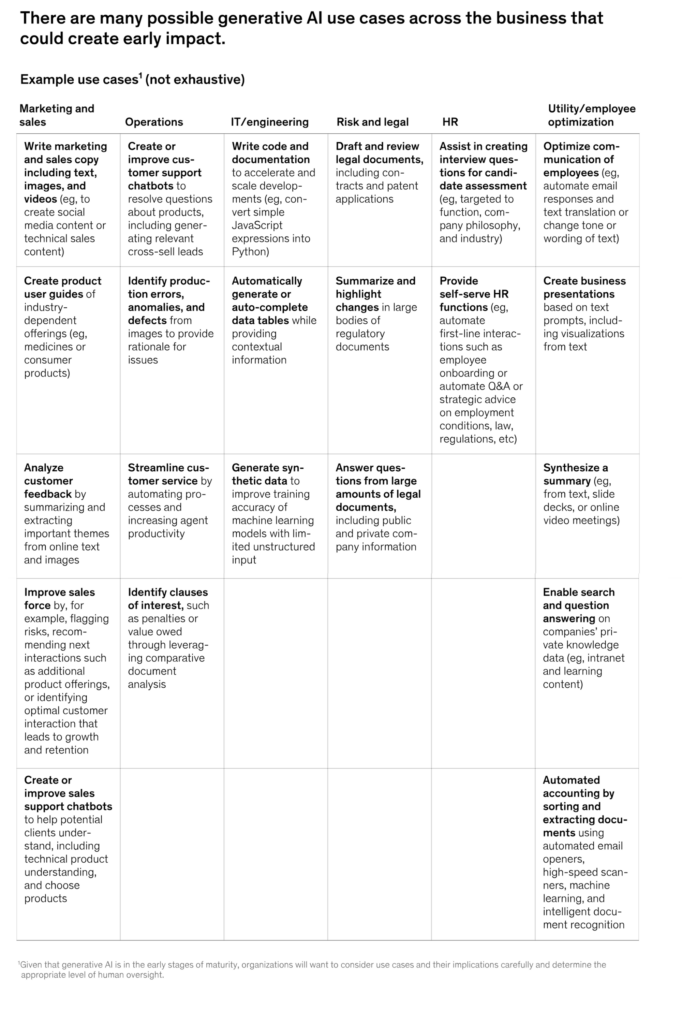
These are only the surface-level impacts that ChatGPT creates. The fact that the technology has grown to such an extent in less than a year is a sign of how massive it is set to become in the time to come. While businesses are still struggling with finding answers on how to integrate the technology into their process, you can partner with us, the go-to ChatGPT app development company to get a head start on the development and integration of the technology.
Our team of AI experts can help you with understanding the capabilities of ChatGPT and aligning them with your business goals. Get in touch with us to know more.
Also know – How much it cost to build an Android app
FAQs around business use cases of ChatGPT
Several companies are using ChatGPT in different capacities. Some of the names that use the technology include – Salesforce, Microsoft, Snapchat, Snap, Shop, Bain & Company, Shopify, and Duolingo.
Yes. ChatGPT has been made live for public usage. Moreover, the technology comes with APIs to integrate with existing business solutions.
There are a number of ways ChatGPT makes businesses better and more efficient. Here are the top modes –
Automated customer services
Increased customer engagement
Improved customer satisfaction
Increased sales conversion
Lowered customer service costs
Better customer segmentation
Market differentiation

Share this article:
Leave a Reply







100+
Project Launched

80+
Happy Clients

18+
Countries Served

91%
Returning client base




.png)
.png)
.png)



Leave a Comment