



A strong web application architecture is the foundation of every successful mobile app.
A web app architecture includes everything that defines an app, right from the UI/UX, features, and tech stack to the development process.
Having a good quality-driven web architecture is the key to data and information flow that helps companies achieve their objectives, and meet business needs and user expectations.
As per Emergen research, the web application market size was projected to be $1.13 billion in 2019, and it is anticipated to reach USD 10.44 billion by 2027 at a CAGR of 31%.
With the popularity of web applications and solutions increasing, picking the right components for the web application system is significant for any project’s success. A good web apps architecture is all about building a stable ecosystem for your web apps.
This guide will discuss the basics of web application architecture, how a web application works, its components, types of web application architecture, best practices to create a web app, and more.
So, let’s dive right in.
What is Web Application Architecture?
Web Application architecture describes the interaction between user interfaces, systems, applications, and database components together. The primary objective of designing a web app architecture is to work seamlessly with one another.
For example, when a user types an URL into the browser and clicks Enter, it requests the server. The browser then searches for the needed files and web pages. The browser then processes the files to display the search query, offering the solution.
The architecture for a web application structure is important owing to the widespread use of apps and gadgets that use web-based communication. Therefore, keeping up with the trends of the industry and consumers’ requirements, makes adding enhancements to the project architecture for web apps a constant process.
The following is an architecture diagram for the web application.
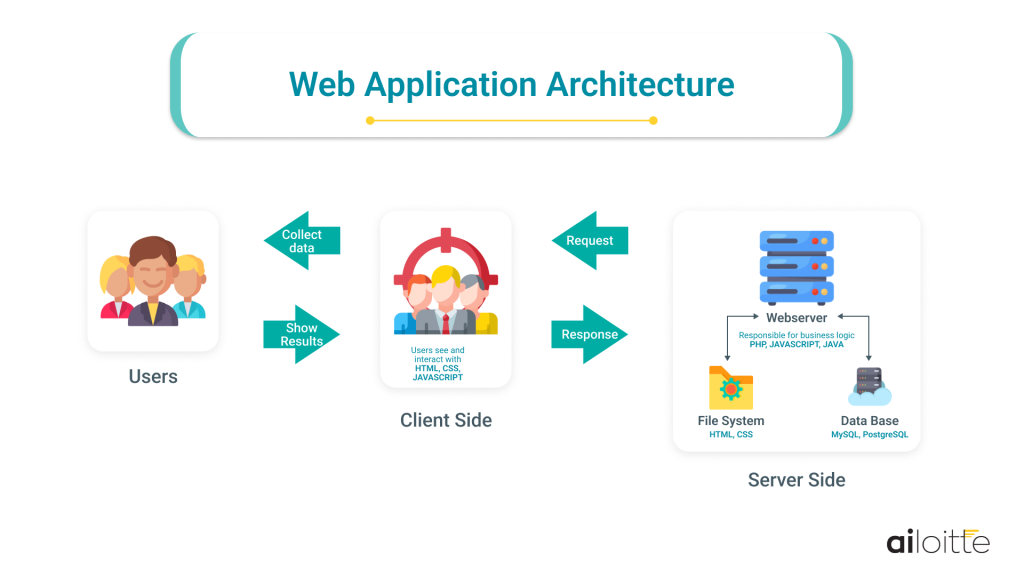
A secure web application architecture allows multitasking by splitting the structure of web apps into modules, thus decreasing the creation time in the long run. Also, constantly updating the software functionality becomes manageable without involving or disturbing the entire structure.
Now that we’ve understood what web application architecture is, let’s know the web application components in detail and their working principles.
The system architecture for a web application mainly consists of two parts-
1. Client(frontend): The code that the browser contains and responds to user input
2. Server(backend): The code that is located on the server and responds to HTTP requests
The frontend is the visible part of the app that is interactive for users. And the client-side code responds to the user’s actions.
The backend isn’t visual for users but makes requests work as it manages the business logic and reacts to HTTP requests.
The front end involves the following languages-
- HTML
- CSS
- JavaScript
To create the backend, here are some commonly used technologies-
- PHP
- Java
- Ruby
- Go
- Python
- C#
- Javascript
Step to make an App – Mobile App Development Process
Essential Components of Web Application Architecture
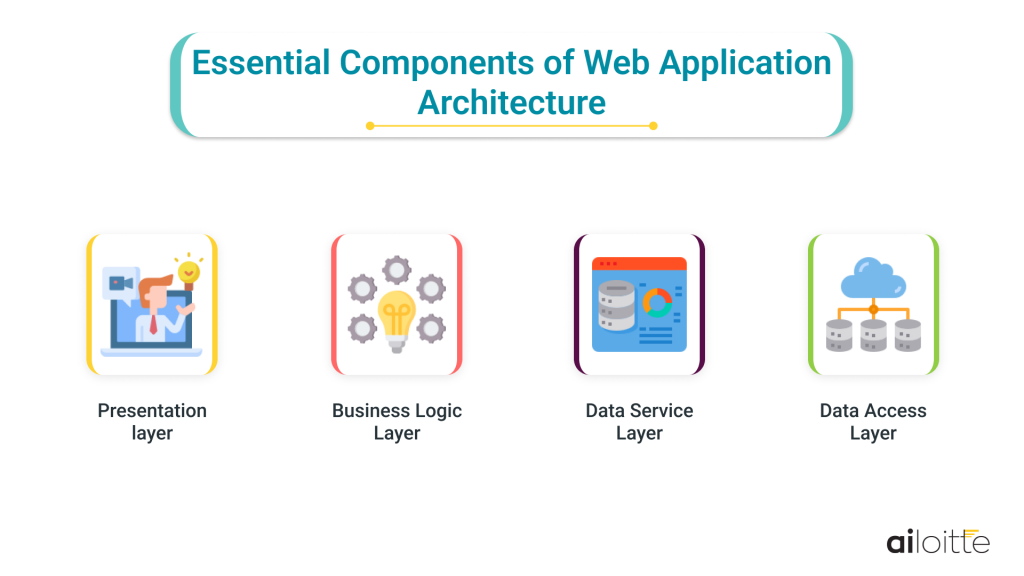
Presentation Layer
The first and foremost layer that processes and displays the user interface. The primary goal of this layer is to get input data, process user requests, send them to the data service, and provide results. It is available through the browser and contains all UI elements that cooperate with the system layer.
The web application architecture in this layer is built in Java, HTML, and CSS. HTML aims to define the structure of your website; CSS is responsible for its exterior. The web solution interacts and responds to the client input by applying JavaScript frameworks such as Angular and React which are useful for creating motion content.
Business logic layer
This layer defines the logic for business operations and rules. For example, logging into your app or website comes under this. It processes customers’ queries from the browser, directs how to access this data, and completes it. The direction by which the backend obtains the data and client queries are encoded in the business layer.
Data Service Layer
Transmission of data from the business logic layer to the presentation layer occurs in this layer. It protects the information of the other web application layers by isolating business logic from the client side.
Data Access layer
This layer offers simplified access to data stored in persistent storage, such as binary and XML files. It manages CRUD operations: Create, Read, Update, and Delete. It is also called the persistence layer, which is united with the business layer. The layer can optimize the data to be shown and which database to be applied to.
Types of Web Application Architecture
Here are the different types of web apps architecture:
Single Page Application Architecture
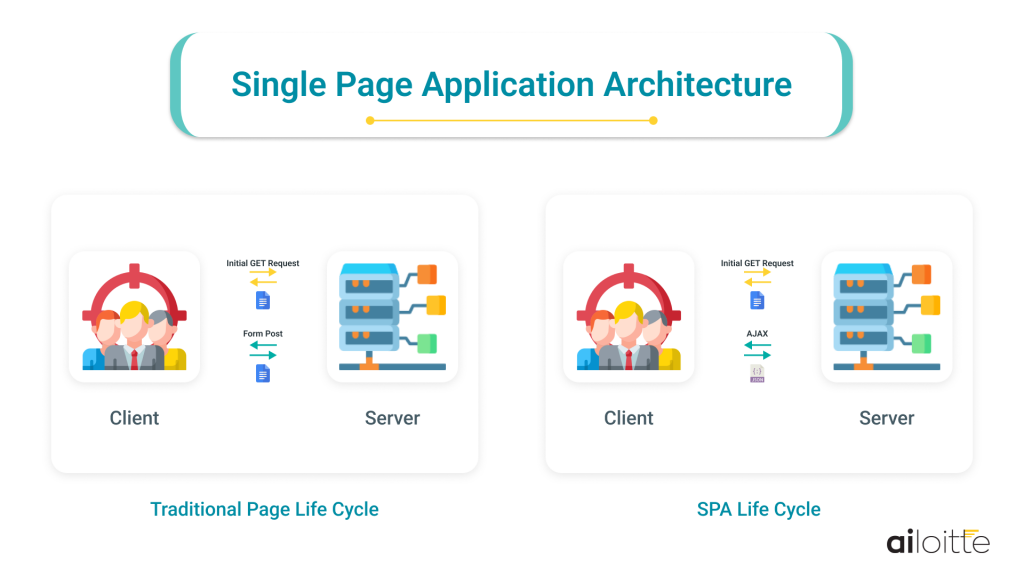
This type of architecture web design was introduced to overcome traditional limitations to achieve a smooth app performance and intuitive, interactive user experience.
Instead of loading a new page each time, SPAs load a single web page and reload the requested data with dynamically updated content, while the rest of the web page remains untouched.
SPAs can prevent interruptions in user activity to boost an intuitive and interactive user experience and they are developed on the front side using JavaScript frameworks.
Web-based application examples for single-page applications include Facebook, Gmail, Google Drive, and Twitter.
Server-Side Rendered Application (SSR)
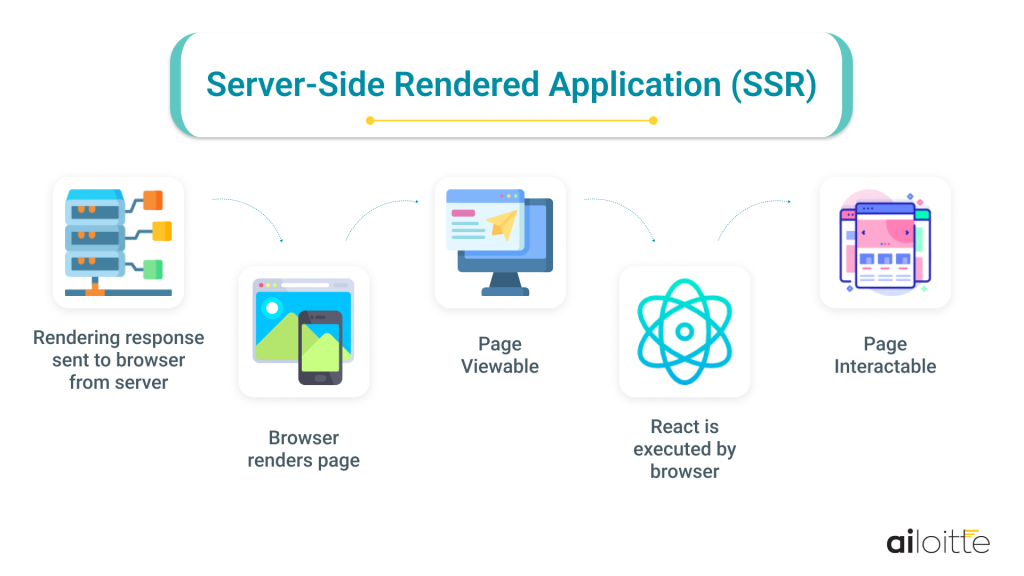
Server-Side Rendered Application (SSR) is the process of rendering a client-side framework website (Javascript) to HTML and CSS on the server. With the help of this tool, you can quickly deliver the most critical assets; thus, rendering the page to the user takes less time.
When you build an SSR App, the server quickly compiles all the data and serves the new HTML document on each request. Once the browser gets the CSS, it can display the UI without waiting for JavaScript to load, making the page load faster.
SSR works pretty fast with a reliable internet connection. It is great for static sites where you don’t have a lot of dynamic content.
Microservice Architecture
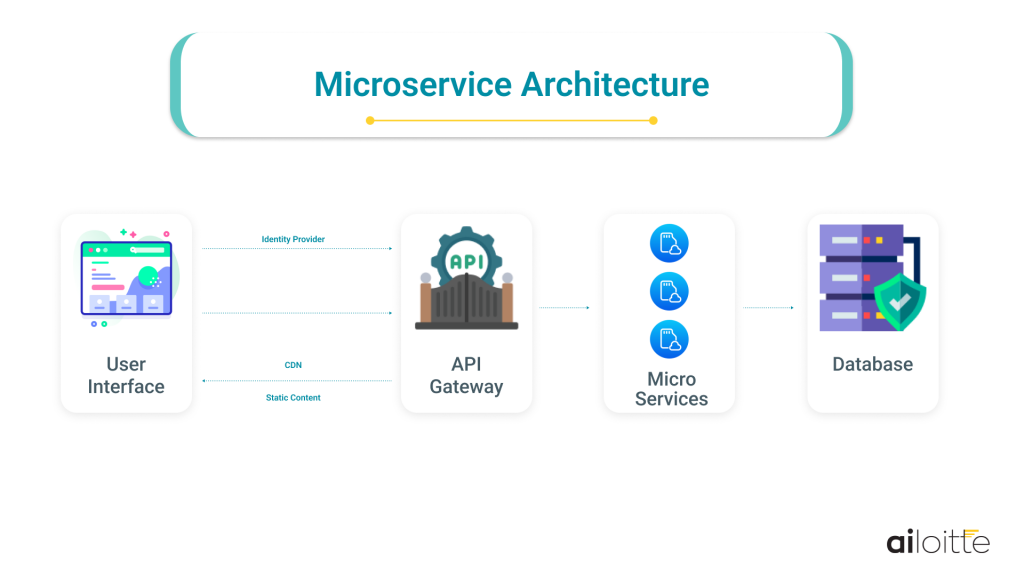
Microservices are a type of SOA (Service oriented architecture). They are lightweight, aren’t dependent on each other, are small services, and execute a single functionality. As a result, developers can speed up deployment processes and roll out web apps more efficiently.
Each microservice architecture component can satisfy a specific business or user requirement, be developed independently in different programming languages, support multiple platforms, and run on its own across cloud, IoT, and mobile.
Some well-known web application architecture examples that have adopted microservice architecture are Amazon, Uber, Etsy, and Netflix.
Serverless Architecture
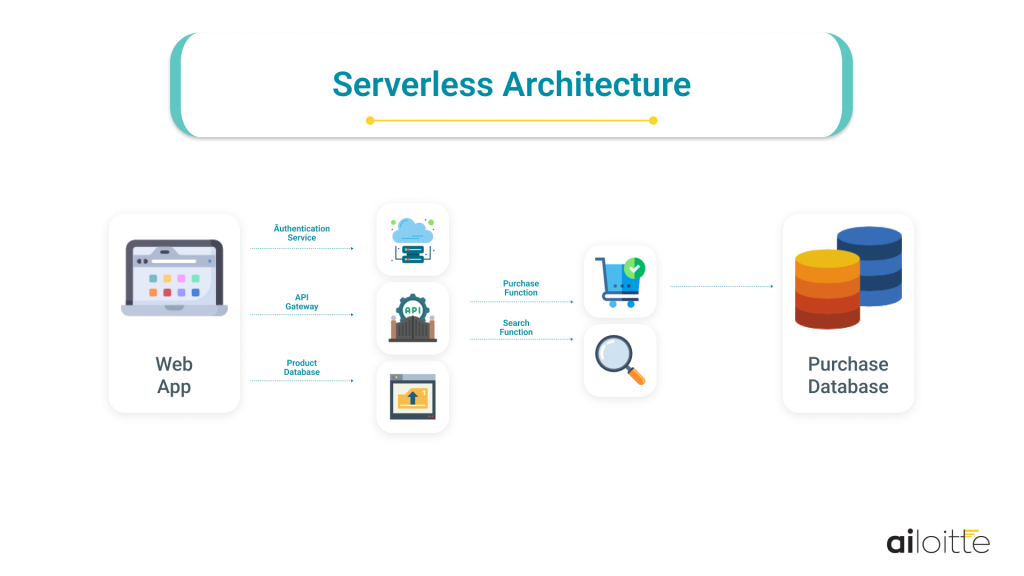
This type of web application architecture allows the execution of app code logic without much worry about web app infrastructure-related tasks. Developers need not manage backend servers. Instead, they can outsource server and infrastructure management to 3rd party cloud infrastructure service providers.
This architecture is best suited for those who don’t want to manage or support servers and the hardware for which the web app is developed.
Progressive Web Application
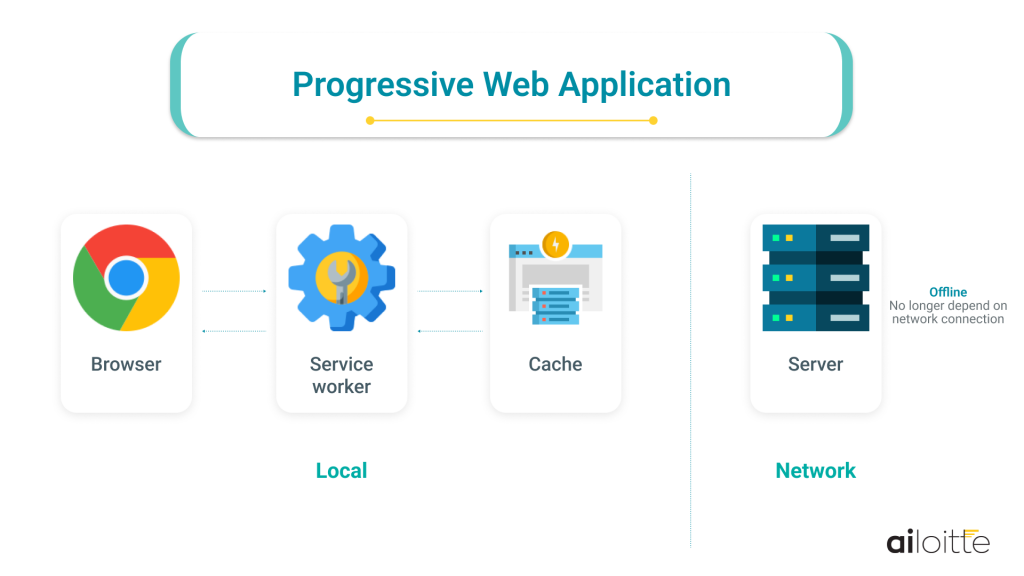
Google introduced Progressive Web Apps (PWAs) in 2015 to develop apps offering enhanced capabilities that provide rich and native functionality. They look like a web app but have all the benefits of a native mobile app.
Progressive web apps are built around an app shell that contains the local resources a web app needs to load the UI and populate it with JavaScript. Data is cached during the last internet interaction, which is why PWAs work offline.
Some good examples of PWA architecture are Uber, Pinterest, Starbucks, etc.

Best practices to follow while designing a web application architecture
Having an excellent working web app is not enough. A good web application architecture pattern that provides an optimal experience to users is also essential.
Here are some of the best practices to follow:
Compliant with the open-closed principle
The Open-Closed Principle(OCP) in modern web application architecture design states that the software functionality entity should be open for extension but closed for modification. This is because the extra pieces are added to the modern application architecture, enhancing the software capabilities.
Ease of testing
A testable web app architecture design allows businesses to conduct time-saving tests that are easy to execute and maintain. As a result, testers can finish reviewing the script faster and minimize the time to market the app or product. Example: Web application architecture in Java.
Security
A good architecture becomes imperative as it should be strong enough to protect sensitive information, comply with privacy laws, and more. In addition, the usage of proper security architecture can reduce the chances of malicious activity.
A web application firewall architecture should provide security for online services from malicious activities. Example: AWS web application architecture is vigilant about your privacy.
Flexibility and scalability
Your web app architecture must be designed to be scaled across multiple servers and regions, thus handling massive amounts of traffic. It is considered best to rely on the cloud and pay only for bandwidth usage. In addition, it must support the latest standards, testing, and analytics, offer fast response time, and more.
Failure management
The web app architecture must be designed in a way that it can heal itself even in the case of a crash. Furthermore, it is essential not to have a single point of failure, as rebooting can become difficult.
Reusability
Code reusability is the capability to reuse readymade code to develop a new web solution based on any web app architecture. Choosing the right web architecture can reduce overall expenses and be repurposed to execute another function.
Wrapping Up
A web application’s success is connected to the architecture you choose as it leads to more rapid and secure web-based communication for users.
Keeping pace with changing requirements is a challenging task, and a minor mistake can cost you the life of your app/product. Thus, designing a modern web application architecture requires a professional and qualified architect who can understand the limitations and challenges.
If you still have questions about how to build a web app using any web application architecture or looking for a web apps development company, we are here to help!
Get in touch with us to build an app for your business.
FAQs
A web application system architecture diagram must be self-explanatory. Make sure the architecture diagrams for web applications are easy to understand, elements consistent, and interaction is clear with other systems.
Many tools in the market can help you design web application architecture such as Draw.io, Terrastruct, Gliffy, Edraw Max, Cacoo, Lucidchart, Coggle, Mindmesiter, etc.
A web application architecture diagram presents a high-level structural layout of all the software components and how they interact. A popular web application architecture diagram example is Node.Js.
The following are the types of web application architecture-
1. Single Page Application Architecture
2. Server-Side Rendered Application (SSR)
3. Microservice Architecture
4. Serverless Architecture
5. Progressive Web Application
Microservices are one of the most popular widely-applicable approaches to building scalable web applications. Also, Java is another popular enterprise web application architecture.
It is imperative to have a good web application architecture because it is the blueprint for supporting future growth and meeting changing business requirements.

Share this article:
Leave a Reply







100+
Project Launched

80+
Happy Clients

18+
Countries Served

91%
Returning client base




.png)
.png)
.png)



Leave a Comment